
14 conveyors · one modular system
Low-profile conveyor systems.
Fourteen conveyors for compact production layouts, each built on one patented modular concept, so drives, guides, stands and components interchange across the range.
They differ in how they carry or present the part, where the drive sits, and how the belt is changed. Tell us the job and our engineers design the right one for you.
Compare conveyor products
Start with how each conveyor carries or presents your part. Groupings describe the conveying method, not suitability for a specific application.
Showing 14 of 14 conveyors
Transport
Move parts steadily from one operation to the next. · 5 conveyors
End-Drive Conveyors
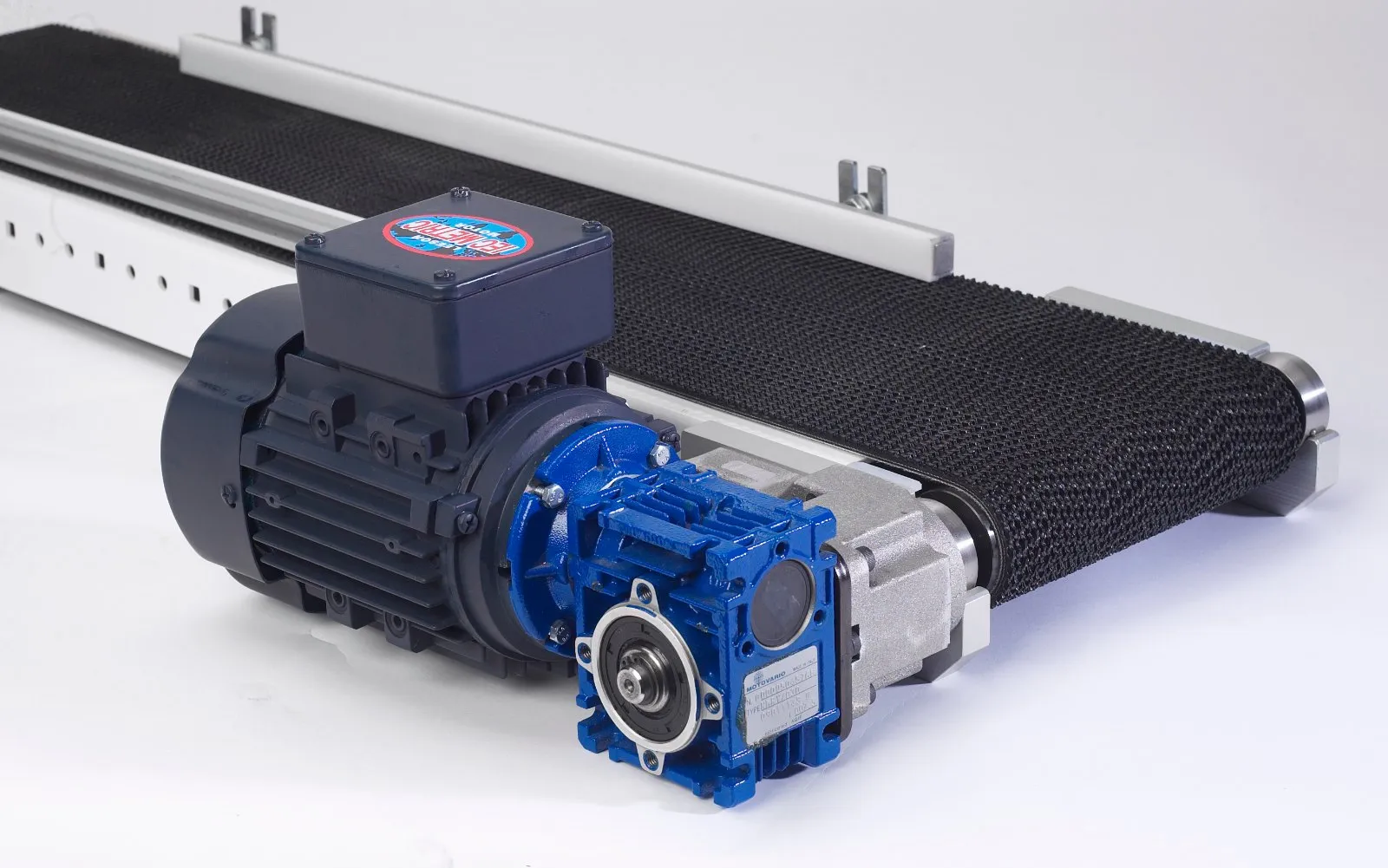
Flat-belt conveying with the drive at one end of the conveyor.
Used for Straightforward flat-belt transfers between operations.
- Belt
- Flat belt
- Key
- 9 belt widths, 2.5–24 in
Center Drive Conveyor
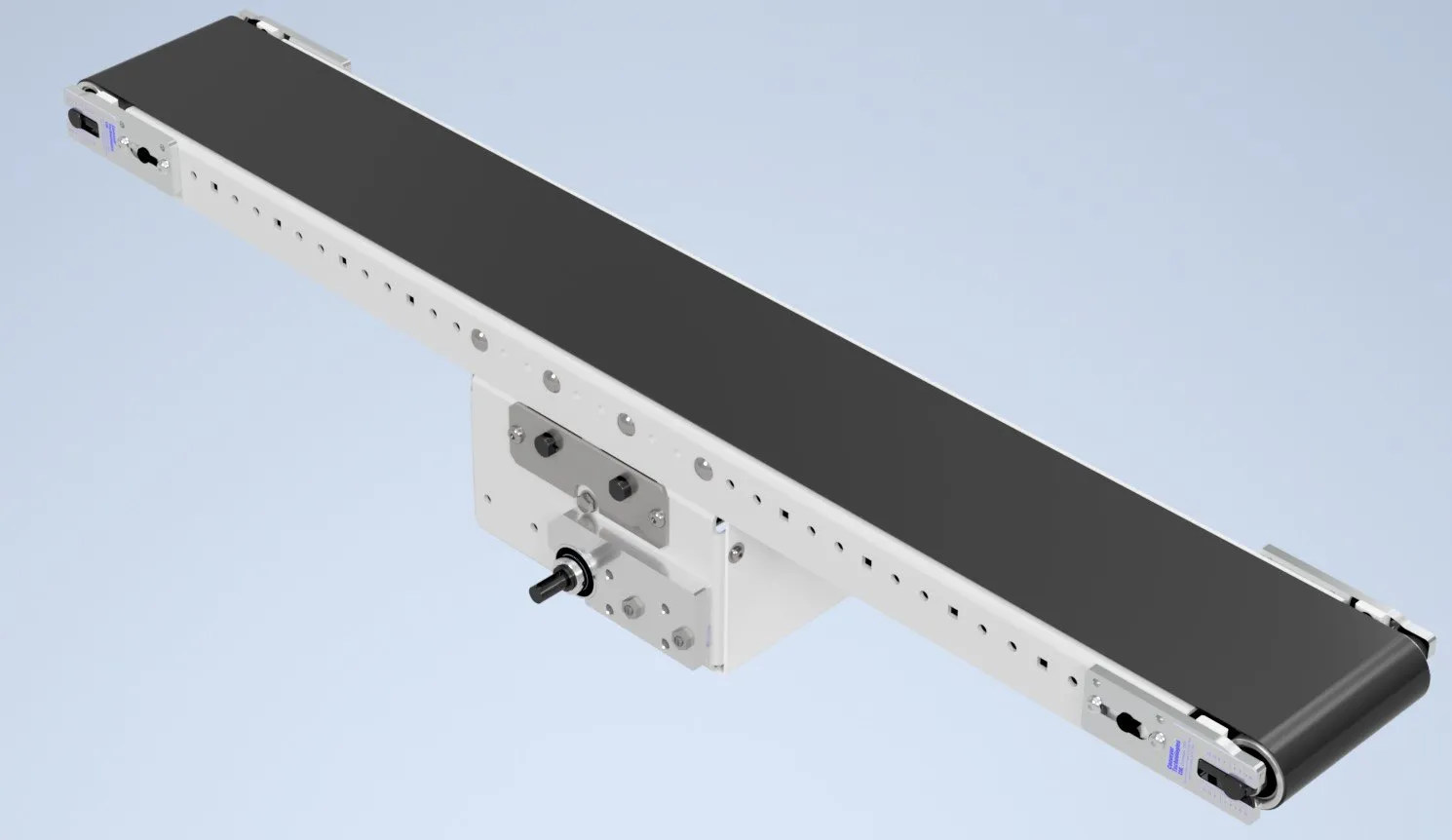
Repositionable drive beneath the conveyor, leaving space at the infeed and discharge ends.
Used for Lines where both conveyor ends must stay clear for transfers.
- Belt
- Endless flat belt
- Key
- 9 belt widths, 2.5–24 in
Modular Plastic Belt Conveyor
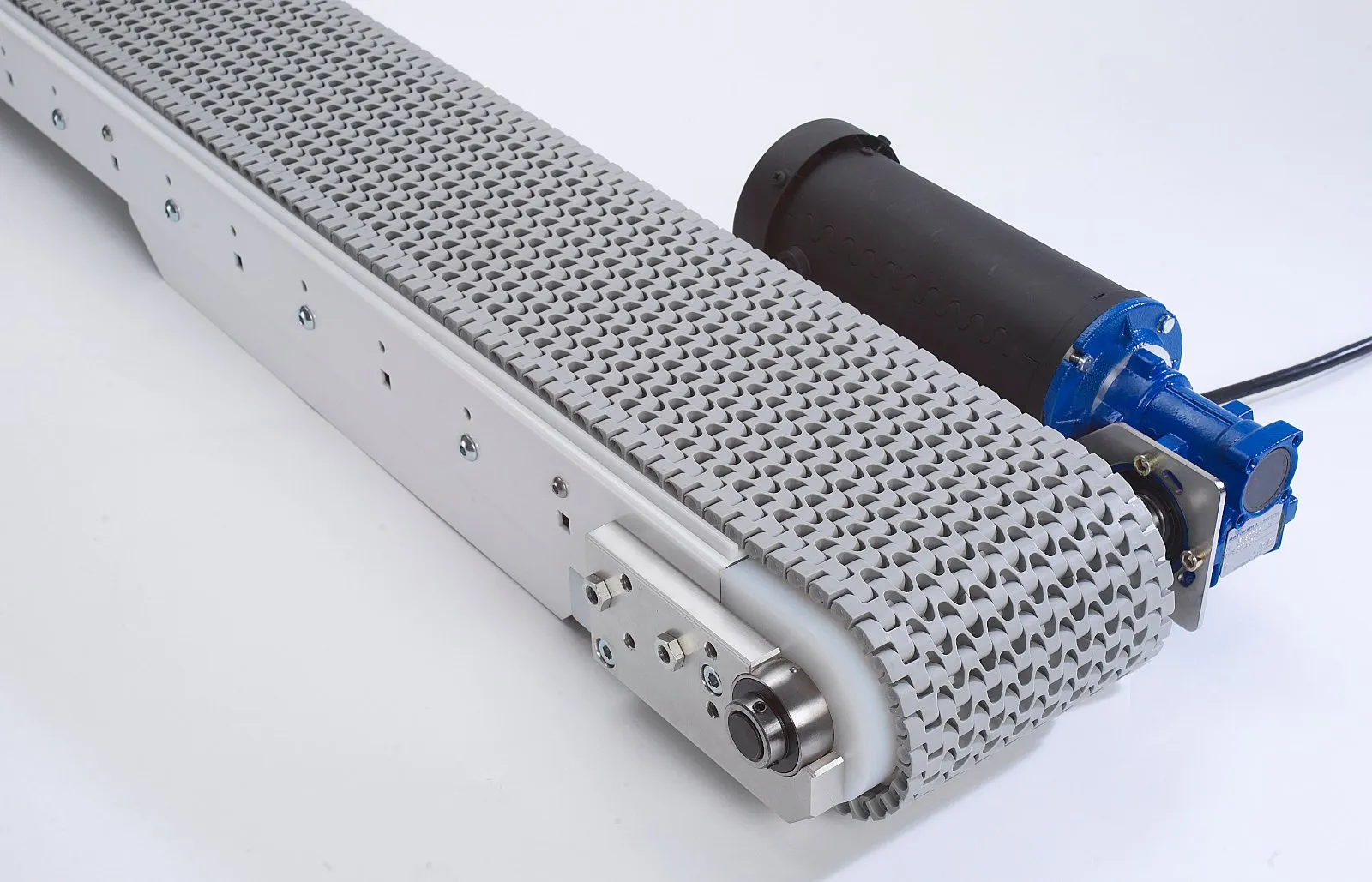
Modular plastic belting with surface, material and pitch choices.
Used for Washdown areas and parts that need a specific belt surface or material.
- Belt
- Modular plastic, 0.5 or 1.0 in pitch
- Key
- Up to 300 lb (136 kg)
Wire Mesh Belt Conveyor
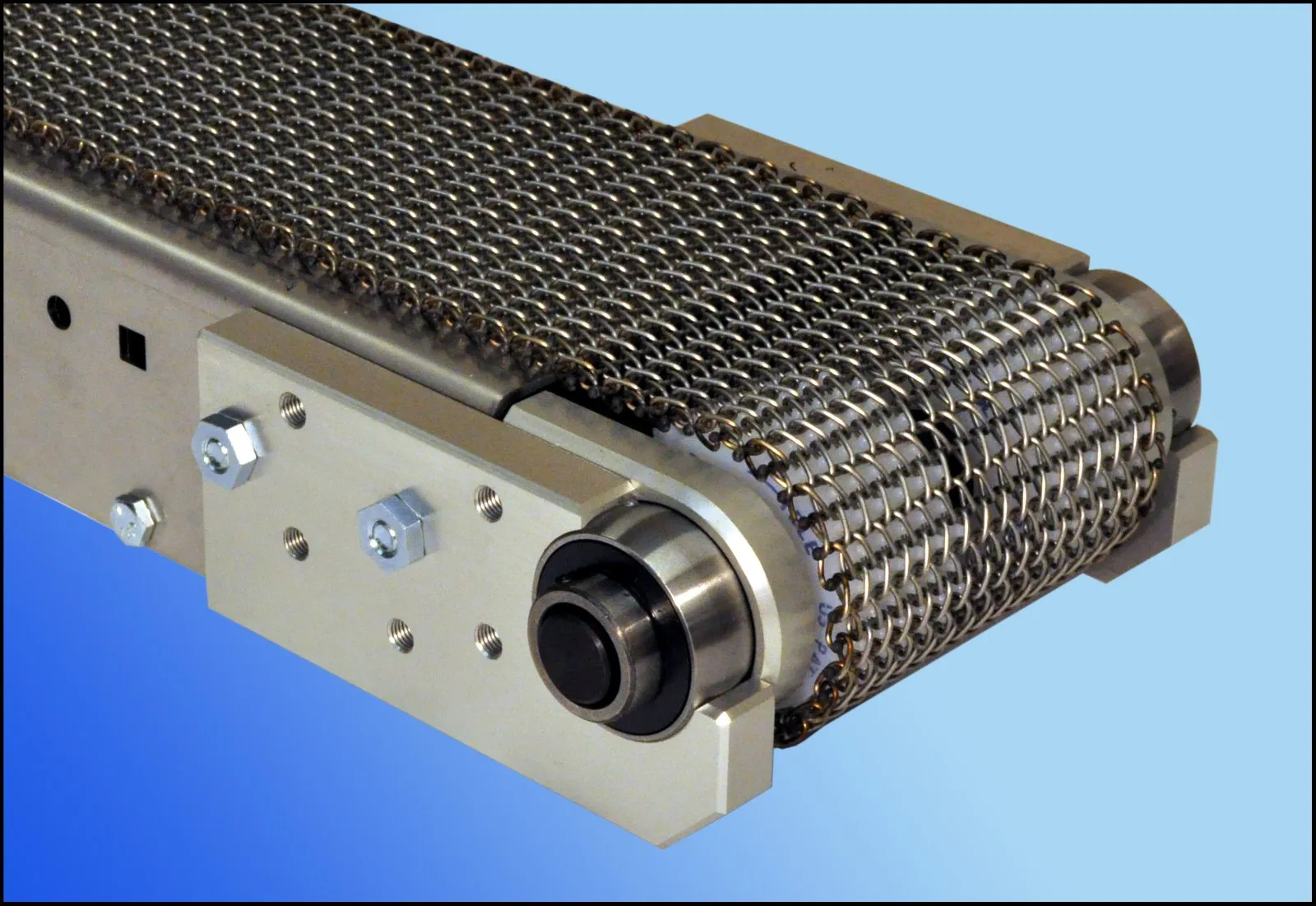
Open stainless steel mesh with replaceable individual belt sections.
Used for Hot, wet or oily parts, and processes where air or fluid must pass through.
- Belt
- Stainless mesh, 60% open flow area
- Key
- 7 belt widths, 2.5–12 in
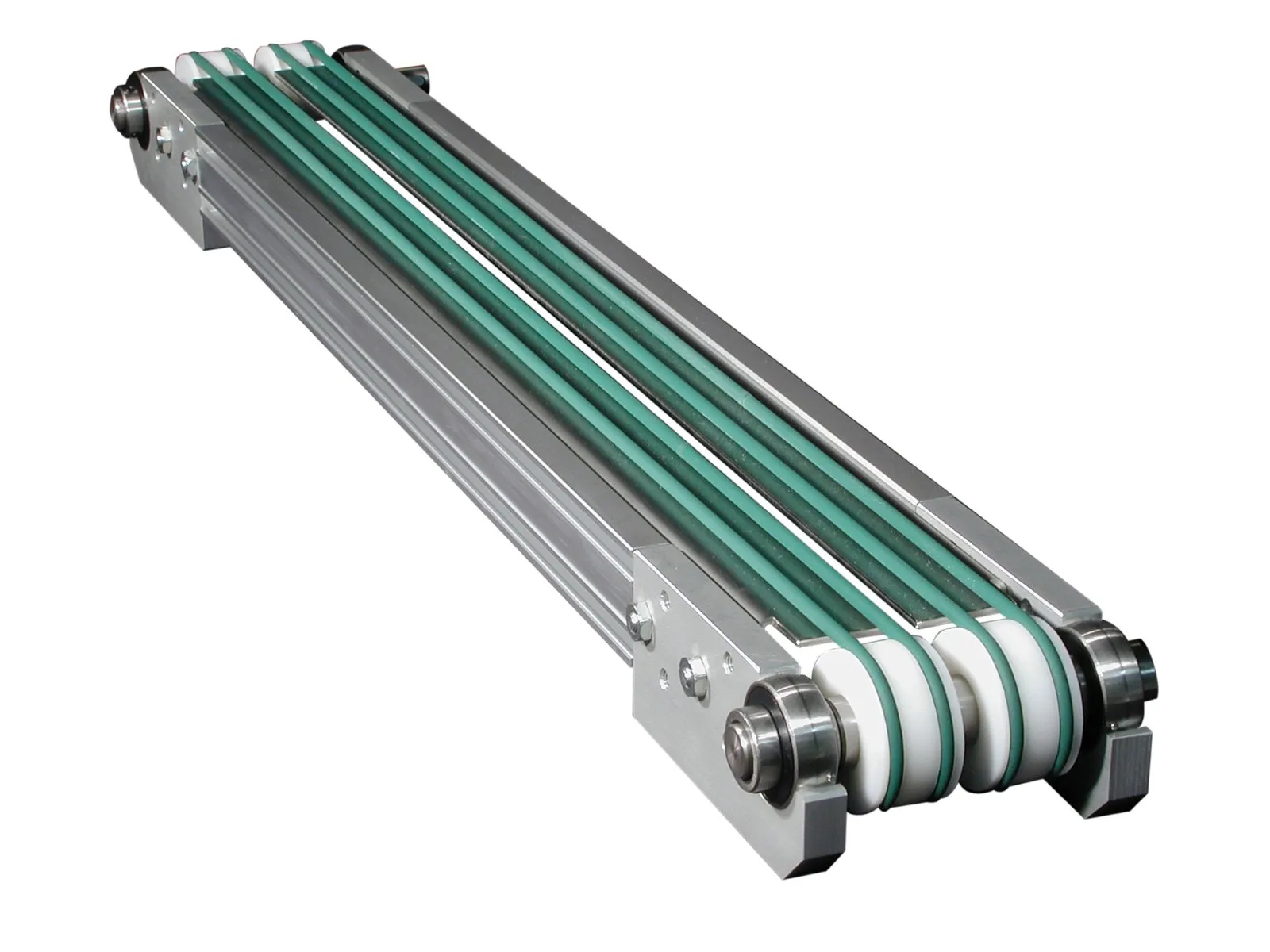
Round Belt Conveyors
Round belts and guides for irregular parts, including parts that project below the belts.
Used for Irregular parts that need support at set points, with room below.
- Belt
- Solid urethane round belts
- Key
- Up to 250 ft/min
Index and position
Stop, position and synchronise parts at working stations. · 4 conveyors
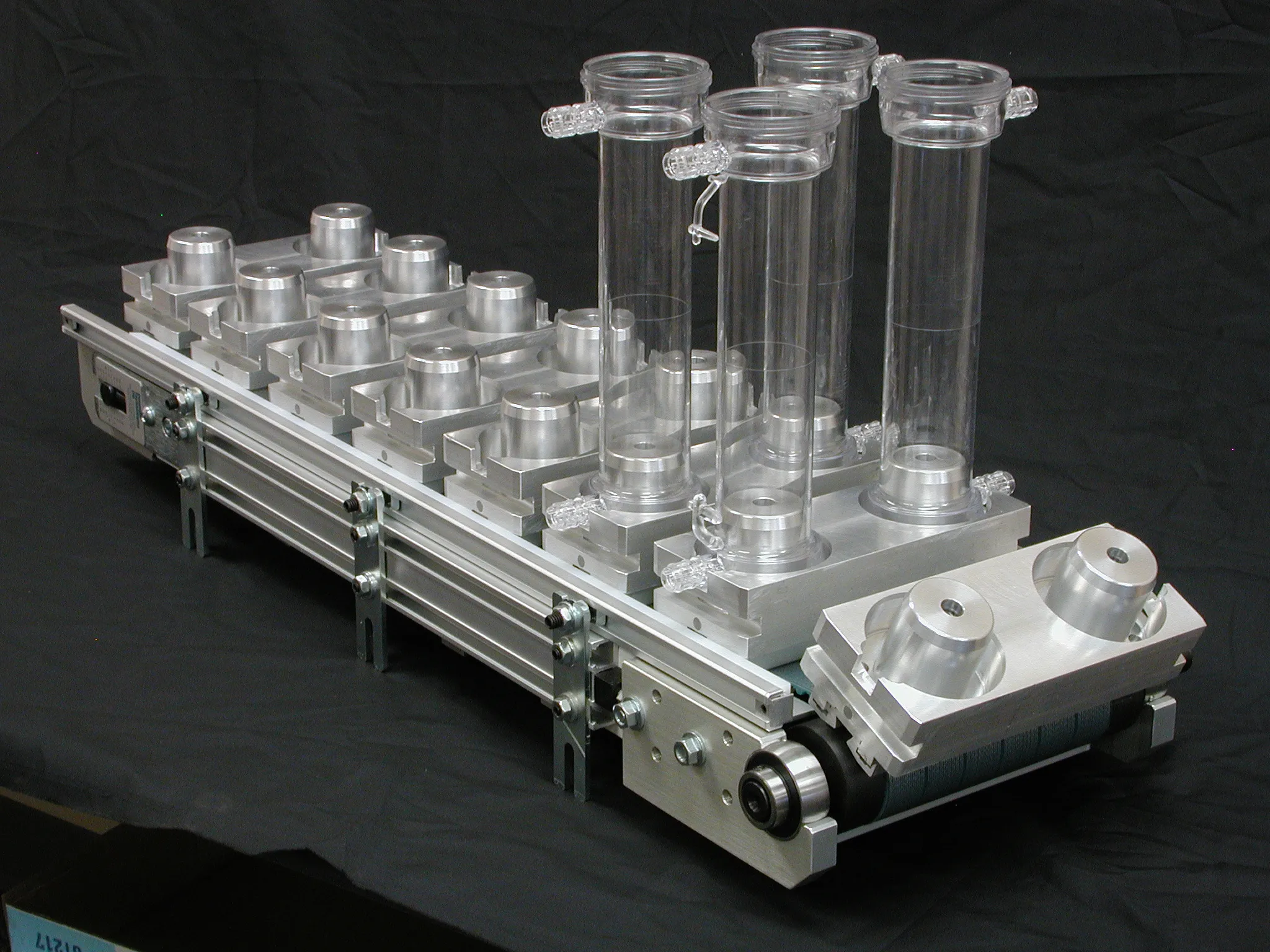
AccuMove Conveyors
Timing belts for indexing, reversing and synchronous movement of multiple conveyors.
Used for Indexing parts to working positions and synchronising conveyors.
- Belt
- Reinforced urethane timing belt
- Key
- Up to 2,000 ft/min
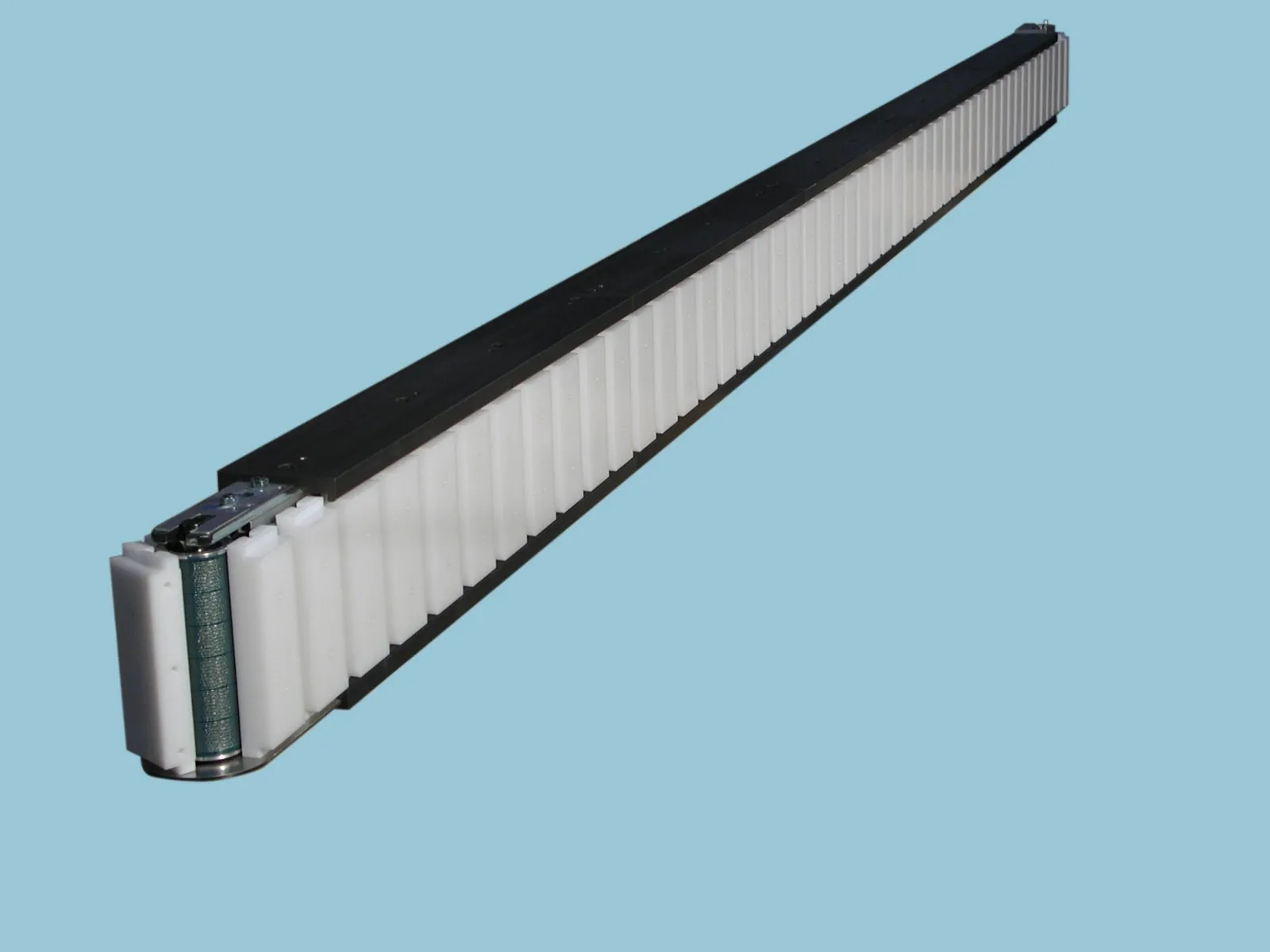
Carousel Indexing Conveyor
Guided, replaceable holders that present parts upright.
Used for Presenting parts upright from station to station.
- Belt
- Guided holders, 105 mm belt
- Key
- 41, 70 or 99 in long
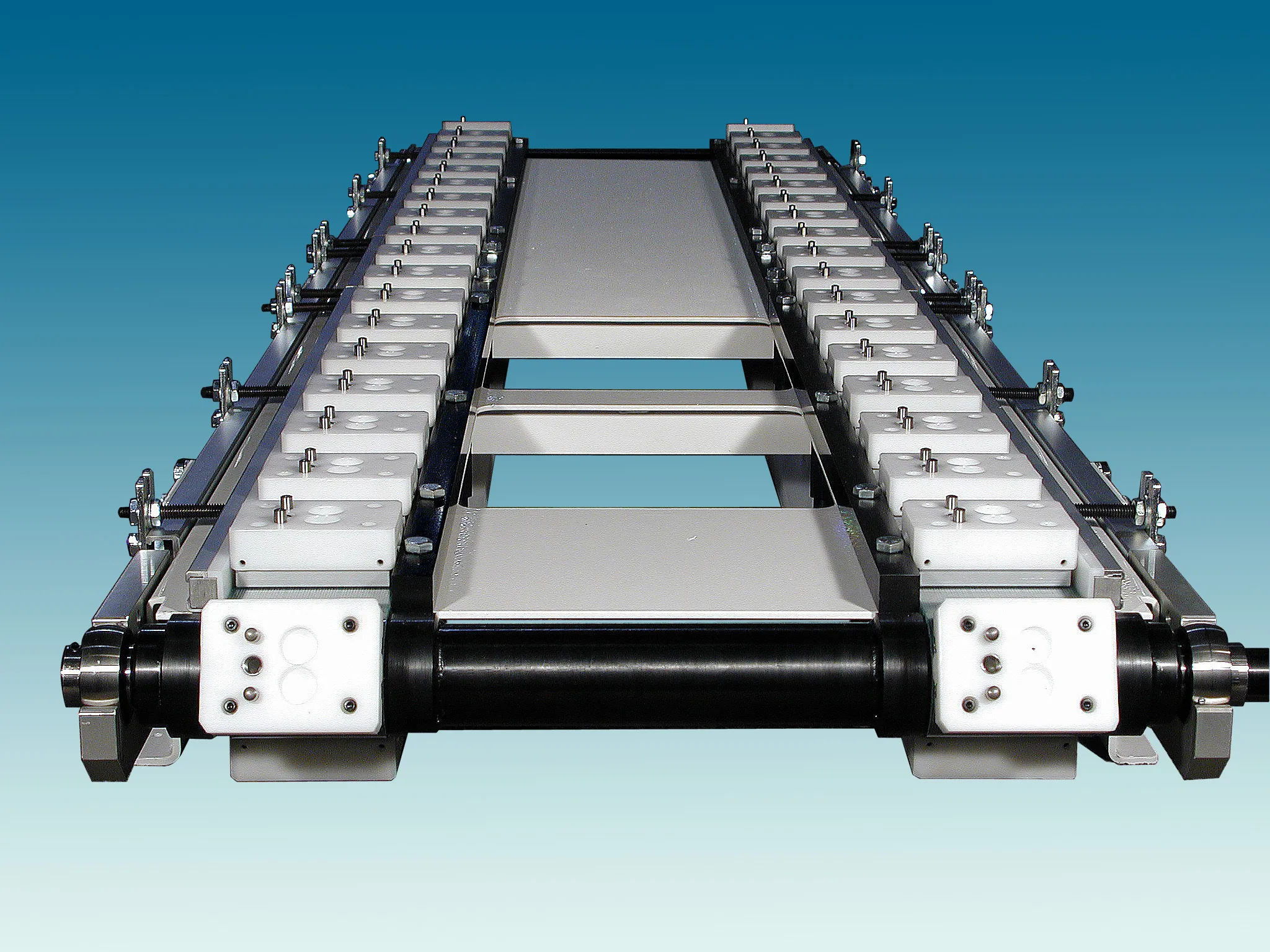
Dual Belt Indexing Conveyor
Separate holders or holders spanning two timing belts.
Used for Parts too wide or awkward for a single belt.
- Belt
- Dual timing belts
- Key
- Holders up to 24 in (610 mm) wide
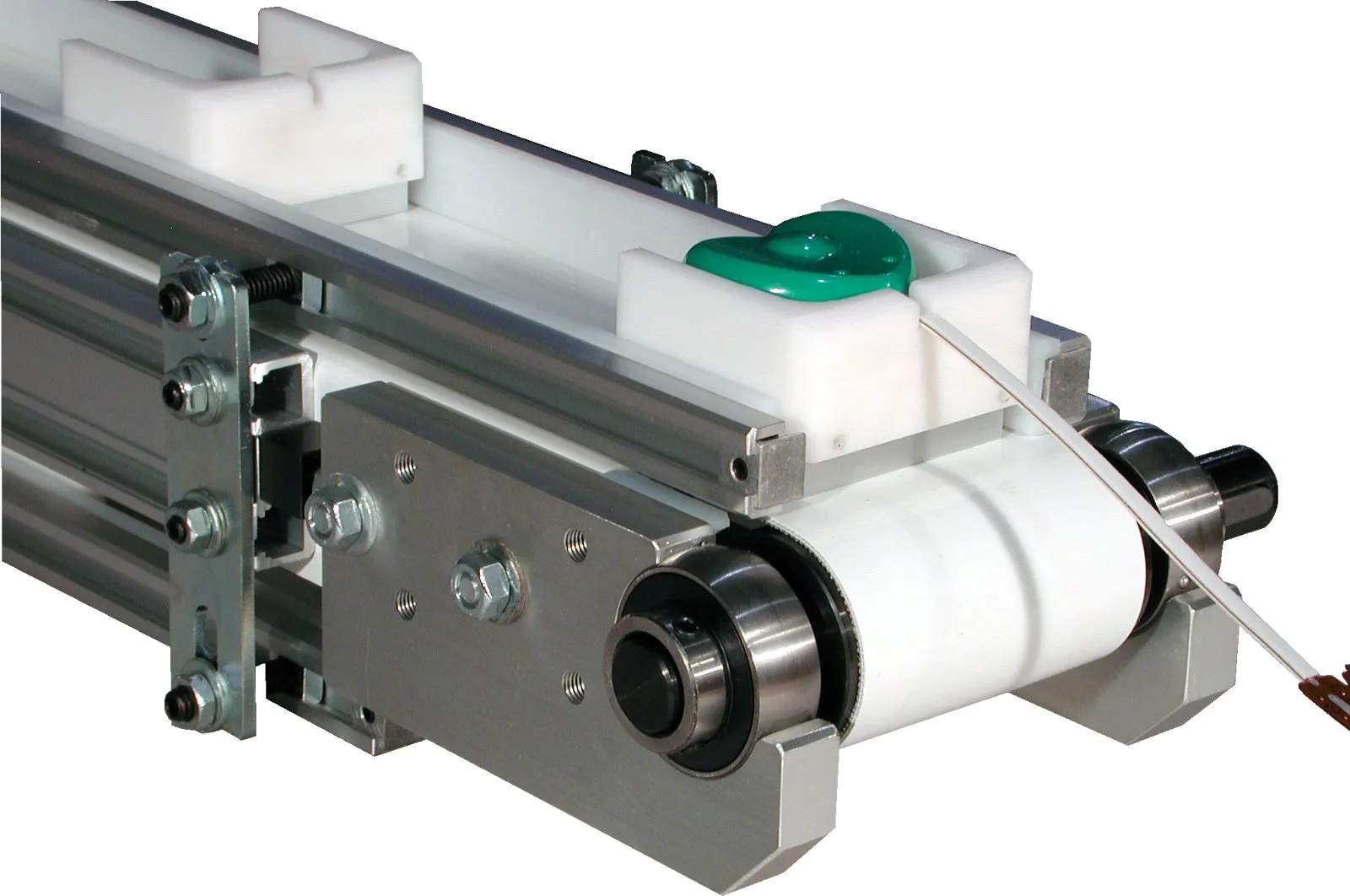
FlexLoc Conveyors with Convertible Holder System
Guided holders and sub-plates that can be removed without tools.
Used for Keeping each part located in a holder between operations.
- Belt
- Timing or flat belt
- Key
- Holder system on the selected conveyor
Hold and present
Hold parts steady for inspection or work. · 2 conveyors
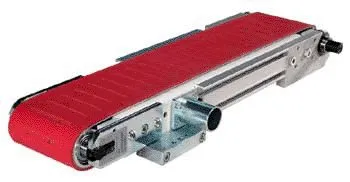
Vacuum Conveyors
A vacuum module and belt pattern for holding products.
Used for Light or unsteady parts that must hold position.
- Belt
- Patterned belt over vacuum module
- Key
- 100–500 ft/min, adjustable
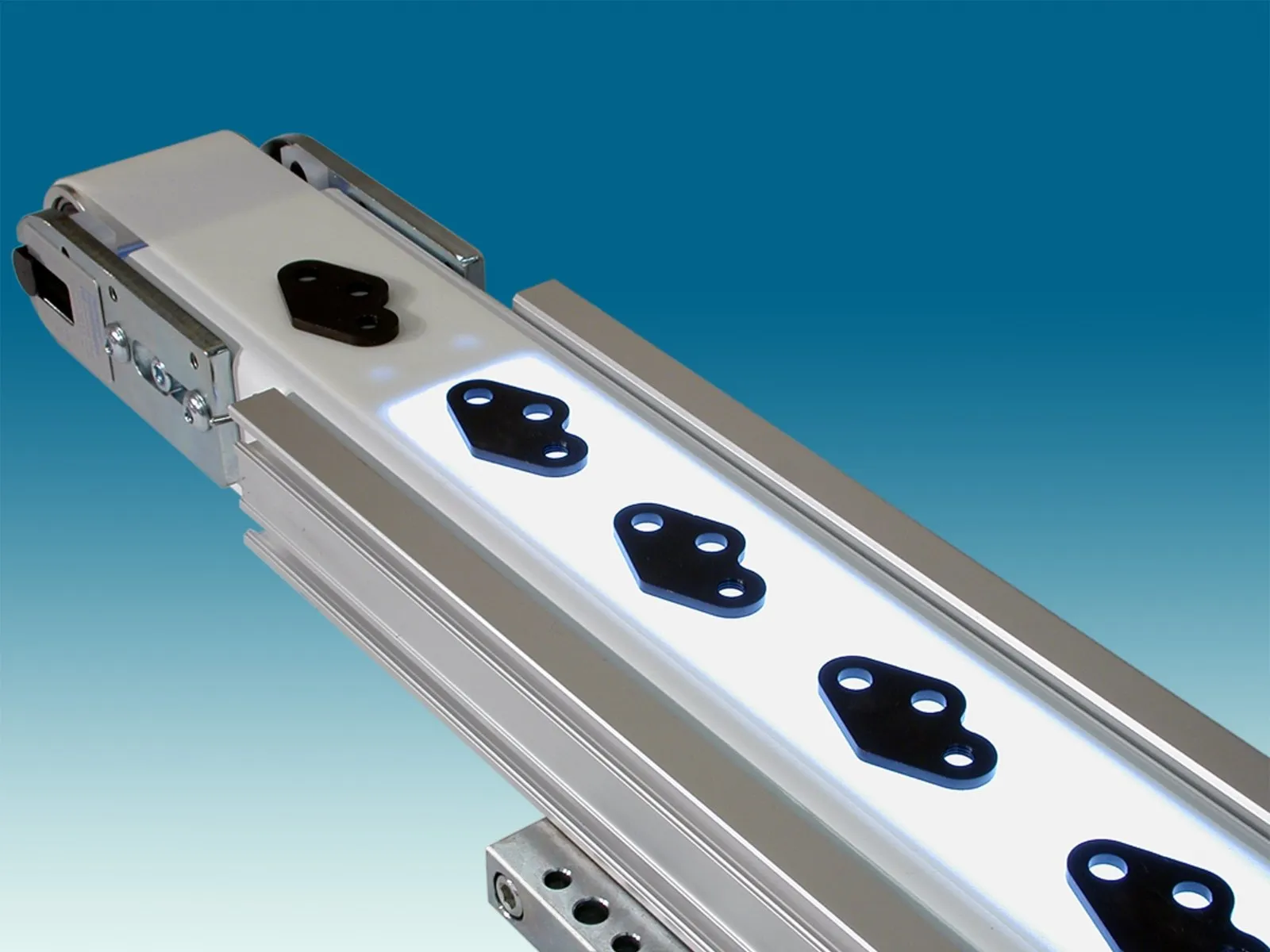
AccuVision Internal Backlit Conveyor
Internal LED backlighting beneath a translucent belt for inspection.
Used for Backlit inspection with cameras or visual checks.
- Belt
- Translucent belt over LED modules
- Key
- 2.28 in (58 mm) high
Incline and space
Climb, space and change level in a compact footprint. · 3 conveyors
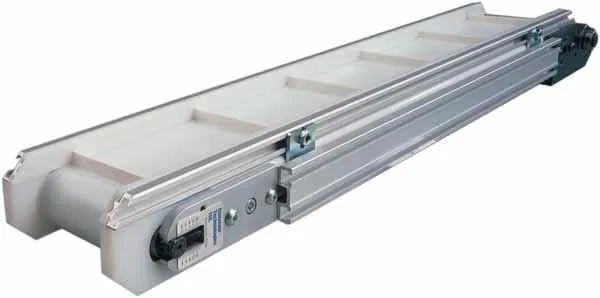
Cleated Conveyors
Cleated belts for inclined movement, spacing and part segregation.
Used for Climbing inclines and delivering evenly spaced product.
- Belt
- Cleated; 20, 30 or 40 mm standard cleats
- Key
- 9 belt widths, 2.5–24 in
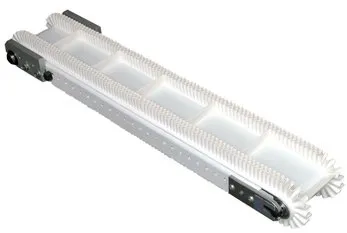
Flex-Side Cleated Conveyor
Flexible sides and cleats where contact with fixed sides is undesirable.
Used for Small or fragile products that shouldn’t rub fixed side walls.
- Belt
- Urethane or rubber, flexible sides
- Key
- 7 belt widths, 4.5–24 in
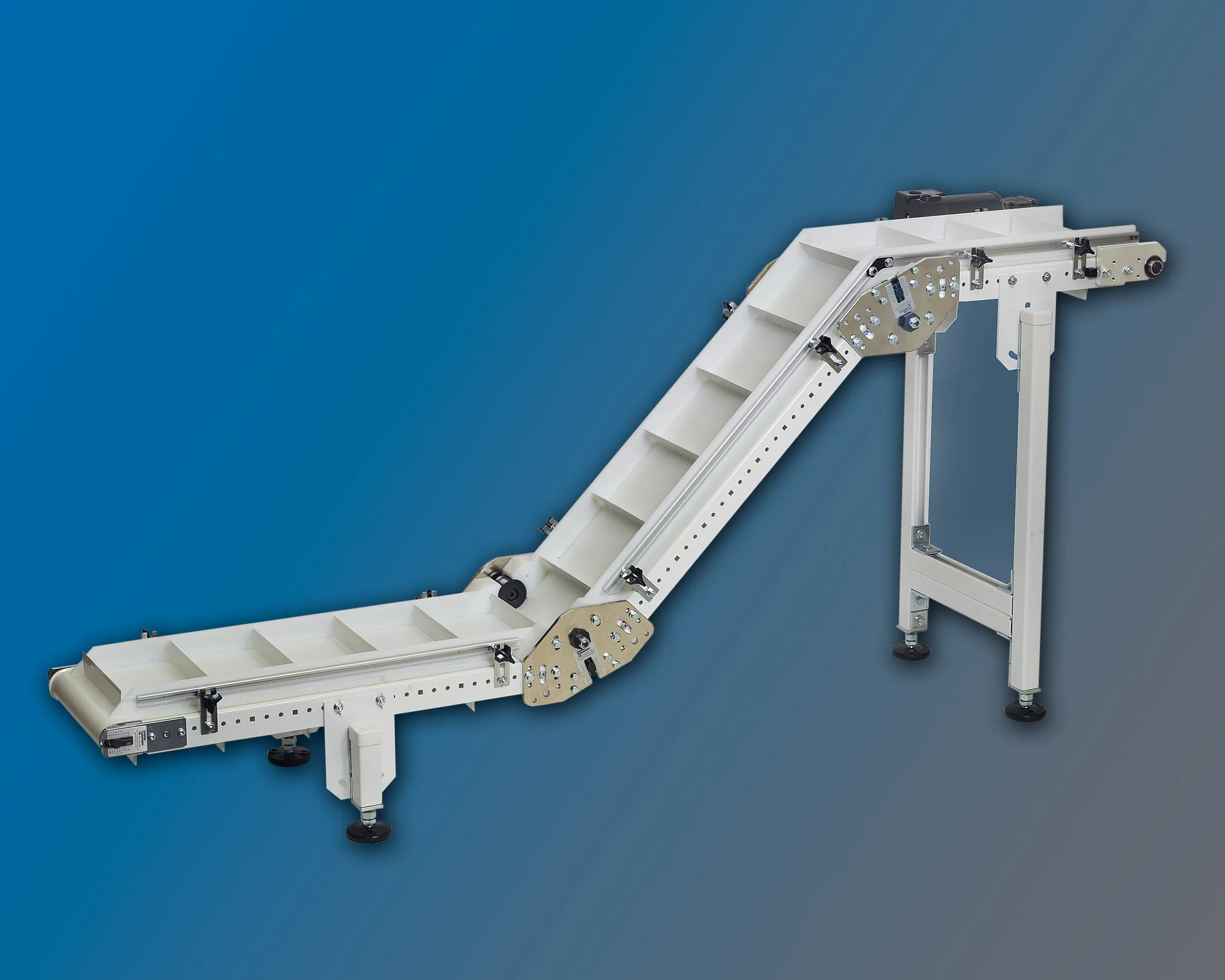
Multi-Flex VSC Variable Shape Conveyors
Repositionable frame sections for different horizontal and inclined layouts.
Used for Moving product between levels in a compact footprint.
- Belt
- Rigid-side or flex-side, with cleats
- Key
- 8 layouts
| Product | Method | Belt | Drive | Listed size or motion | Frame | Service feature |
|---|---|---|---|---|---|---|
| End-Drive Conveyors | Transport | Flat belt | At the end of the conveyor | 9 belt widths, 2.5–24 in | Steel, aluminum or stainless | Tool-free belt changes in minutes; two minutes on our open stand |
| Center Drive Conveyor | Transport | Endless flat belt | Center, repositionable in 3 in increments | 9 belt widths, 2.5–24 in | Specified with your system | Belt replaced without removing the drive; two minutes on our open stand |
| Modular Plastic Belt Conveyor | Transport | Modular plastic, 0.5 or 1.0 in pitch | AC or DC, reversible options | Up to 300 lb (136 kg) | Aluminum or stainless | Tool-free belt changes in minutes; sealed-for-life bearings |
| Wire Mesh Belt Conveyor | Transport | Stainless mesh, 60% open flow area | End or center drive | 7 belt widths, 2.5–12 in | Stainless | Individually replaceable belt sections |
| Round Belt Conveyors | Transport | Solid urethane round belts | Specified with your system | Up to 250 ft/min | Steel, aluminum or stainless | Self-tracking round belts |
| AccuMove Conveyors | Index and position | Reinforced urethane timing belt | Stepper, servo or brushless DC for indexing | Up to 2,000 ft/min | Single-piece 10-gauge steel | Self-tracking belting; tension calibration; sealed bearings |
| Carousel Indexing Conveyor | Index and position | Guided holders, 105 mm belt | Indexing, adjustable speed | 41, 70 or 99 in long | Aluminum or stainless | Replaceable holders |
| Dual Belt Indexing Conveyor | Index and position | Dual timing belts | Specified with your system | Holders up to 24 in (610 mm) wide | Aluminum or stainless | Belts and holder plates calibrated together at setup |
| FlexLoc Conveyors with Convertible Holder System | Index and position | Timing or flat belt | AC or DC | Holder system on the selected conveyor | Aluminum or stainless | Tool-free holder and sub-plate changes |
| Vacuum Conveyors | Hold and present | Patterned belt over vacuum module | At the end or in the center | 100–500 ft/min, adjustable | Steel, aluminum or stainless | Tool-free belt replacement |
| AccuVision Internal Backlit Conveyor | Hold and present | Translucent belt over LED modules | Fixed, variable or indexing | 2.28 in (58 mm) high | Extruded aluminum side rails with dual T-slots | Two-minute belt change on our open stand |
| Cleated Conveyors | Incline and space | Cleated; 20, 30 or 40 mm standard cleats | AC or DC, reversible options | 9 belt widths, 2.5–24 in | Steel, aluminum or stainless | Belt replaced without removing the drive; two minutes on our open stand |
| Flex-Side Cleated Conveyor | Incline and space | Urethane or rubber, flexible sides | AC or DC, reversible options | 7 belt widths, 4.5–24 in | Steel, aluminum or stainless | Belt changed without removing the drive; two minutes on our open stand |
| Multi-Flex VSC Variable Shape Conveyors | Incline and space | Rigid-side or flex-side, with cleats | Fixed or variable speed | 8 layouts | Stainless construction available | Tool-free belt removal; sealed bearings |
No conveyors match all the selected filters.
How we choose
Four questions that narrow the choice.
The part, the motion, the layout and the service access each rule conveyors in or out. Our engineers work through them with you and match the conveyor to the part as it enters and leaves the operation.
Answer them in the finderHow must the part be supported and presented?
Guides contain products, holders set part positions and cleats provide spacing or incline flow. Backlighting, vacuum holding and open conveying surfaces serve different inspection and handling tasks.
An irregular underside, a set holding position and an edge lit for inspection each call for different features.
What movement does the process require?
AccuMove uses timing belts for indexing, reversing and synchronous movement of multiple conveyors. Cleated and Flex-Side conveyors organize products during inclined movement. The drive and conveying surface work together to provide the movement and spacing.
How will the conveyor fit into the layout?
End-Drive places the drive at one end. Center Drive puts it beneath the conveyor, leaving the transfer ends clear. Multi-Flex VSC uses repositionable frame sections to change the layout.
Conveyor stands cover aluminum, steel and shared arrangements; side guides cover fixed, two-axis and hold-down options.
What access is needed for adjustment and belt changes?
End-Drive includes belt-tension calibration. AccuMove combines self-tracking belting, tension calibration and sealed bearings. Tracking and maintenance features depend on the belt construction and the conveyor.
AccuVision allows a two-minute belt change when mounted on our open stand design. Each product page sets out its belt-change mechanism and conditions.
Why one system
One modular system vs a one-off conveyor
All 14 conveyors are built on one patented modular concept. Here’s what that changes once the conveyor is on your floor.
| Aspect | Conveyor Technologies modular system | A one-off conveyor |
|---|---|---|
| Parts between conveyor types | Components interchange across the range | Specific to that build |
| Drives, guides and stands | Standard drives and accessories shared between conveyor types | Chosen and sourced for each build |
| Bearings | Sealed, lubricated for life; no routine relubrication | Depends on the design |
| Belt tension | Calibration gauges on each side show length and tension position | Depends on the design |
| Belt changes | Tool-free on most models; two minutes on our open stand for AccuVision, End-Drive, Center Drive, Cleated and Flex-Side | Depends on the frame and access |
| Adding a second line | Same parts, drives and know-how carry across | Starts again from a new design |
Other ways in
Starting from somewhere else?
If you know the requirement, the problem or the process better than the product, begin there.
- A known requirement such as size, load, motion or cleaningConveyor Selection Guide
- A product catches, tips, drifts or backs upTransfer & Product Control Guide
- An automated cell, inspection station or machine integrationConveyor Applications
- A production process such as stamping, molding or packagingIndustries Served
- An installed conveyor, identifier known or notEquipment Identification