Application
Conveyors for OEM & Machine Integration
Build conveyor movement into your machine, with room left to service it.
We arrange the product path, drive and mounting inside your frame, workstation or enclosure, keeping the belt and service points reachable.
Design it in CAD and export STEP files, or let our engineers design it.
01How it works
Choose where the drive goes
The drive position decides what space the conveyor takes up around the product path.
End-Drive Conveyors
Motor and gearbox at the end of the conveyor, outside the working area.
Useful when parts pass through the machine and the drive can sit at one end.
End-Drive →Center Drive Conveyor
Drive underneath, between the ends.
Useful when products enter or leave right next to other equipment.
Center Drive →
02In detail
Fitting it into the frame
Low-profile frames
The low frame height puts the conveying surface under work areas and between stations. Extruded aluminum frames have holes and slots for fixing to your structure. Plan space for the motor, gearbox and mounting hardware too.
Access around the conveyor
Leave clear infeed and discharge, room for guards and sensors, and a path for belt removal and maintenance. We plan the supports around these points.
Machine mount or stand
Machine mounting fixes the conveyor to your structure; stands support it on its own.
03In detail
Belt, frame and motion
Conveying surface
Choose belt width, length and surface: a continuous belt for ordinary transport, timing belts for indexed motion, modular plastic or wire mesh for different jobs. Urethane and silicone are among the belt materials, where the configuration allows.
Frame finish
Anodized aluminum, powder coat or stainless steel, depending on the conveyor. Wet operation and cleaning decide which fits.
Motion to match the machine cycle
Fixed speed, adjustable speed, or index and dwell, using AC or brushless DC motors, or a servo interface. Speed, direction and index commands connect to your machine; interface compatibility depends on the arrangement.
04Recommended conveyors
Conveyors for specific jobs in the machine
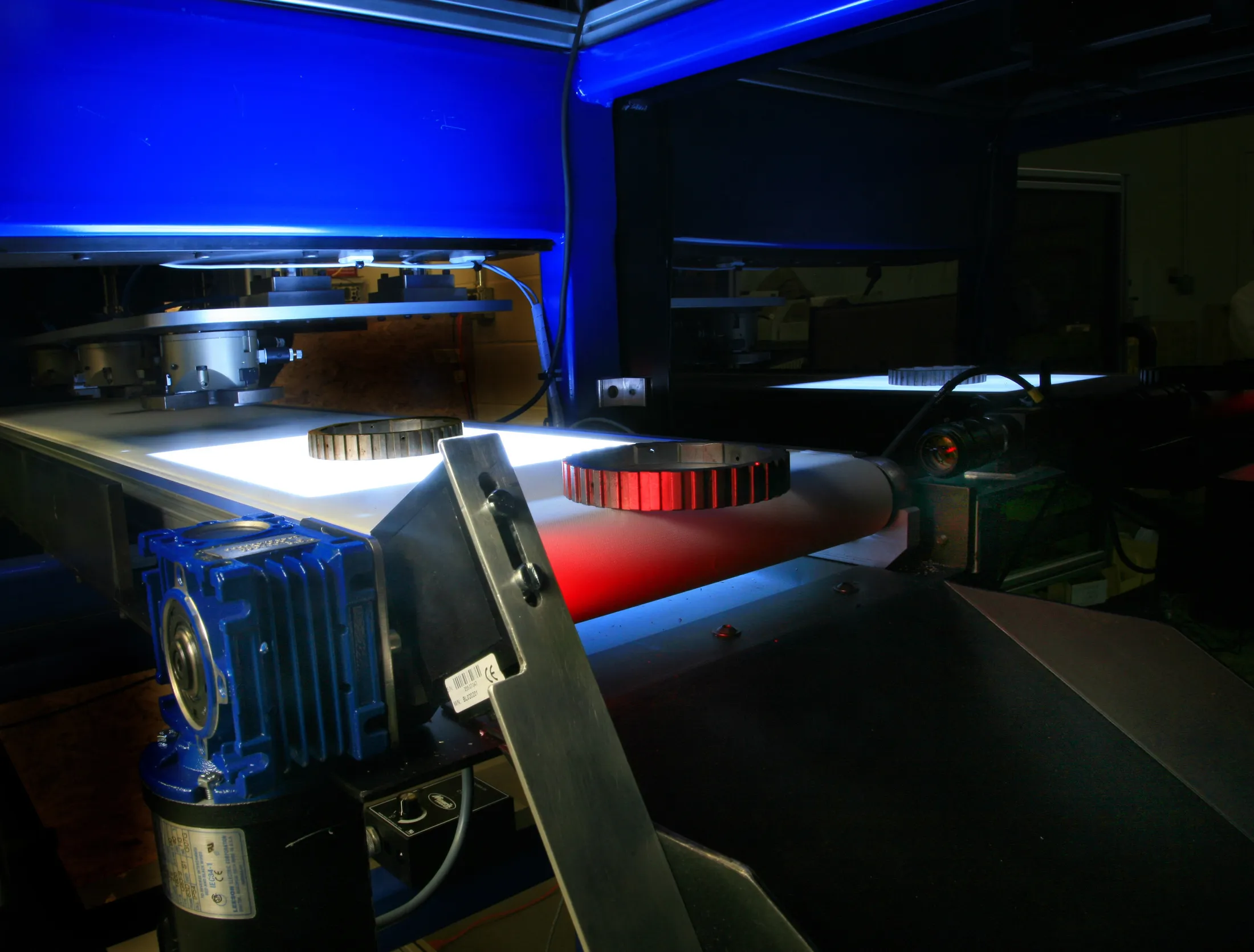
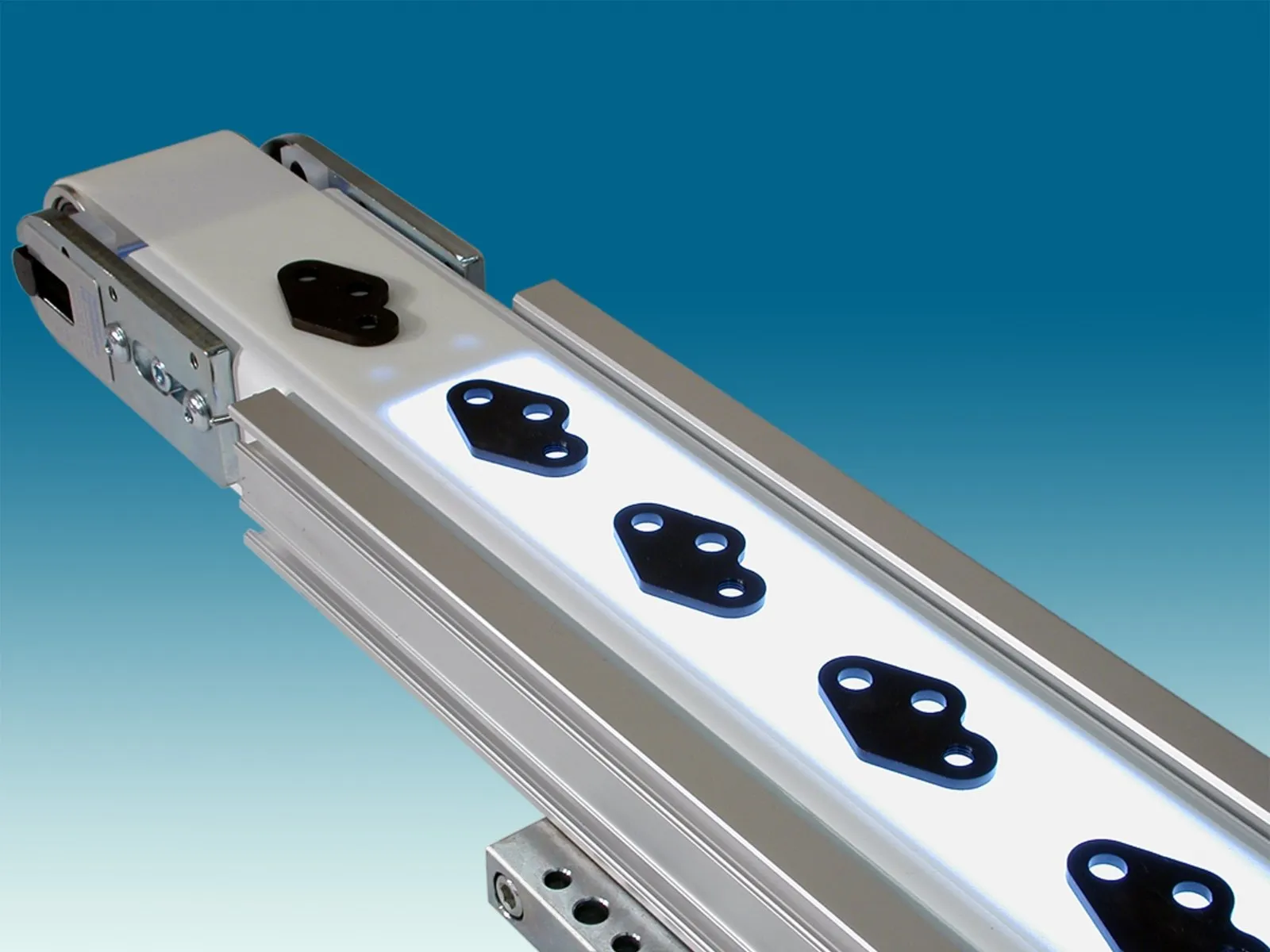 ConveyorAccuVision puts LED lighting under a translucent belt for visual inspection.
Inspect the part
AccuVision puts LED lighting under a translucent belt for visual inspection.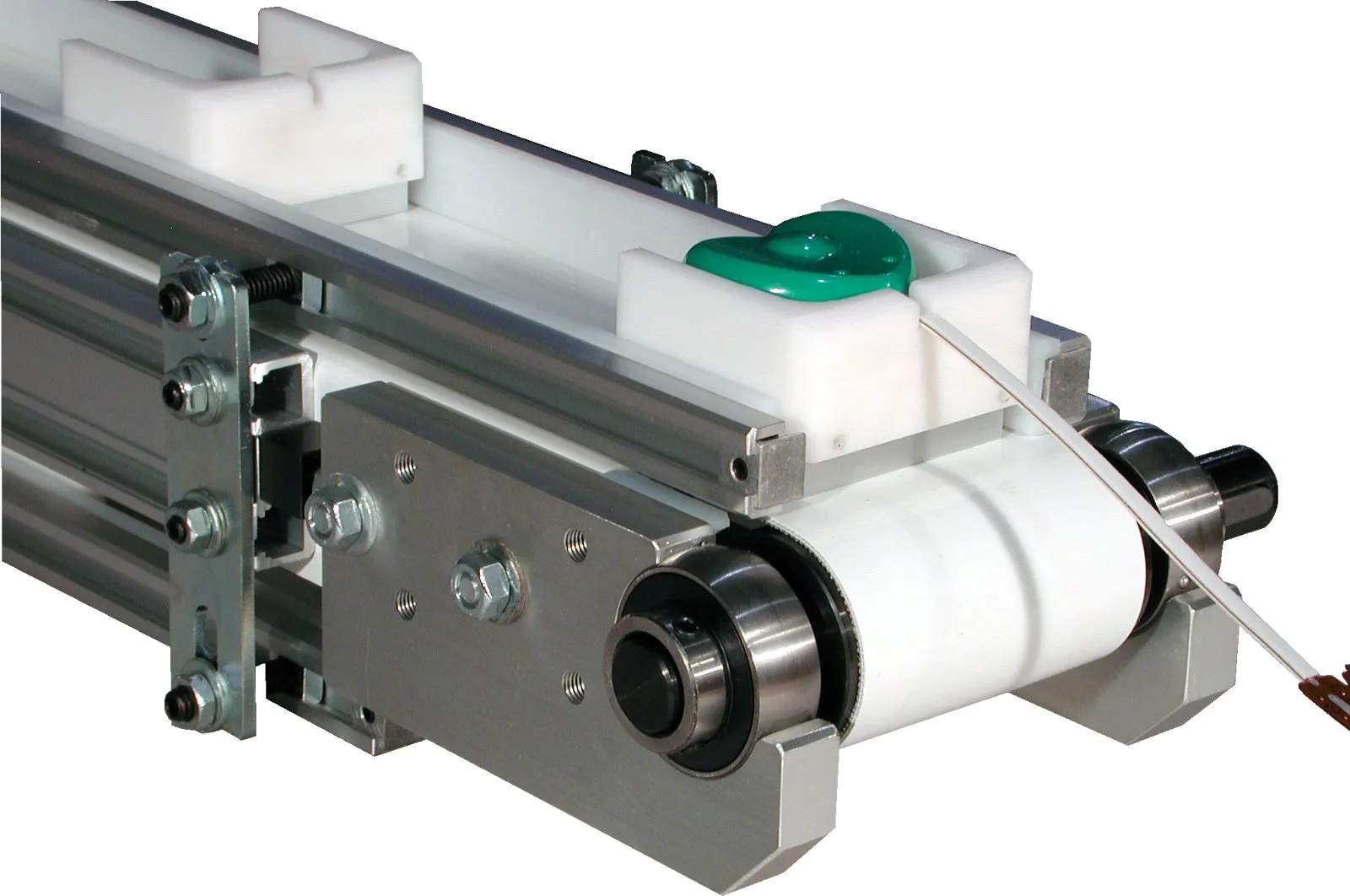 ConveyorDual Belt Indexing and FlexLoc carry parts in guided holders that locate them at each station.
Carry parts through stations
Dual Belt Indexing and FlexLoc carry parts in guided holders that locate them at each station.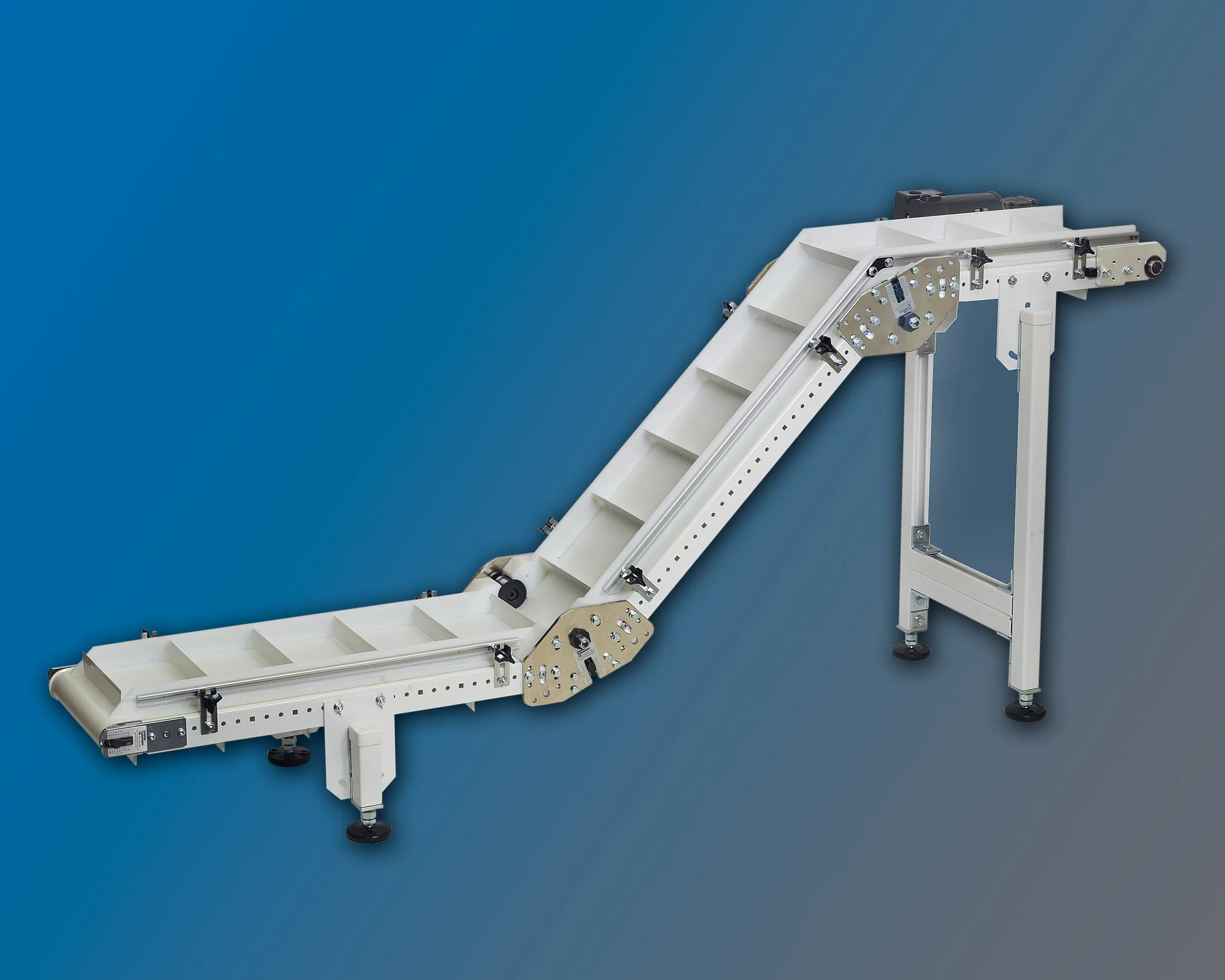 ConveyorCleated Conveyors for inclines and spacing; Multi-Flex VSC for routing between levels.
Change height or separate products
Cleated Conveyors for inclines and spacing; Multi-Flex VSC for routing between levels.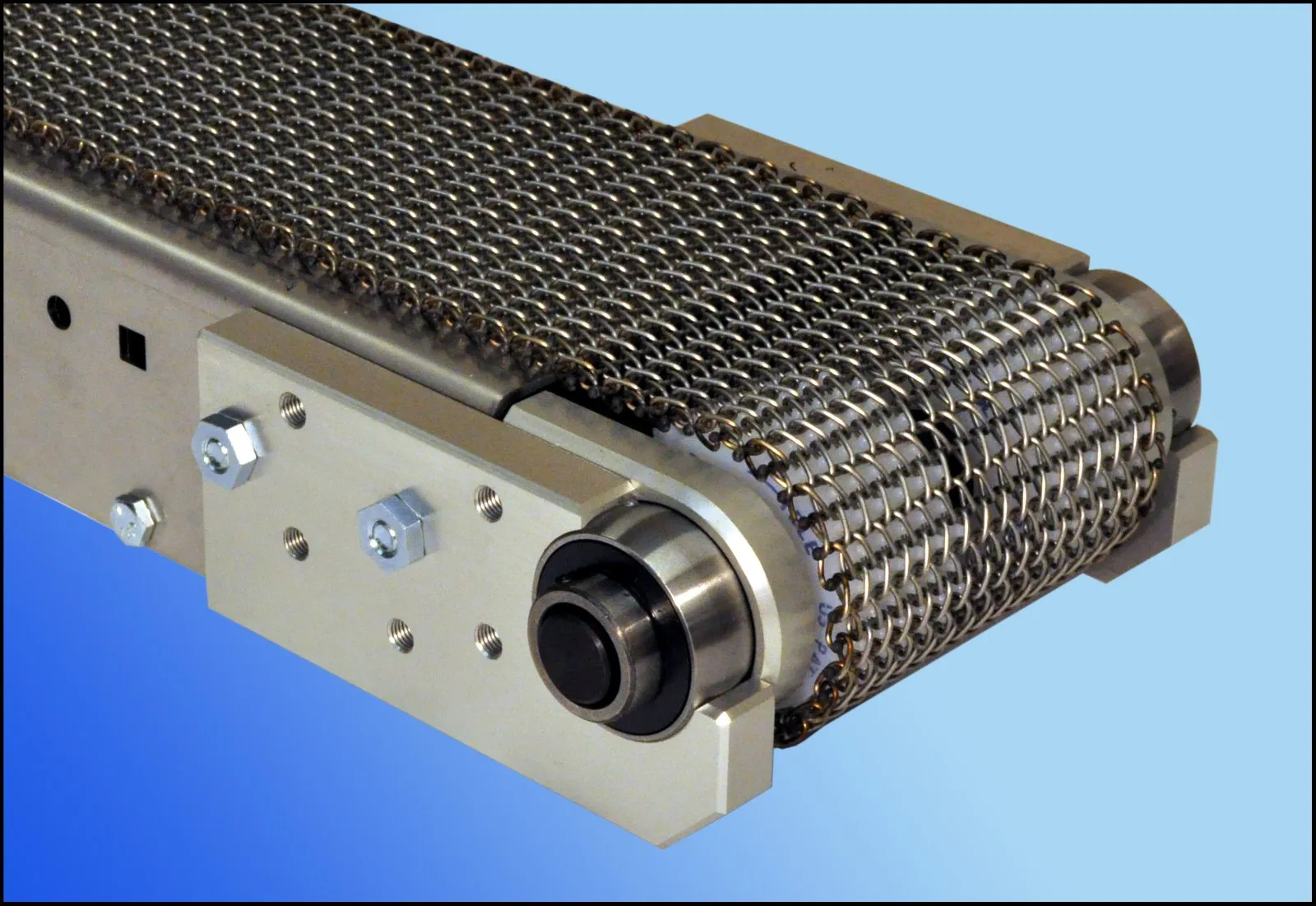 ConveyorWire Mesh Belt Conveyor for heating, cooling, washdown and drainage.
Let air or fluid through
Wire Mesh Belt Conveyor for heating, cooling, washdown and drainage.