Industry
Conveyors for Metalworking & Stamping
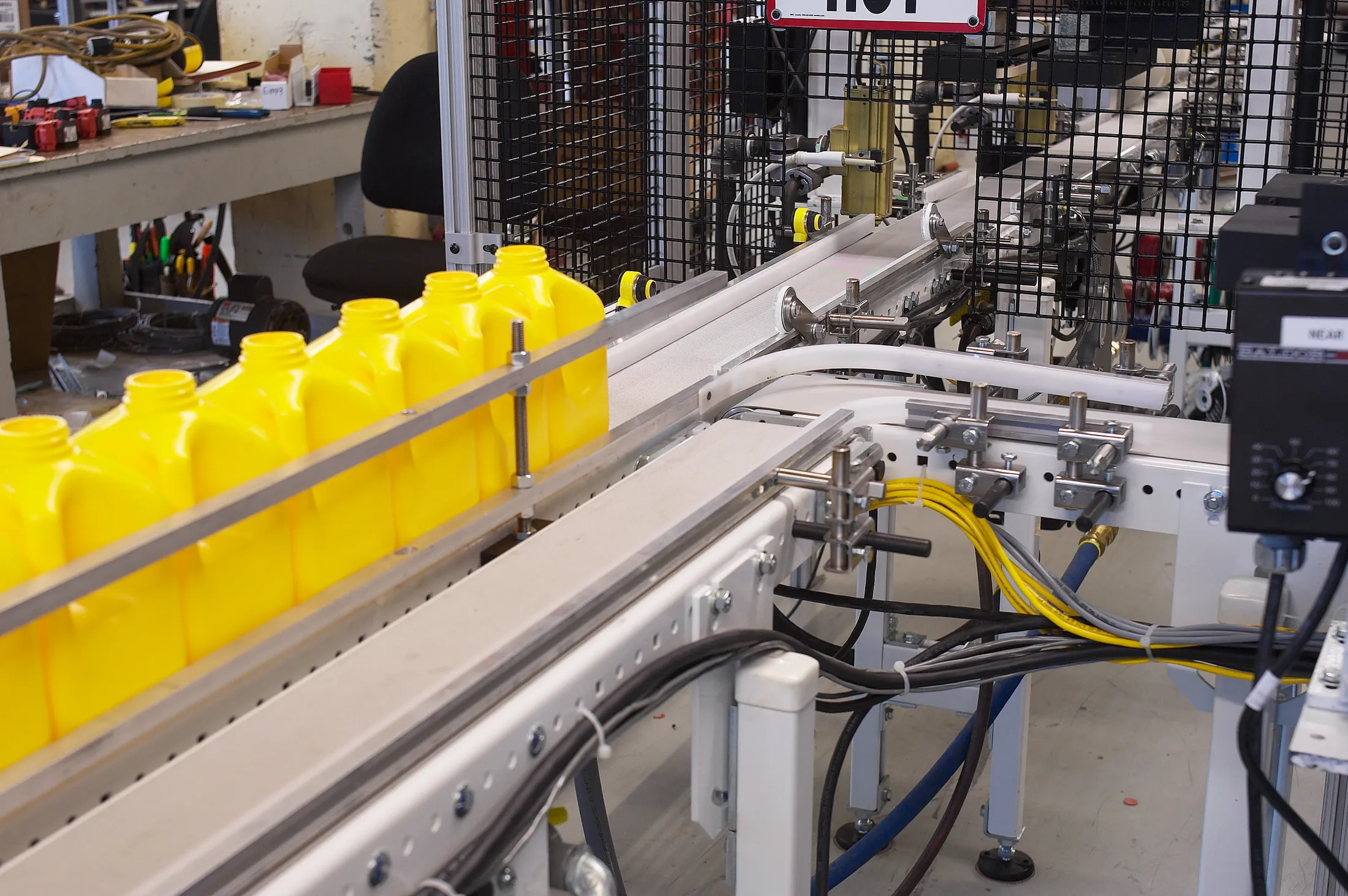
Catch parts and clear scrap from under the die, in the space the press leaves you.
We fit the belt, drive and mounting around your material, the press clearance and the route to collection or the next operation.
Design it in CAD and export STEP files, or let our engineers design it.
01In detail
Finished parts
Catch ejected parts
A conveyor under the die receives parts as they leave the tooling and carries them to collection or the next operation. Its length and discharge set the onward path.
Protect the part surface
Urethane and rubber belts are available. A finished part may need a gentler surface; sharp scrap edges need a tougher one. We choose for the weight, finish and oil exposure of what’s carried.
Hand parts to the next station
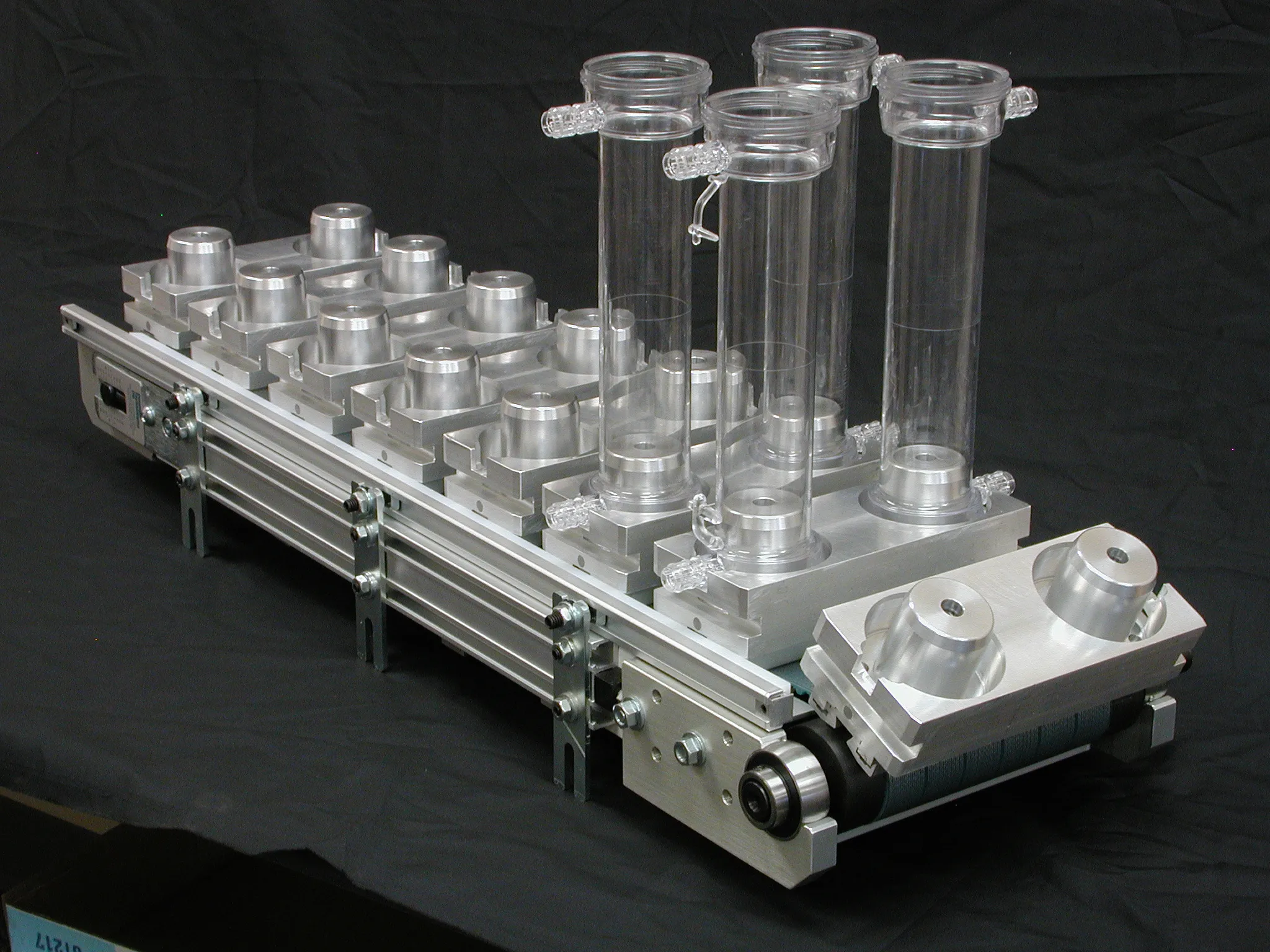
Timing belts and holders position parts for inspection, assembly or robots, when the next station needs a set orientation as well as controlled travel.
02How it works
Scrap removal
Slugs, chips and offcuts
Scrap drops from the die opening or chute onto the conveyor, which carries it to collection. Length and discharge are fitted to the press layout.
Lift scrap to a bin or shredder
Cleats carry scrap up an incline with spacing along the belt. We choose a belt for the scrap’s shape, sharp edges and exposure.
Cleated →Drain oil and coolant
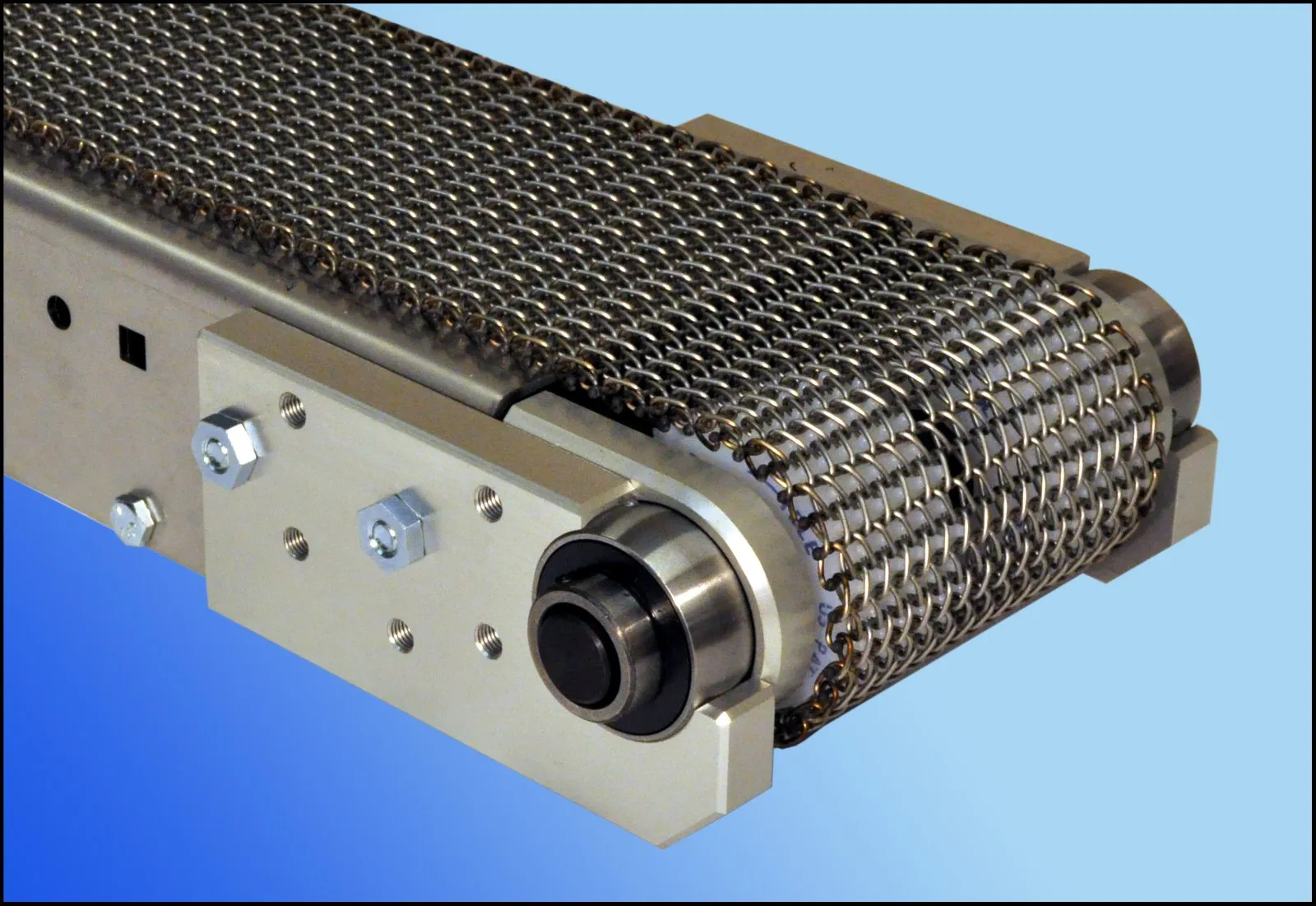
Wire mesh lets oil or coolant drain through while carrying solid material, with openings sized to support the scrap.
Wire Mesh →
03Reference
Fitting under the die
Compact aluminum frames mount to the press, to freestanding stands, or to purpose-made brackets. The motor, gearbox, supports and discharge all need space as well as the belt, and we keep access to the press and conveyor.
| Drive layout | When it fits |
|---|---|
| End-Drive | Motor and gearbox at the end of the conveyor, outside the die area where the layout allows. |
| Center Drive | Drive between the ends, where there’s no room for a motor at either end. |
04In detail
Press automation
Interfaces and timing depend on the press, conveyor and controls used together.
Follow the press cycle
Conveyors can work with progressive dies, transfer presses and robots, from the final die station or under a single station. Start and stop commands follow the press; fault signals and cycle counts report back.
Into inspection or robots
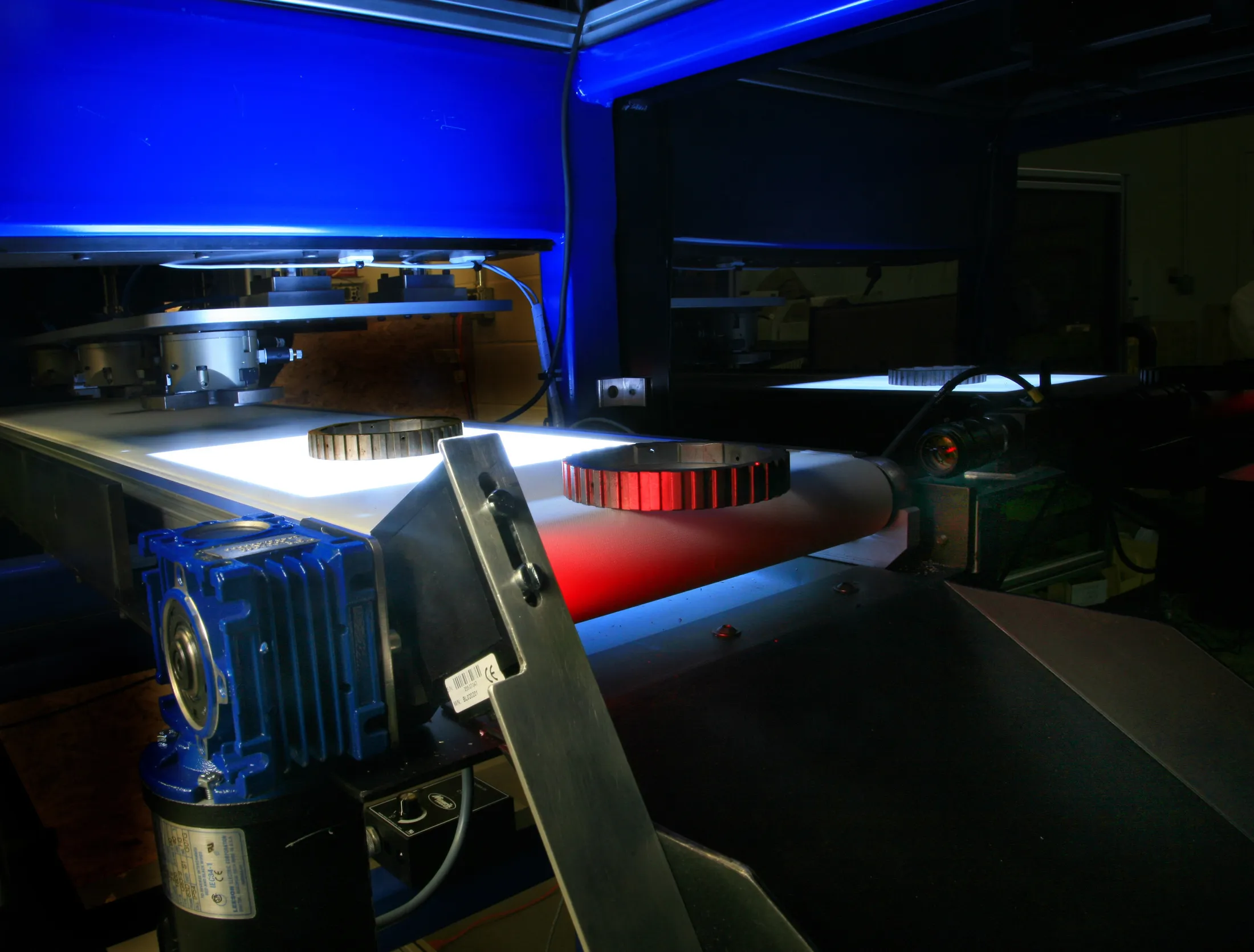
For parts going straight from the press to inspection or robotic handling.
05Conditions
Oil, coolant and bearings
Sealed-for-life bearings need no routine relubrication. Oil, coolant and metal debris still shape the belt and component choices, and the conveyor needs access for inspection and maintenance.
06Recommended conveyors
Conveyor options to explore
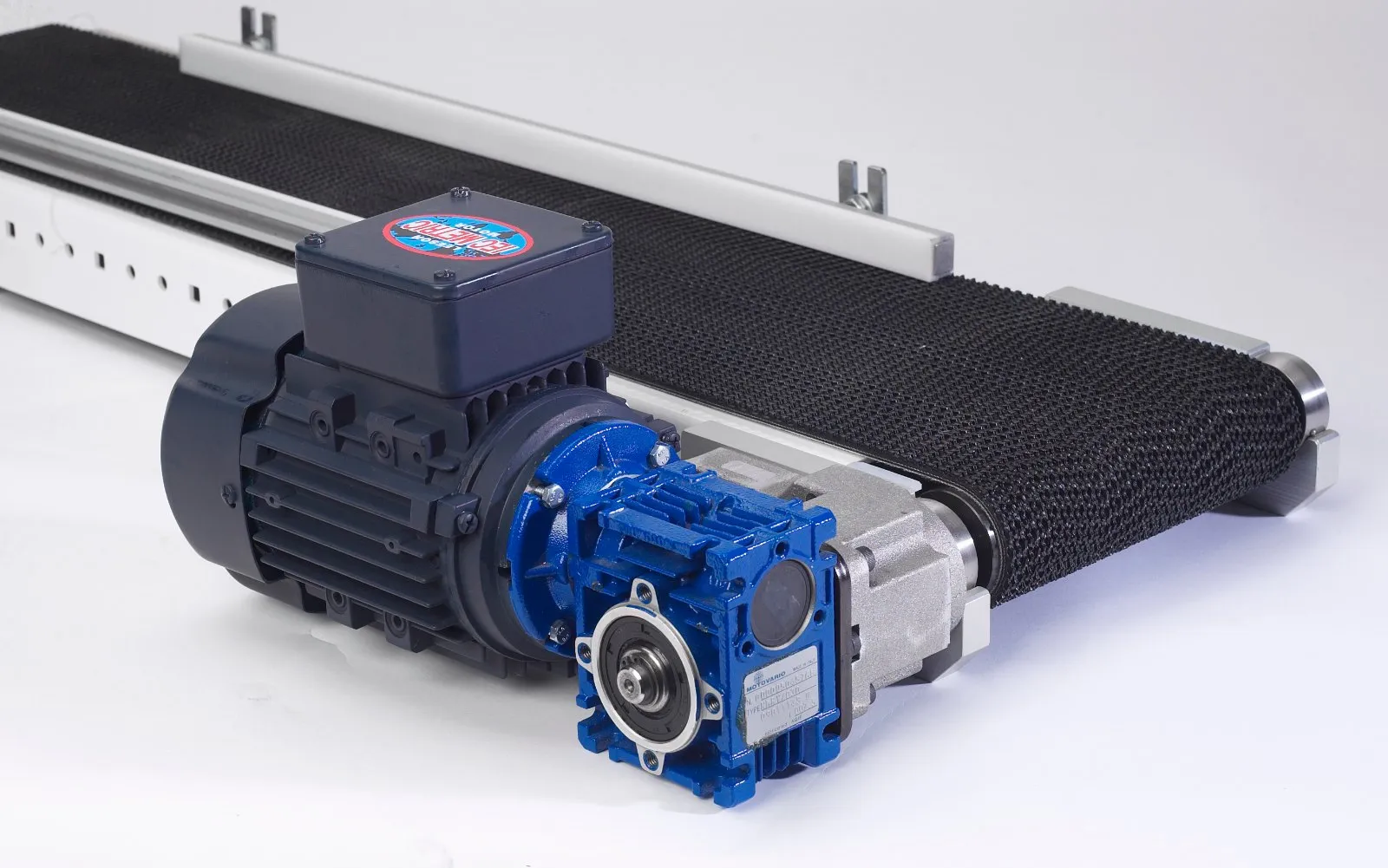 ConveyorUseful when finished parts leave the die area for collection or a secondary operation.
End-Drive Conveyors
Useful when finished parts leave the die area for collection or a secondary operation.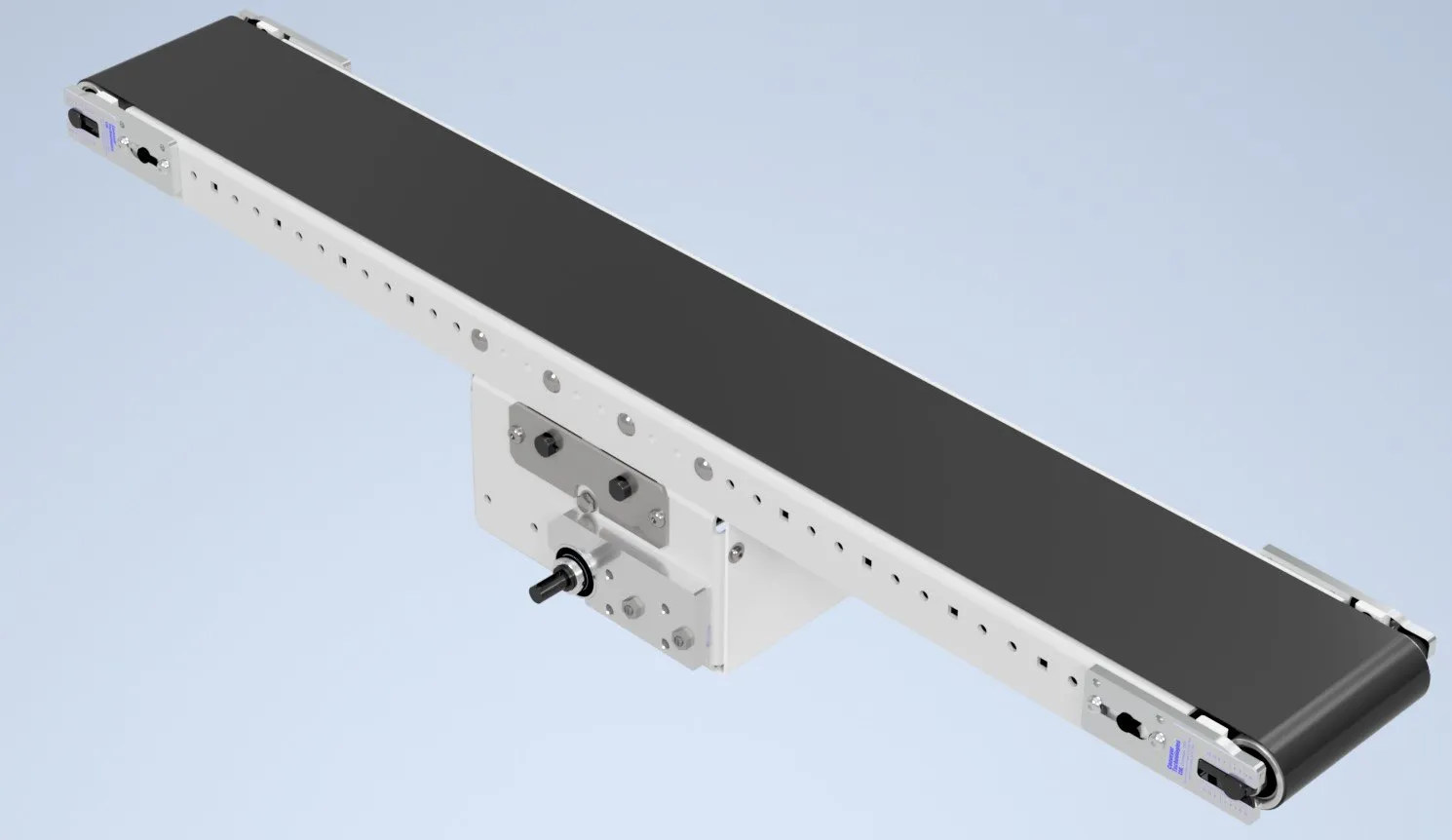 ConveyorUseful when the press and collection equipment leave no room for a motor at either end.
Center Drive Conveyor
Useful when the press and collection equipment leave no room for a motor at either end.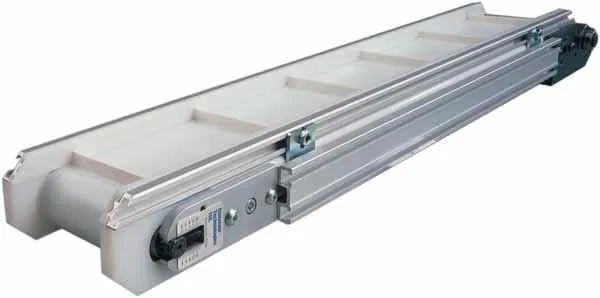 ConveyorUseful when scrap climbs from under the press to a higher bin or shredder.
Cleated Conveyors
Useful when scrap climbs from under the press to a higher bin or shredder.- ConveyorUseful when parts or scrap carry oil or coolant that needs draining.
Wire Mesh Belt Conveyor
Useful when parts or scrap carry oil or coolant that needs draining.