Application
Conveyors for Automation
Carry parts between robots, stations and inspection, and hand each one over ready to work on.
Low-profile conveyors with the motion, part holding and mounting chosen around the work at each station.
Design it in CAD and export STEP files, or let our engineers design it.
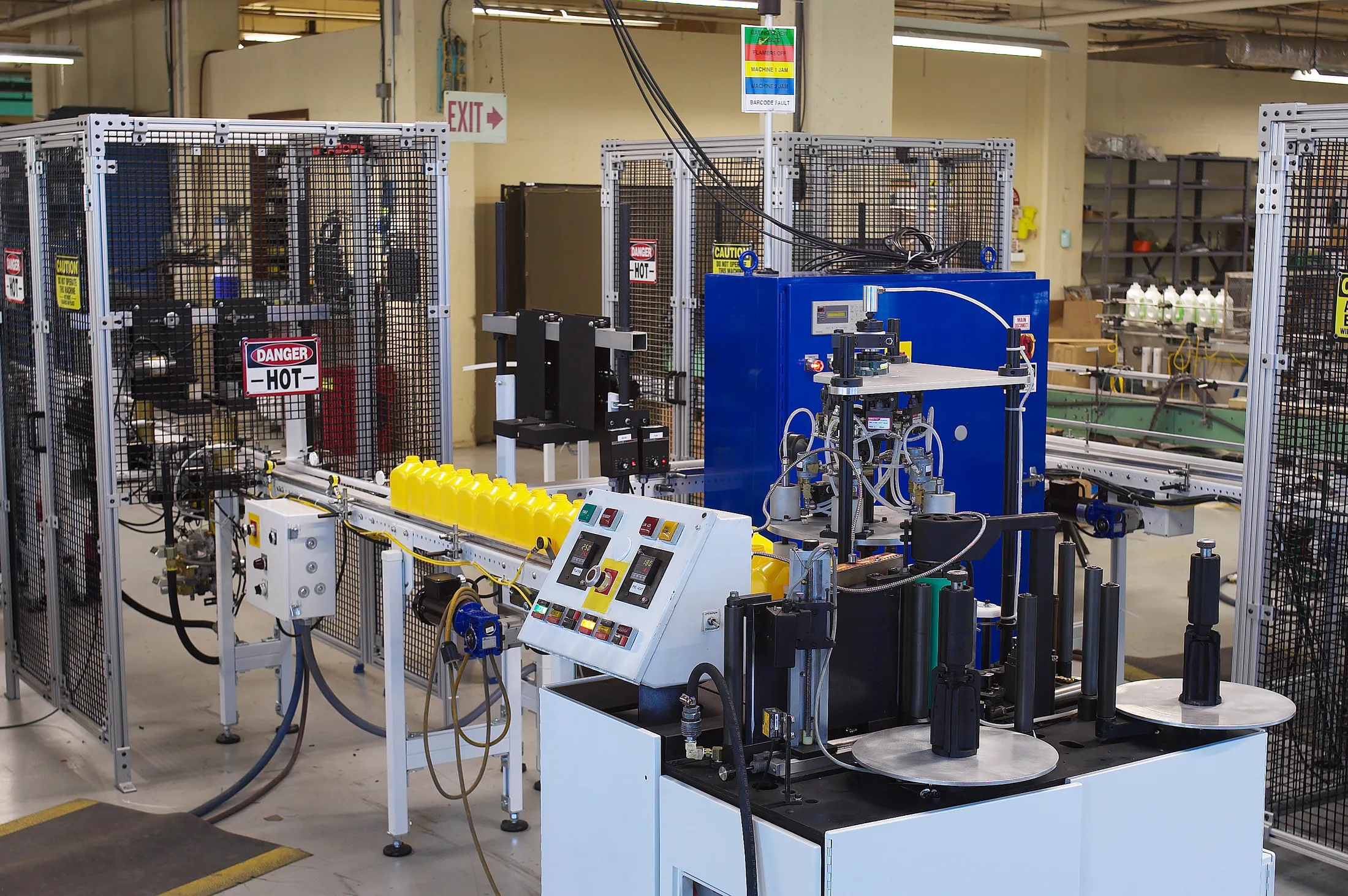
01How it works
Deliver the part to the robot
Positioning tolerance and cycle time belong to the complete conveyor, holding and control arrangement, not the belt alone.
Move to a set position
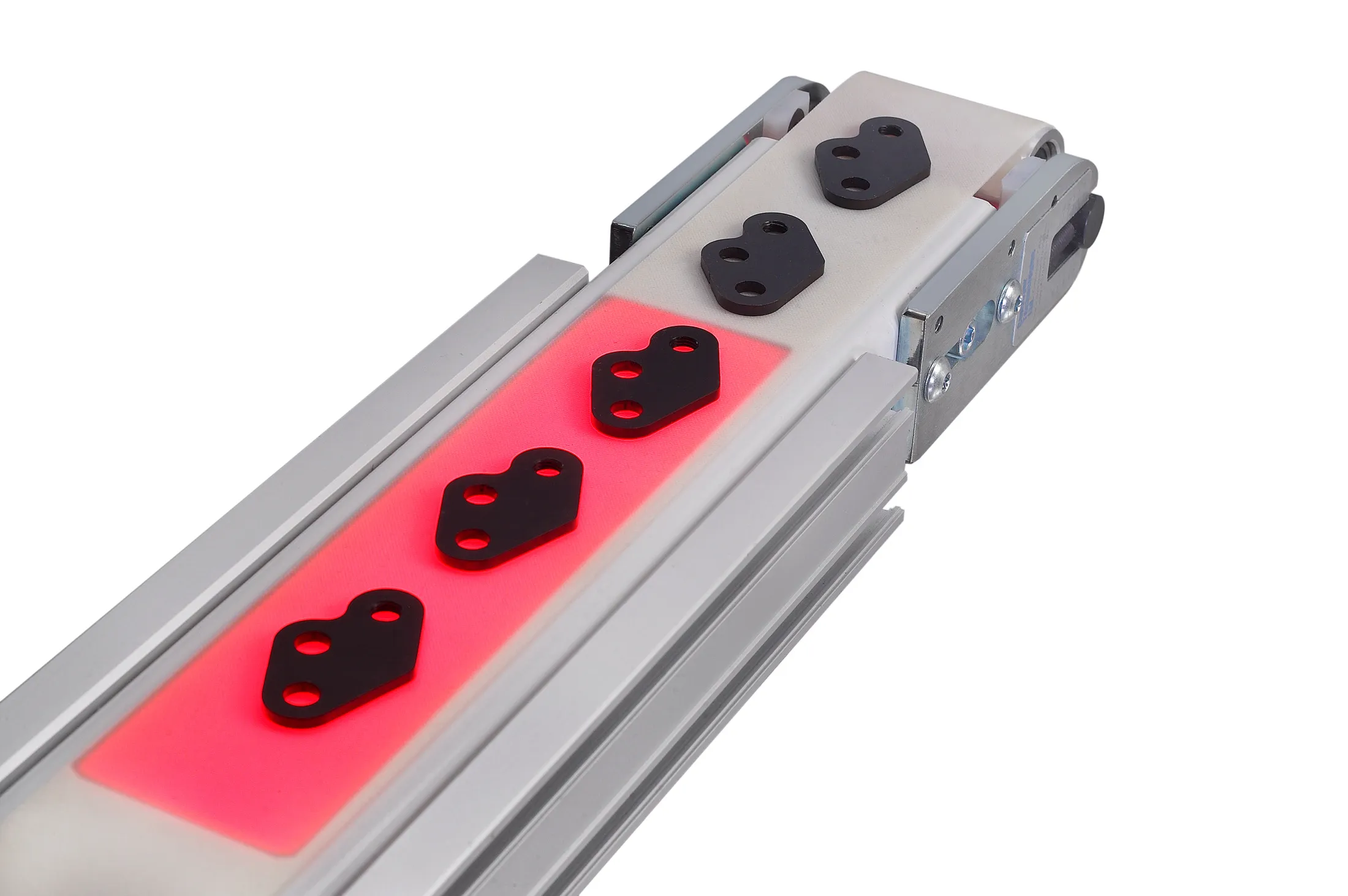
Timing belts lock into toothed pulleys, so parts index accurately between labeling, dispensing, fastening, inspection or assembly positions.
Precision Indexing →Hold the orientation
Moving the belt doesn’t locate a loose part. Holders and fixtures set its orientation, a fixed stop can give a reference position, and a sensor can confirm it’s there before the station starts.
Leave time to work
Each cycle accelerates, travels and dwells. The dwell has to cover the robot’s or station’s task before the next move.
02In detail
Build the line around the process
Fit the space
Low-profile frames suit compact workstations and enclosures; end or center drives put the motor where there’s room.
Connect to the equipment either side
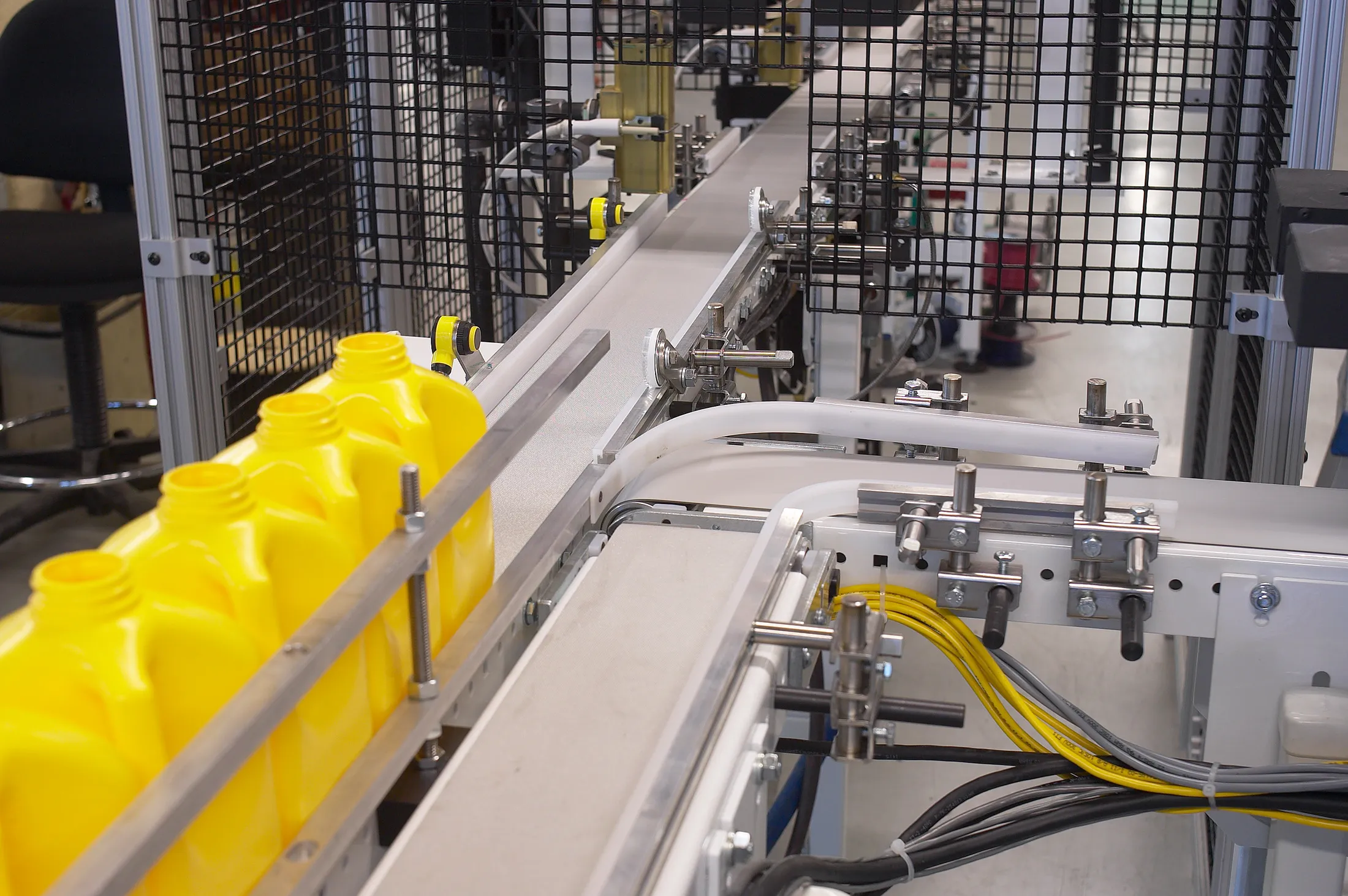
Length, belt width, height and speed are chosen around the transfer points. Mount the conveyor on the floor, a bench or the machine.
Handle product changes
Adjustable side guides take different widths; removable holders change how a part is located. Which applies depends on the conveyor and product.
03In detail
Controls and sensors
Start, stop and speed
Drives accept start, stop and speed commands and report back to your controller. We match the drive and interfaces to your machine sequence; PLC and communication needs depend on the drive and controls selected.
Sensors along the conveyor
T-slot rails take photoelectric, proximity and other sensors, and they slide to the right spot without new holes. Use them to confirm a part is present, check its position or detect a jam.
04Recommended conveyors
Conveyors to explore
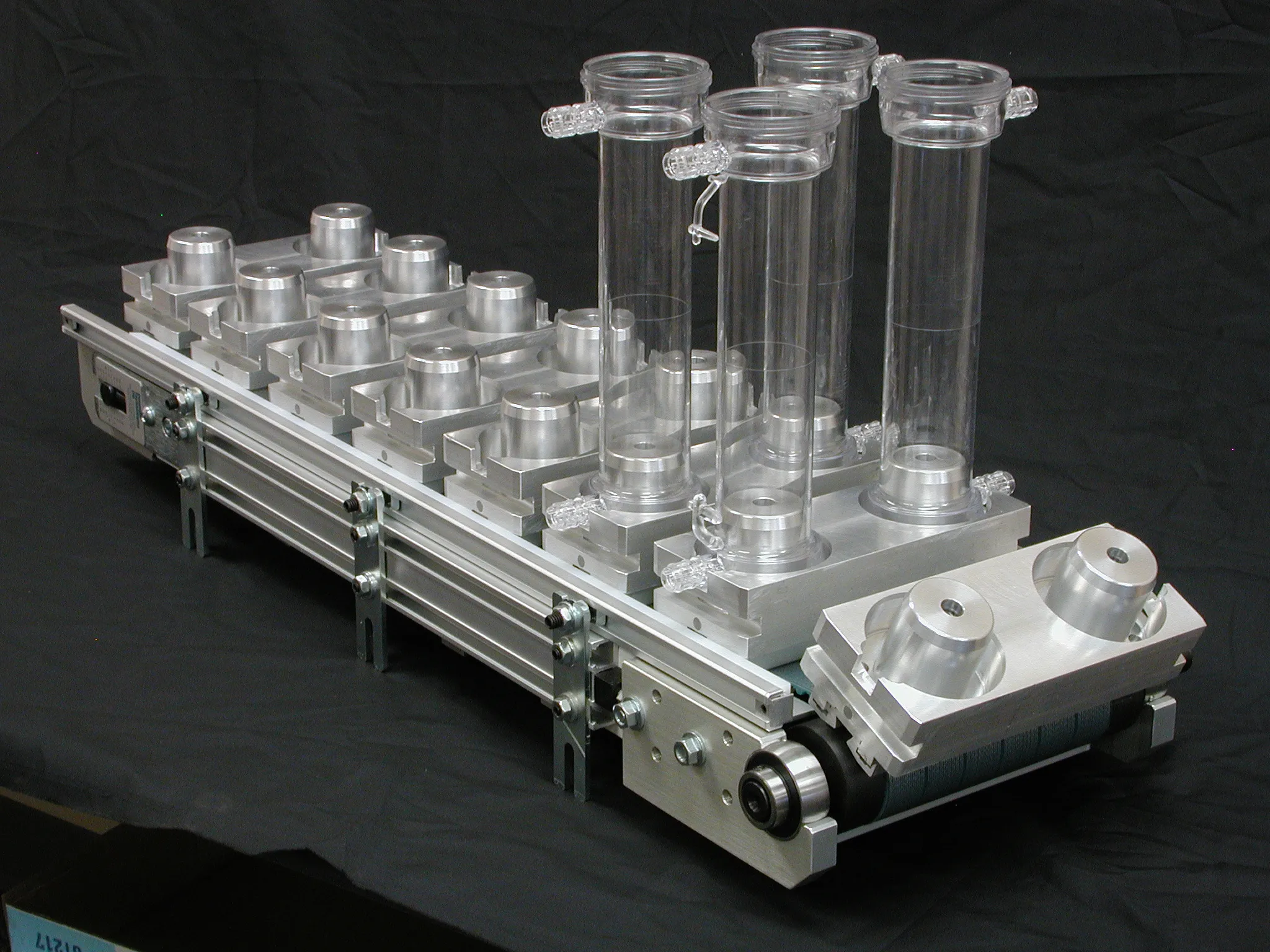 ConveyorUseful when parts index between assembly, labeling or inspection stations.
AccuMove Conveyors
Useful when parts index between assembly, labeling or inspection stations.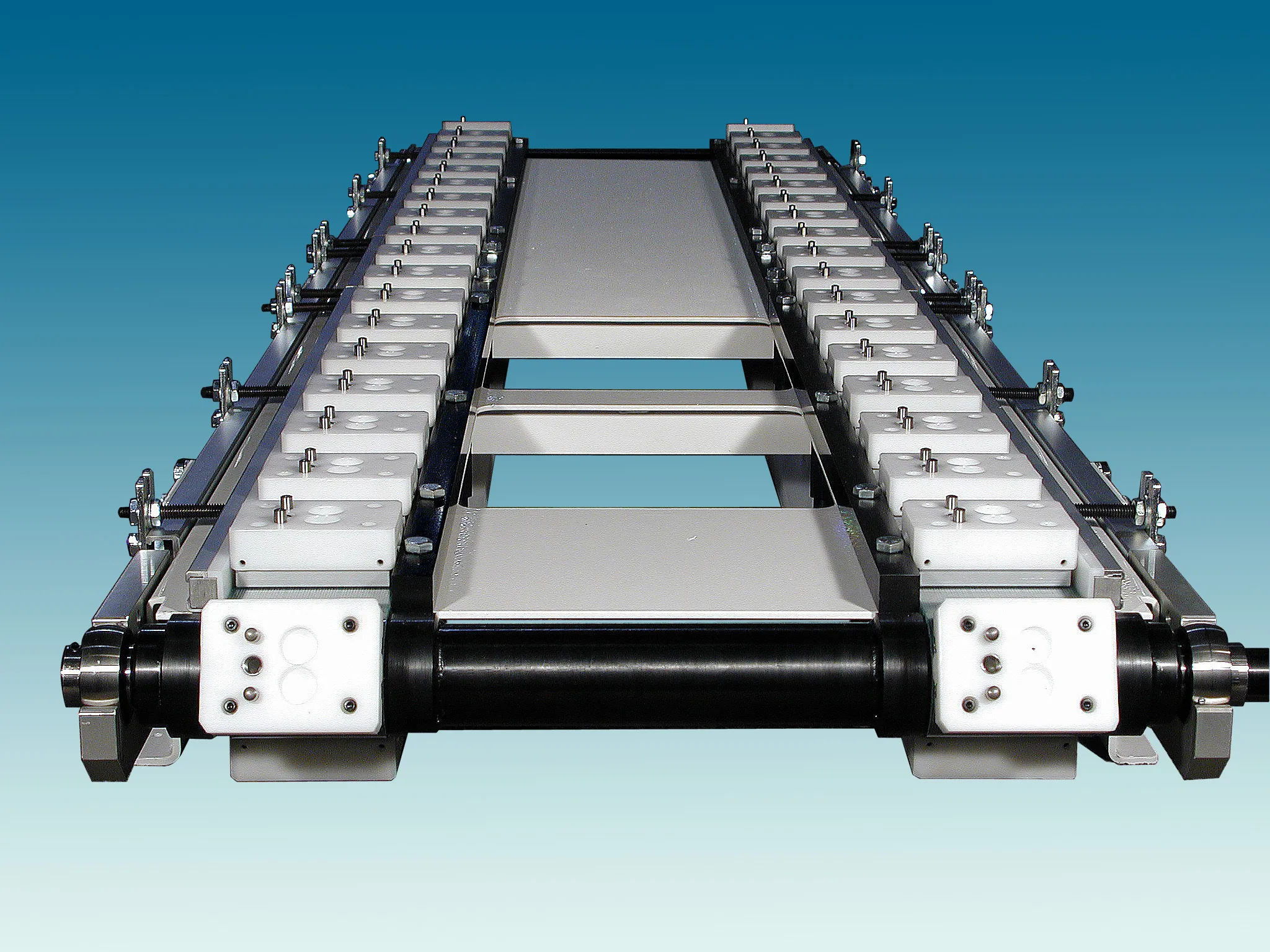 ConveyorUseful when parts travel in holders through a sequence of stations.
Dual Belt Indexing Conveyor
Useful when parts travel in holders through a sequence of stations. ConveyorUseful when light parts need to stay put between operations.
Vacuum Conveyors
Useful when light parts need to stay put between operations.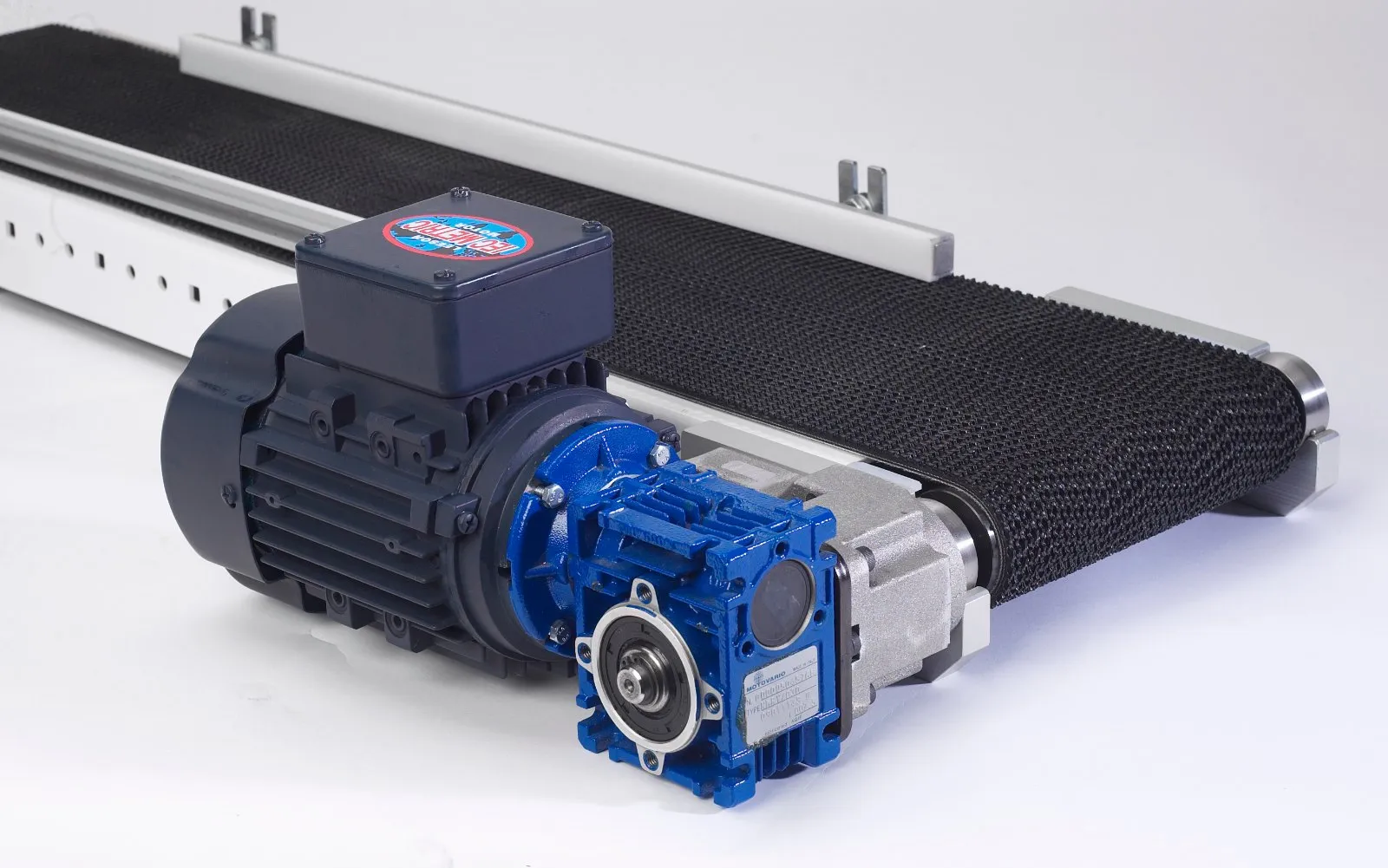 ConveyorUseful for moving parts between workstations or through a machine.
End-Drive Conveyors
Useful for moving parts between workstations or through a machine.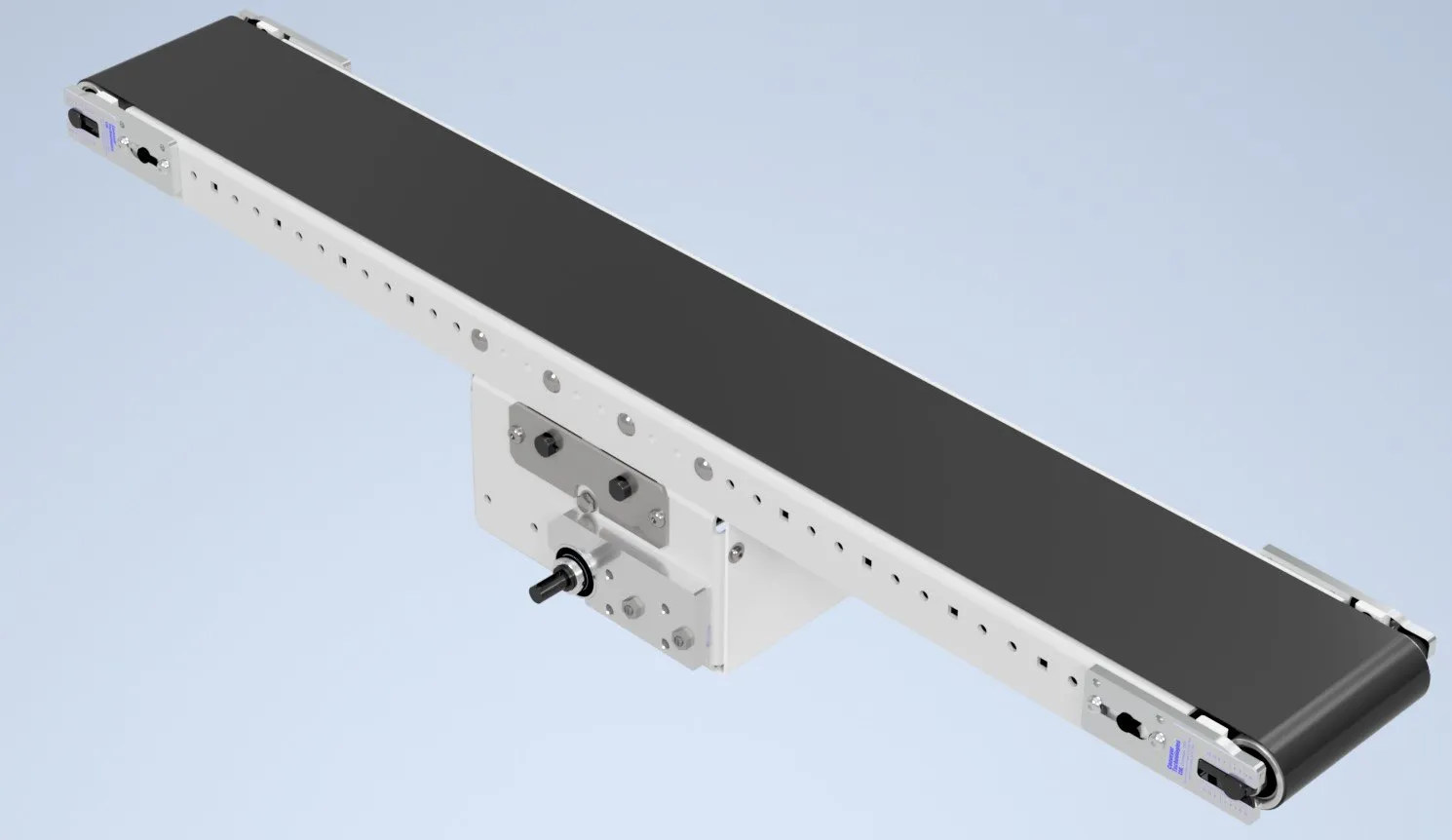 ConveyorUseful when products enter or leave right next to other equipment.
Center Drive Conveyor
Useful when products enter or leave right next to other equipment.