
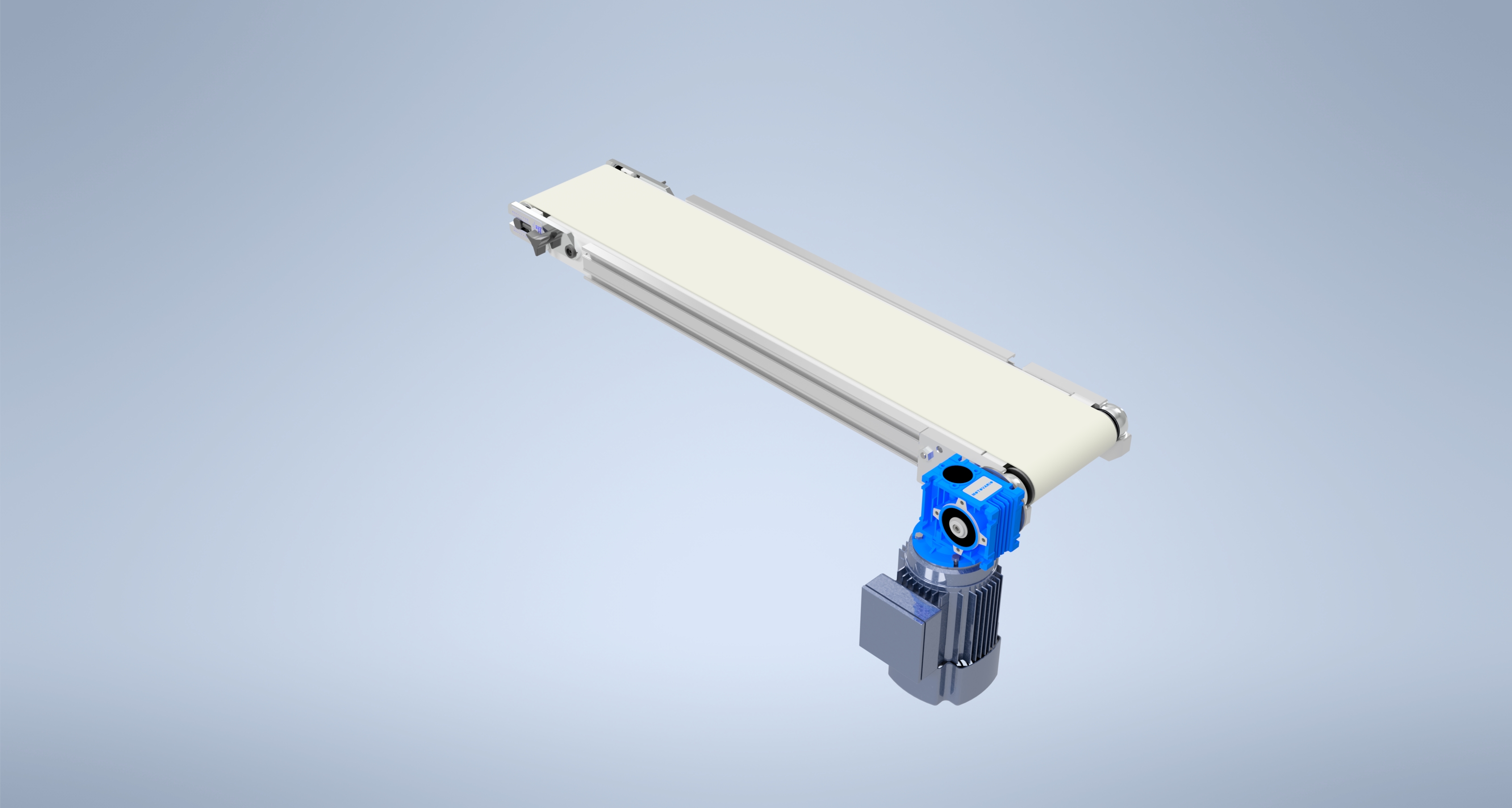
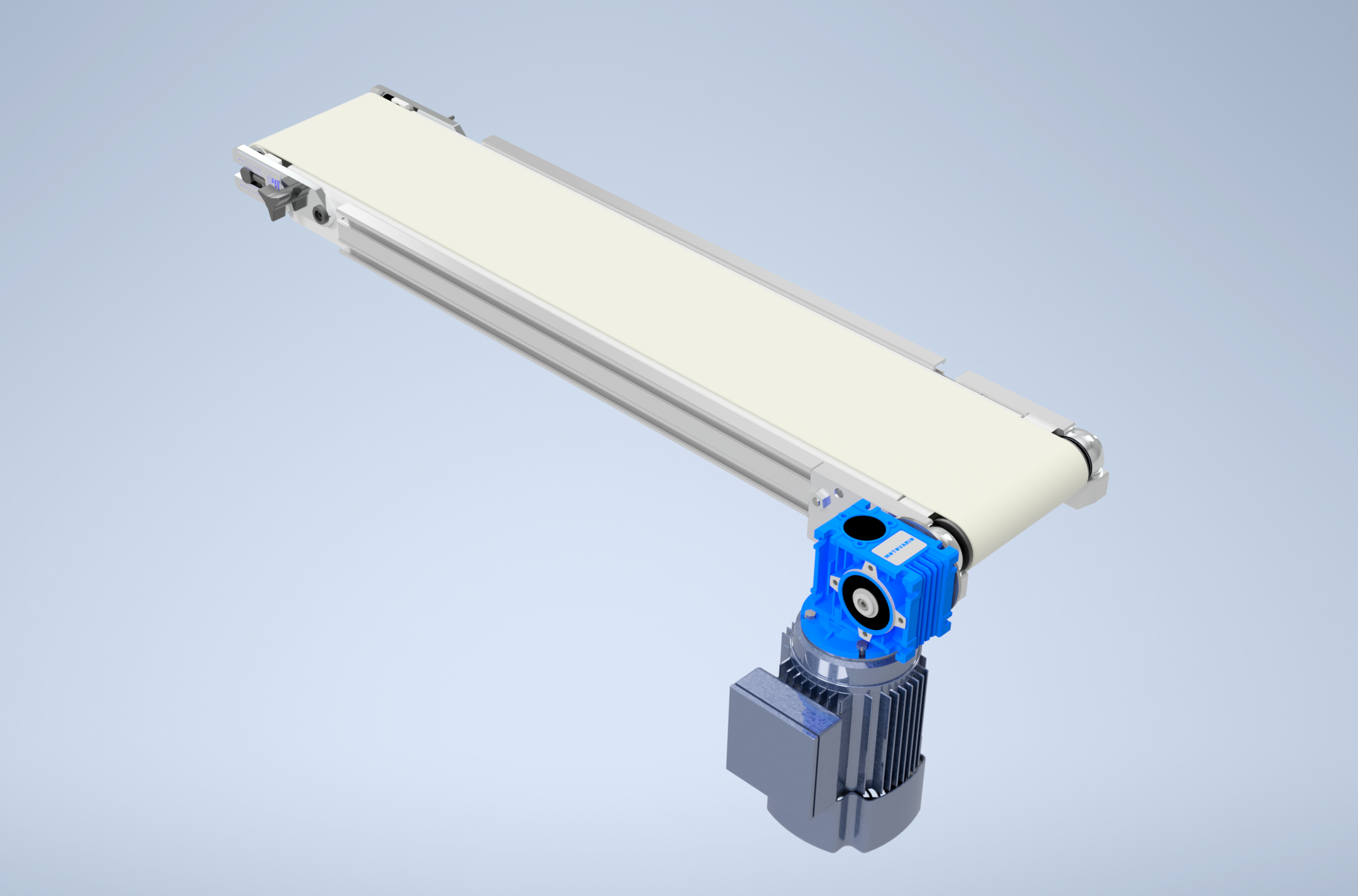
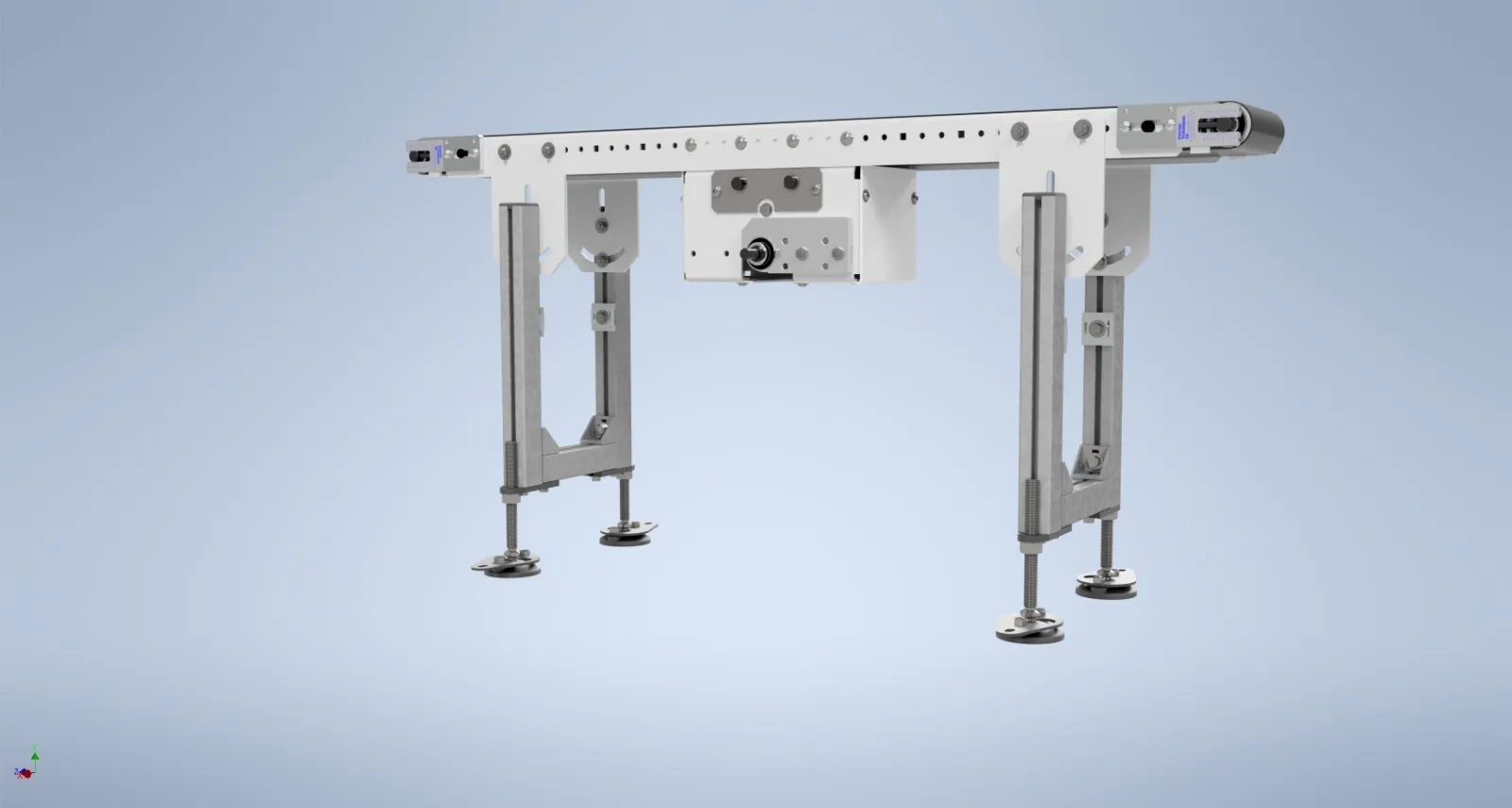
Flat-belt conveyor with an end-mounted drive
End-Drive Conveyors
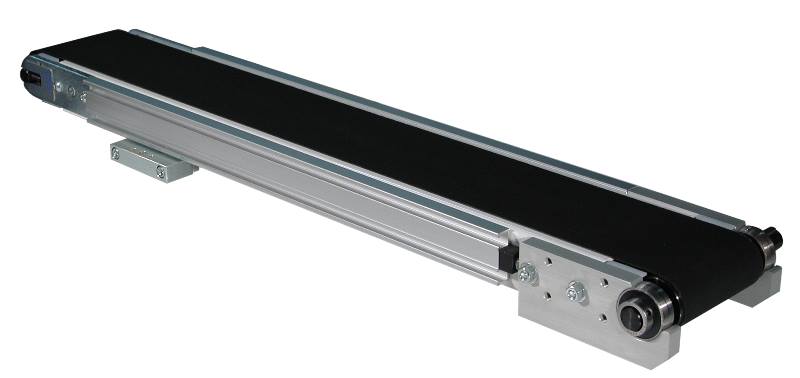
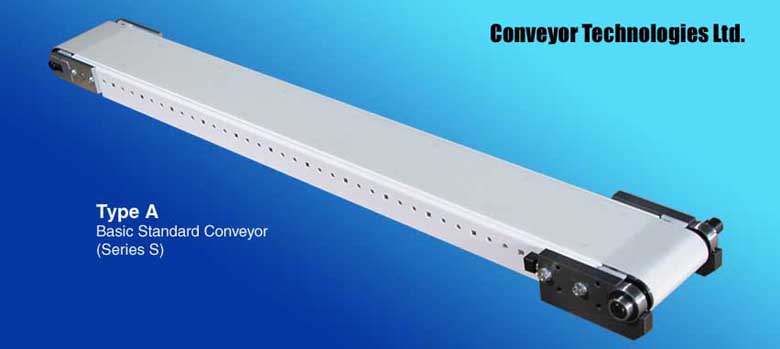
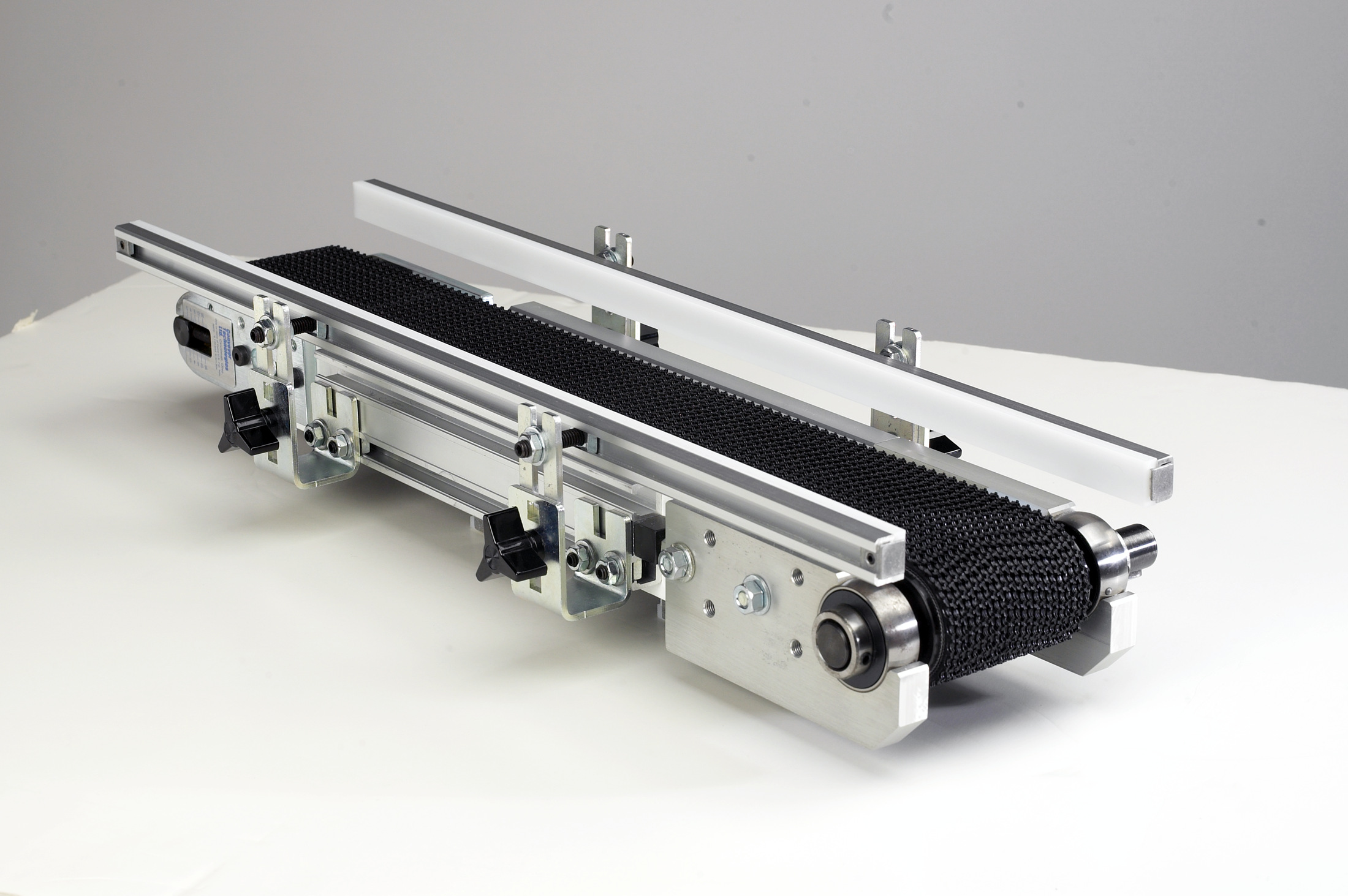
The straightforward flat-belt conveyor in our range: the drive mounts at the end of the conveyor, belts change without tools, and tension and tracking are set by gauge.
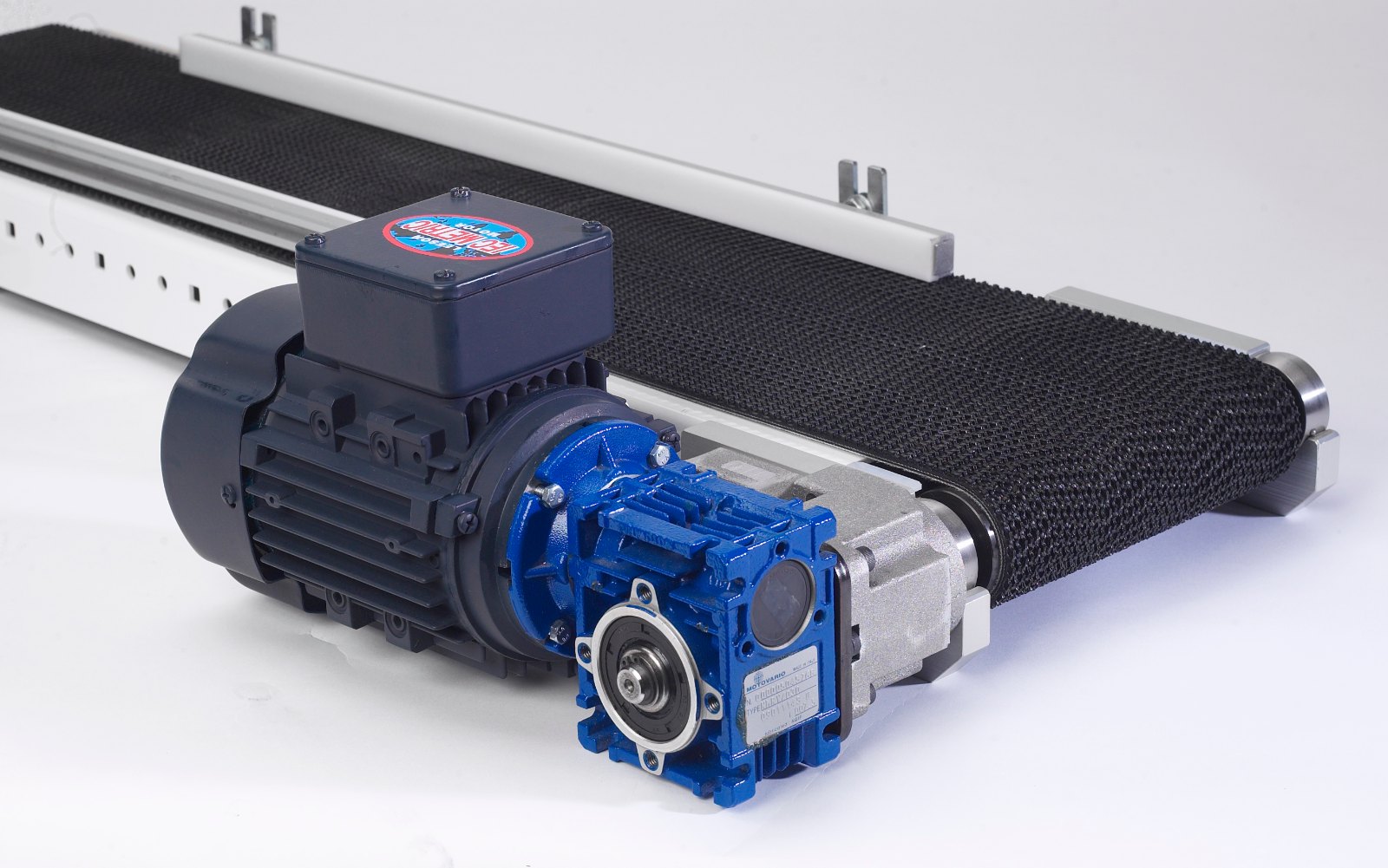
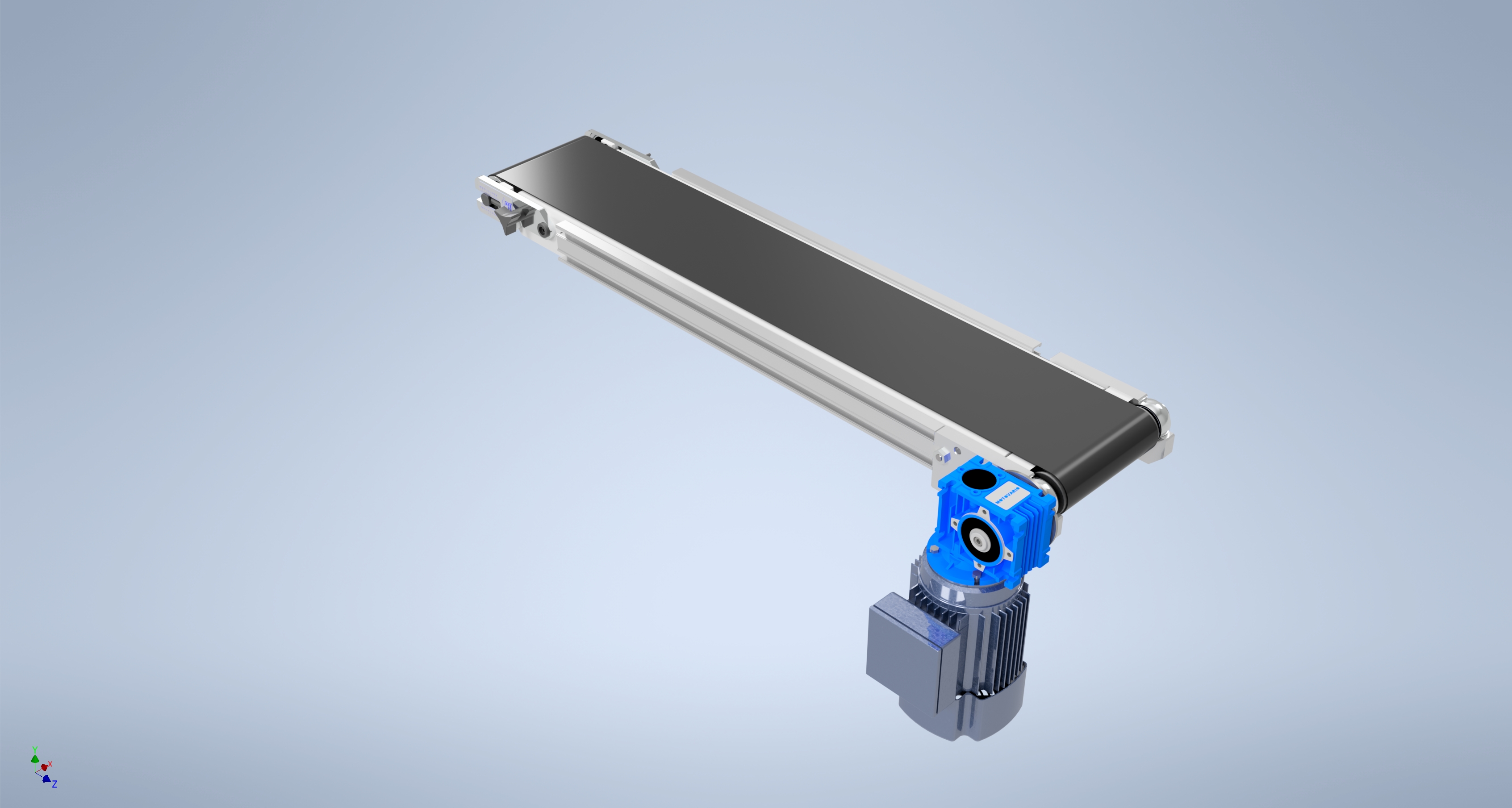
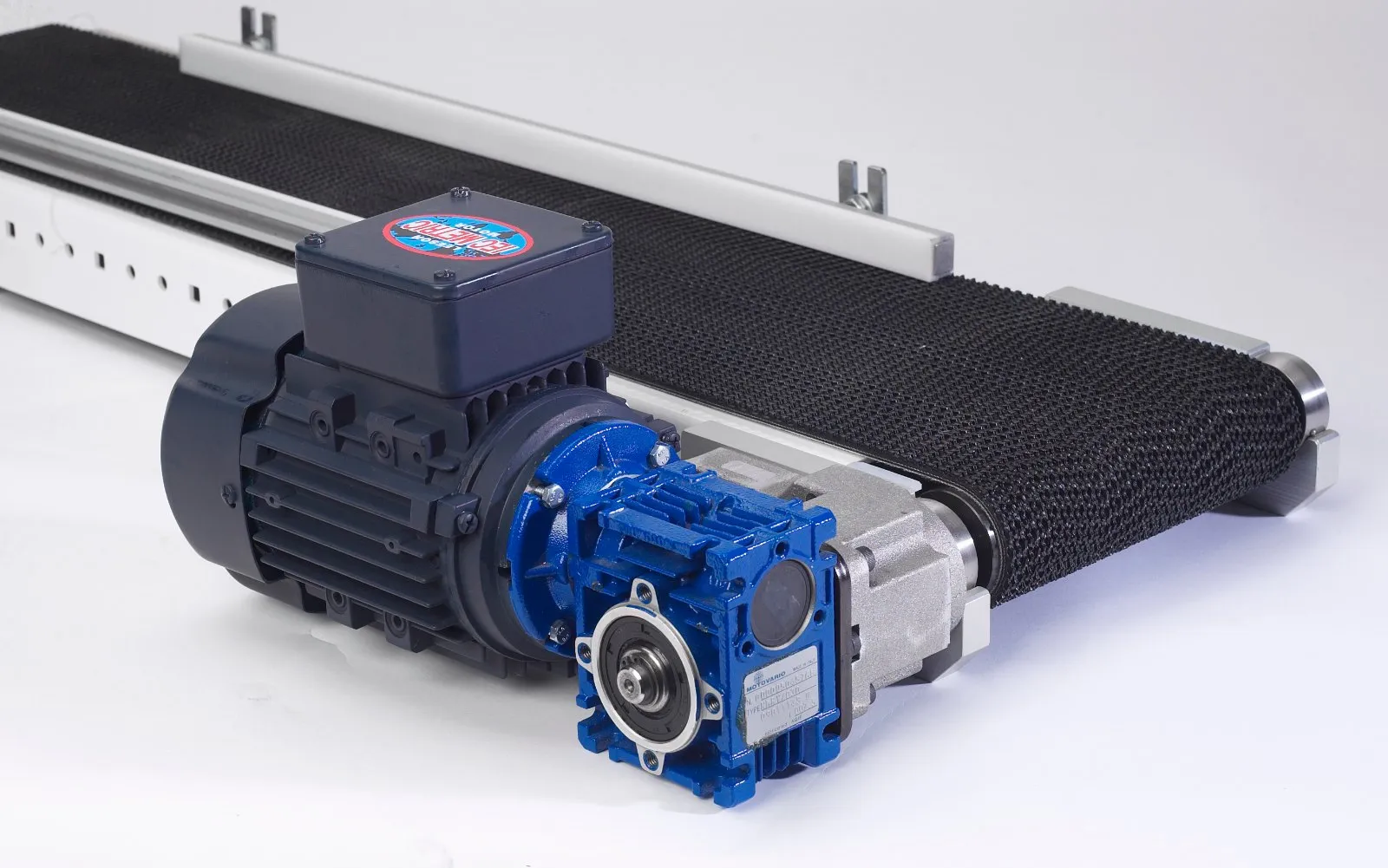
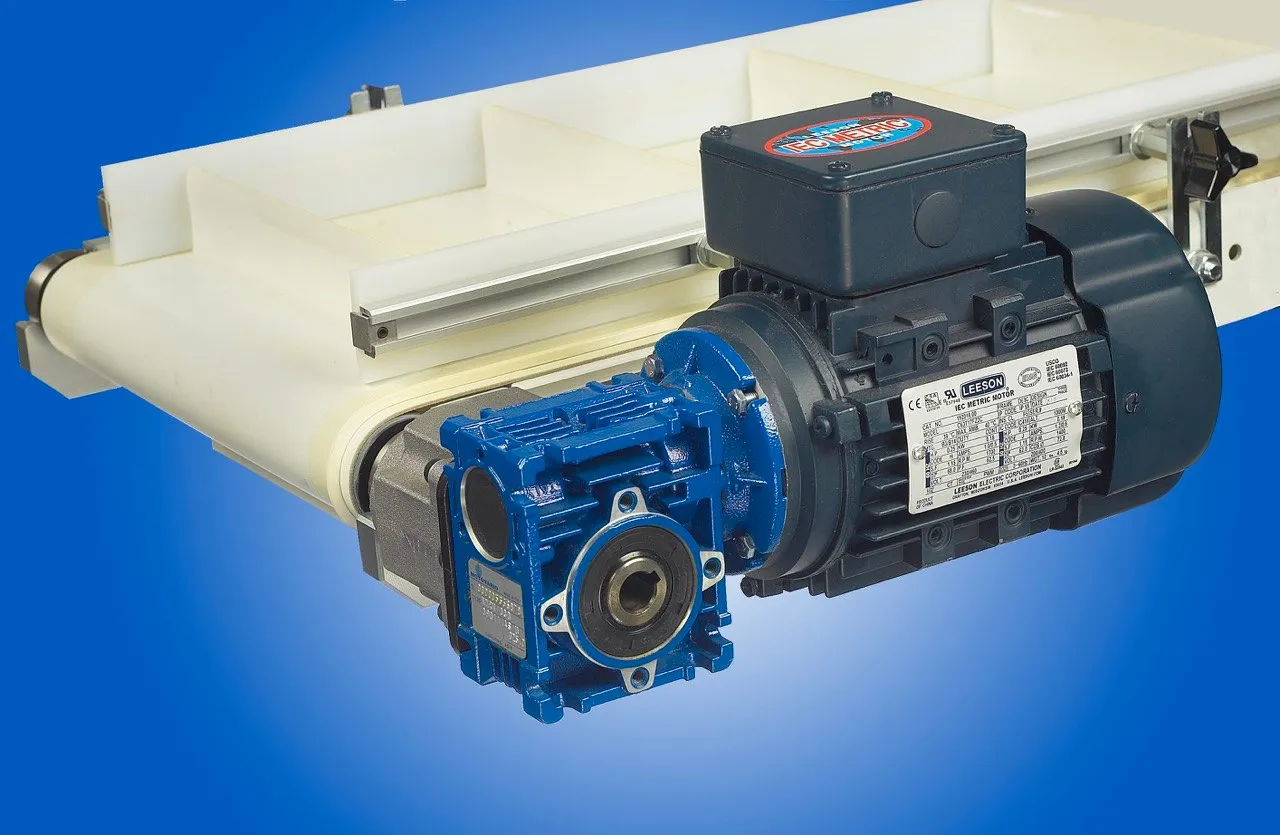
A low-profile conveying surface with the motor and gearbox mounted at the end of the conveyor, an arrangement that can place the drive outside a die or mold area. We select the conveyor and drive for your application.
Design it in CAD and export STEP files, or let our engineers design it.
Preview unavailable. Open original image ↗
- Belt widths
- 9 widths, 2.5–24 in
- Length
- 14 in to 20 ftin 1 in increments
- Drive
- At the end of the conveyorAC or DC, reversible options
- Belt change
- Two minuteson our open stand; tool-free
Features
Engineered for the job it does every day.
Primary feature
Tool-free belt change in minutes
Tool-free belt changes can be completed in minutes. The construction lets an endless belt be replaced without removing the drive or dismantling the conveyor from its stands. Mounted on our open stand design, the belt change takes two minutes.
Belt-replacement access depends on the tail arrangement and mounting.
In practiceThe drive and stands stay in place while the belt is changed, so the conveyor stays in the line.
Calibrated belt tension and tracking
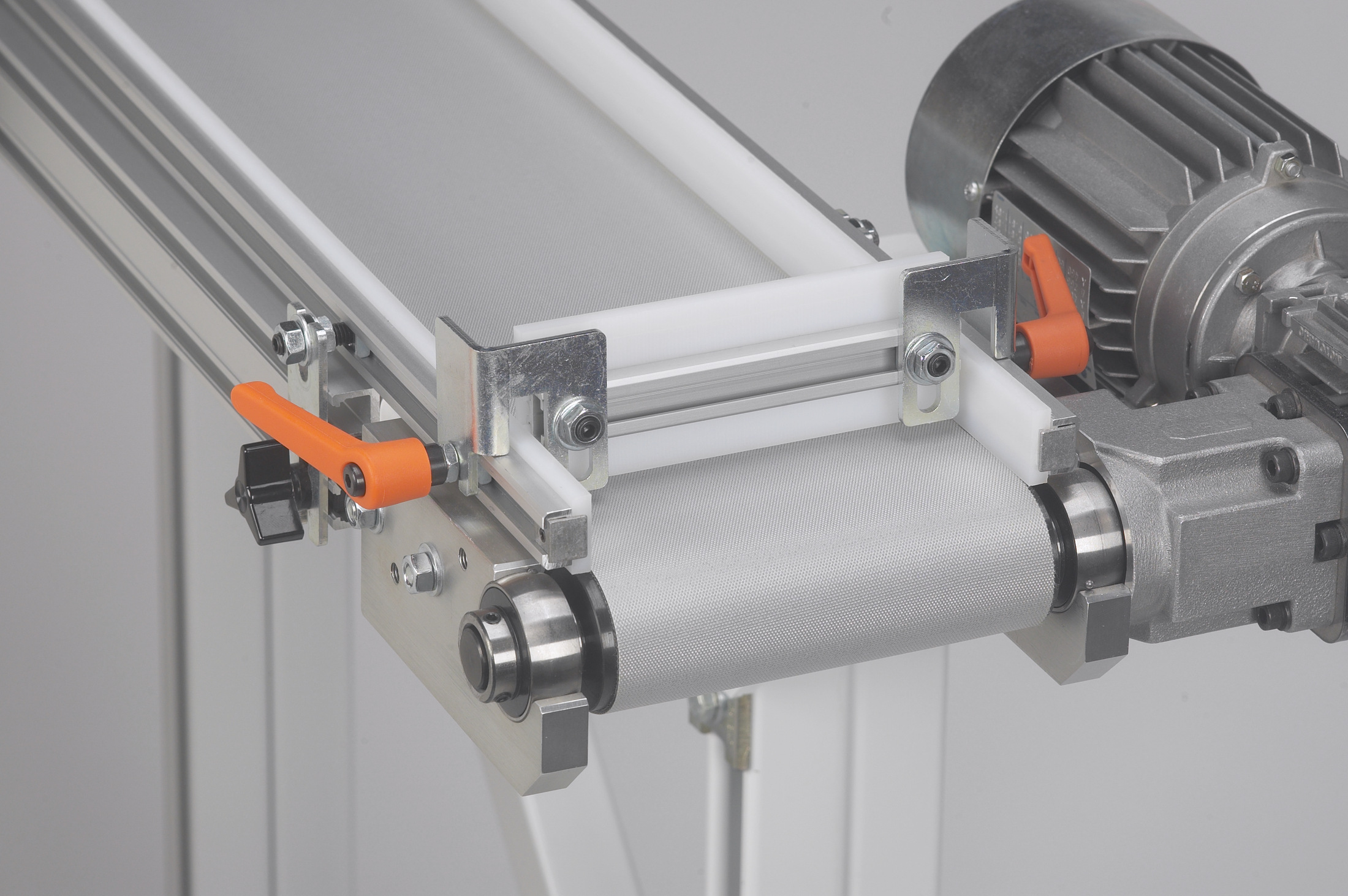
A gauge on each side of the belt calibrator shows where the belt is set. Use it to set tension and keep the belt running straight, and to check belt length before ordering a replacement, without taking the belt off.
In practiceTension and tracking are set to a reference, not by feel, and a replacement belt can be checked for length before the old one comes off.
End-mounted drive placement
The motor and gearbox sit outside the conveying area and can be positioned outside a die or mold area. Their position is part of the installation envelope, with guarding, cables and the infeed or discharge.
In practiceThe motor stays out of the conveying area and can sit clear of the die or mold.
Sealed bearings and crowned drive pulley
The crowned drive pulley uses two self-aligning bearings, sealed and lubricated for life. The solid steel bearing housing is also the drive mounting surface. No routine bearing lubrication.
In practiceNo routine bearing lubrication in your maintenance schedule.
Maintenance at a glance
Built to be maintained, not just to run.
What servicing this conveyor involves.
- Belt change
- Tool-free, in minutes; two minutes when mounted on our open stand designWithout removing the drive or taking the conveyor off its stands
- Tension and tracking
- Calibration gauges on each sideAlso checks belt length without removing the belt
- Bearings
- Sealed for life, with no routine lubrication
- Replacement parts and belts
- AvailableStart with the equipment identifier if you have it
Technical specifications
The numbers, with their conditions.
Values apply to the configurations named. Load, speed and duty are confirmed with the drive selection.
| Specification | Value | Condition |
|---|---|---|
| Belt widths | 2.5, 3.25, 4.5, 6, 7.5, 10, 12, 18 and 24 in | 63, 83, 114, 152, 190, 250, 305, 457 and 610 mm |
| Length options | 14 in (357 mm) to 20 ft (6096 mm) | In 1 in increments |
| Drive position | Mounted at the end of the conveyor | |
| Catalogue designation | Type A | Useful when identifying an existing conveyor or ordering parts |
| Motors | AC or DC | Reversible-drive options |
| Frame materials | Powder-coated steel, aluminum or stainless steel | |
| Versions | U.S. and metric |
Applications
Where it works, and how it fits.
For an unresolved transfer or product-control problem, start with the Transfer and Product Control Guide. The Selection Guide compares layout requirements.
- Uses
- Manufacturing, assembly, packaging and automation
- Machine layout
- Drive outside the die area in stamping, or outside the mold area in injection molding
- Environments
- Cleanroom, washdown and high-temperatureSuitability depends on the configuration: cleanroom class, cleaning methods, temperatures and chemical or oil exposure. Stainless steel construction is available.
Transfers and layout
- Application
Automation
Carry parts between robots, stations and inspection, and hand each one over ready to work on.Explore → - Application
Food-Contact Conveyors
Conveyors specified for what touches your product.Explore → - Application
Washdown & Sanitary
Conveyors built for wet areas and regular cleaning.Explore → - Industry
Food & Beverage
Connect filling, labeling and packing, and handle the wet end of the line.Explore → - Industry
Metalworking & Stamping
Catch parts and clear scrap from under the die, in the space the press leaves you.Explore → - Industry
Plastics & Injection Molding
Take parts, runners and sprues away from the mold, each to where it needs to go.Explore →
Configured with
One conveyor, one complete system.
We design the drive, guides and stand with the conveyor, from the same modular system, so the parts are designed to work together.
Questions engineers ask
Tell us what you need to move.
And where the conveyor will operate. We design and configure an End-Drive Conveyor for your application; a brief description is all we need to start.
Talk to an engineer2.5, 3.25, 4.5, 6, 7.5, 10, 12, 18 and 24 in (63, 83, 114, 152, 190, 250, 305, 457 and 610 mm).
Tool-free, in minutes; two minutes when mounted on our open stand design. Without removing the drive or taking the conveyor off its stands.
Sealed for life, with no routine lubrication.
Cleanroom, washdown and high-temperature. Suitability depends on the configuration: cleanroom class, cleaning methods, temperatures and chemical or oil exposure. Stainless steel construction is available.
Documents and support
Everything you need, after it’s installed.
- Technical chart · PDF
Torque Load Chart
How much load a conveyor can carry, and the drive torque it needs. Values change with the conveyor, incline and drive, so a chart value alone isn’t the capacity of a complete conveyor; we confirm it for your system.Open chart (PDF) → - Instructions · PDF
Increase Tension / Re-track Belting (TP1052A)
How to tighten and re-track a belt. Check that it matches your conveyor and belt before making adjustments; we can confirm.Open instructions (PDF) → Warranty
- Conveyor
- 10 years, unlimited hours
- Bearings
- 5 years
- Drive packages
- 2 years
- Existing equipment
Drawings, manuals, parts and belts
An identifier helps us find what applies to your conveyor. No identifier? Start with a description.Identify your equipment →
Compare with
Other ways to transport parts
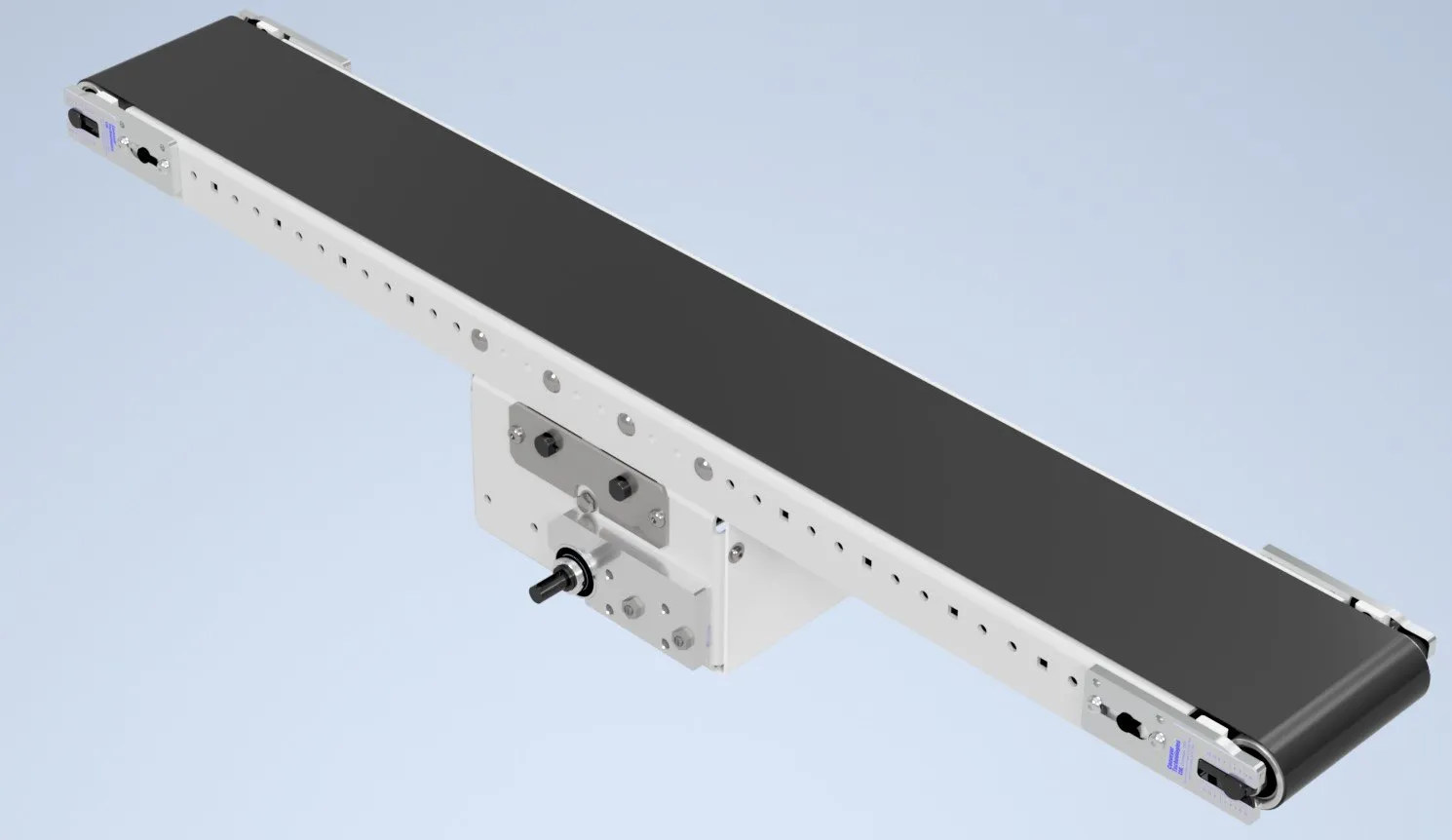 ConveyorChoose it when there’s no room for a motor at either end.Choose it whenthere’s no room for a motor at either end.
Center Drive Conveyor
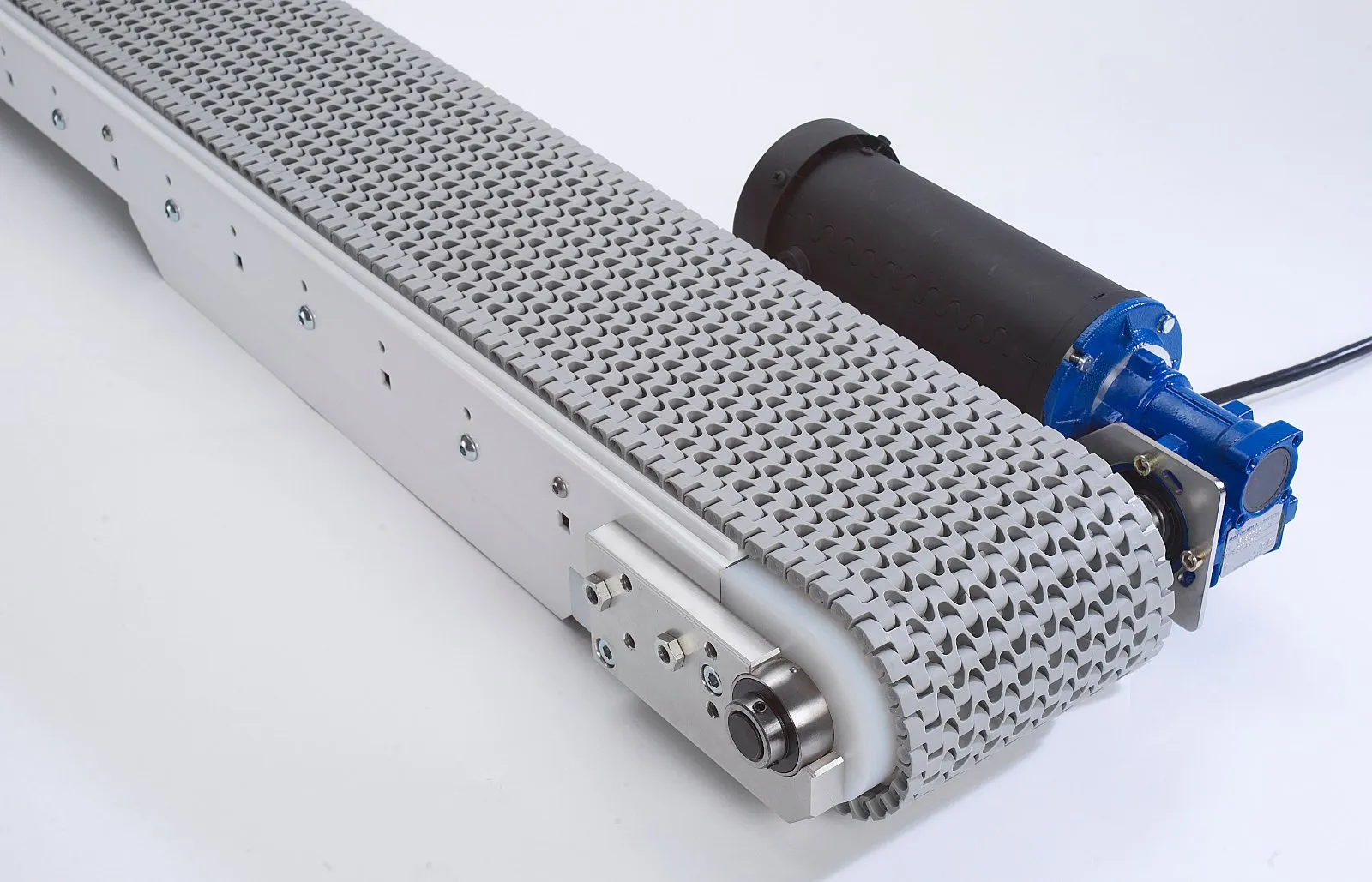 ConveyorChoose it when you need a choice of belt surfaces and materials, or regular washdown.Choose it whenyou need a choice of belt surfaces and materials, or regular washdown.
Modular Plastic Belt Conveyor
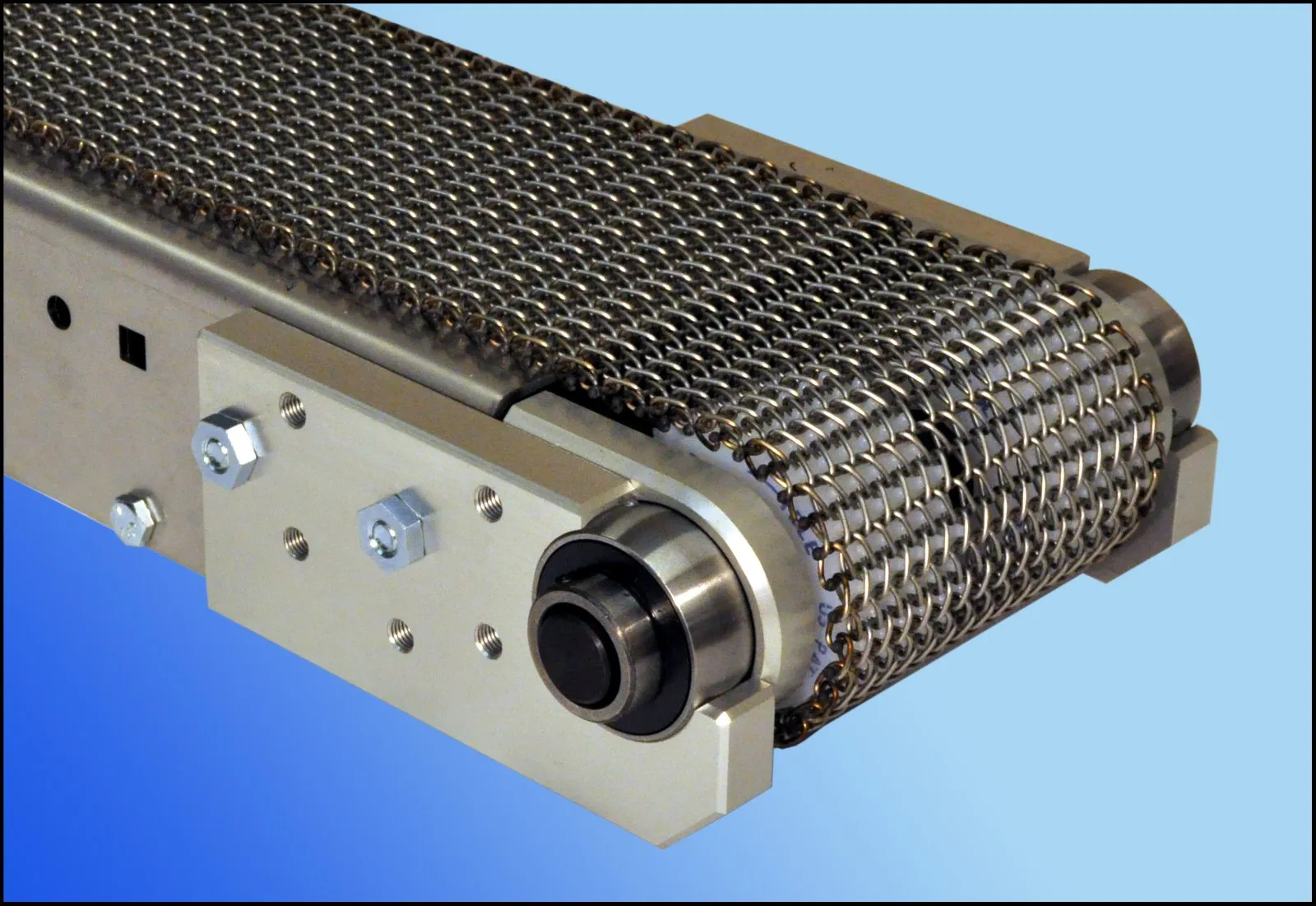 ConveyorChoose it when parts are hot, wet or oily, or air and fluid need to pass through.Choose it whenparts are hot, wet or oily, or air and fluid need to pass through.
Wire Mesh Belt Conveyor