Industry
Food & Beverage Conveyors
Connect filling, labeling and packing, and handle the wet end of the line.
We help with tight transfers between machines, presenting product to inspection, and conveying surfaces for cleaning, cooling and drainage.
Design it in CAD and export STEP files, or let our engineers design it.
01In detail
Packaging lines
Fit between machines
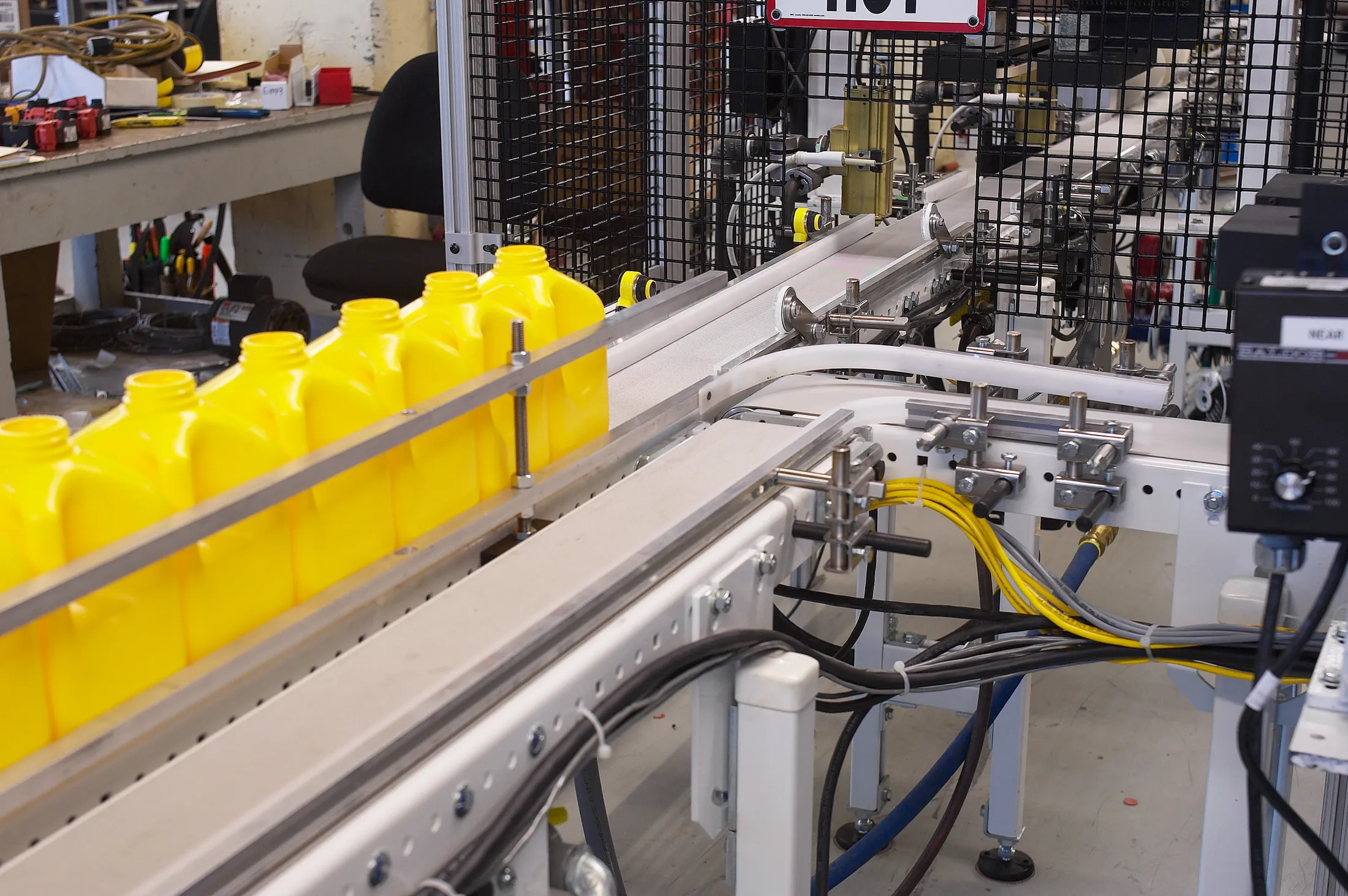
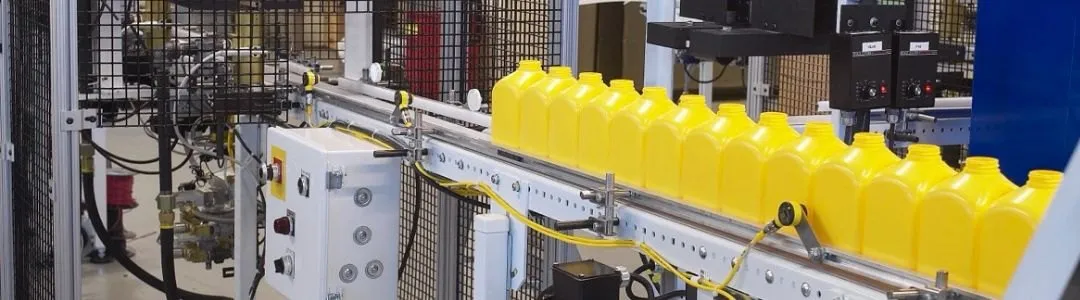
The gap between a filler, capper and labeler includes the transfer points as well as the conveyor. A low-profile frame fits under equipment where height is tight; we plan belt width, length and drive position around those connections.
Cartons, trays and bundles
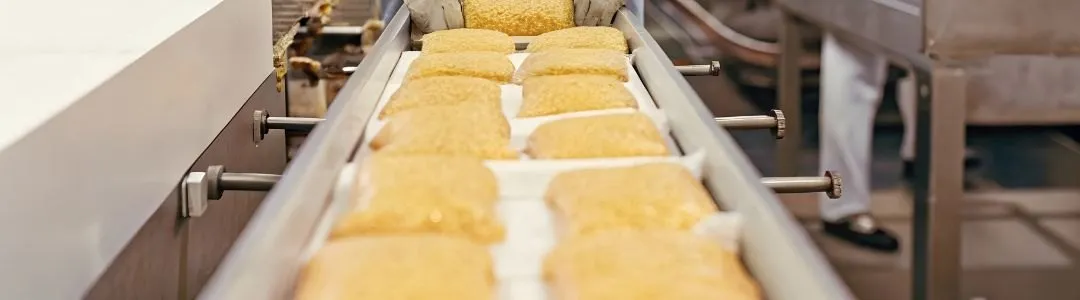
Flat belts give continuous support; cleats add spacing and separation, including up inclines to case packing and palletizing.
Keep pace with the line
Variable-speed drives follow the equipment around them; timing belts suit labeling and positioning. The package still needs support and timing; belt movement alone doesn’t locate it.
02How it works
Inspection and detection
Detection performance and reject compatibility depend on the complete system.
Present the product
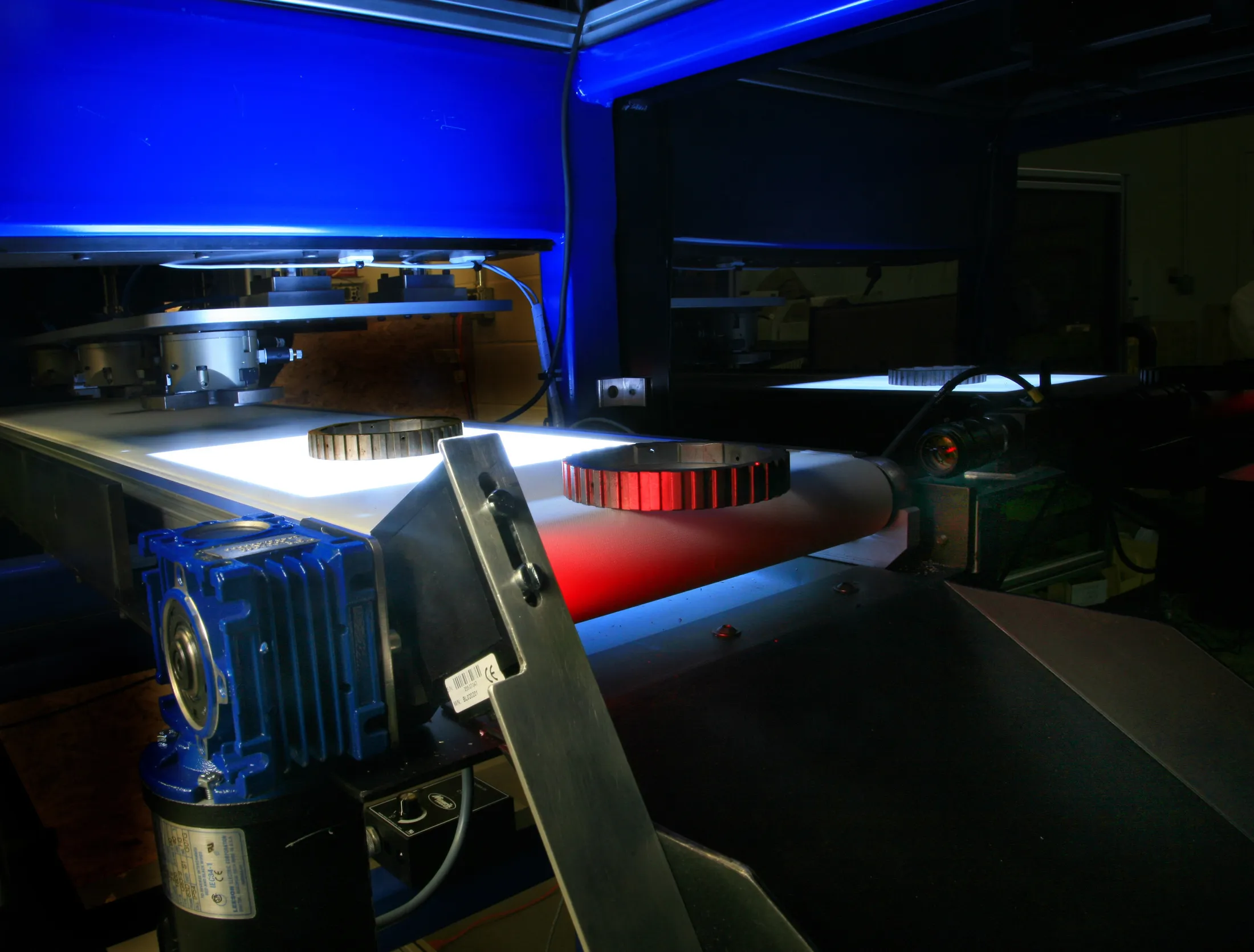
Vision inspection, metal detection and checkweighing each need the product to pass through a set area. Our inspection conveyors use precision-machined pulleys and sealed bearings, and we plan the product path around your station.
Vision Inspection →Track it to the reject point
When a reject station follows inspection, the controls have to match each inspected product to its later arrival there. Camera triggers, conveyor speed and reject timing are planned together.
Metal-detectable belts
Metal-detectable belt compounds are available. That’s a belt-material choice, separate from setting up the detector and reject equipment.
Modular Plastic Belt →
03In detail
Cleaning and wet operation
For direct food contact, the material and component documentation comes with the selected configuration. Choosing a conveyor doesn’t on its own make a facility compliant.
Frames and bearings
Washdown configurations use stainless frames, corrosion-resistant hardware and sealed-for-life bearings, with no routine relubrication and no lubricant to reach the product.
Reach every surface
Open frames give access from below, and removable belts expose the belt and the surfaces under it. Belt, removal access and drive protection are matched to the cleaning and product contact.
04How it works
Cooling, drying and drainage
Air through the belt
Wire mesh lets air reach the product from above and below, for cooling and drying after heating or frying.
Wire Mesh →Drain liquid, keep the product supported
Liquid drains through the open belt. Smaller items need an opening pattern that supports them all the way; we choose it and confirm the allowable product-contact temperature.
05Recommended conveyors
Conveyor options to explore
Packaged goods and food carried directly on the belt ask different things of the surface, and cleaning methods and chemicals shape the choice.
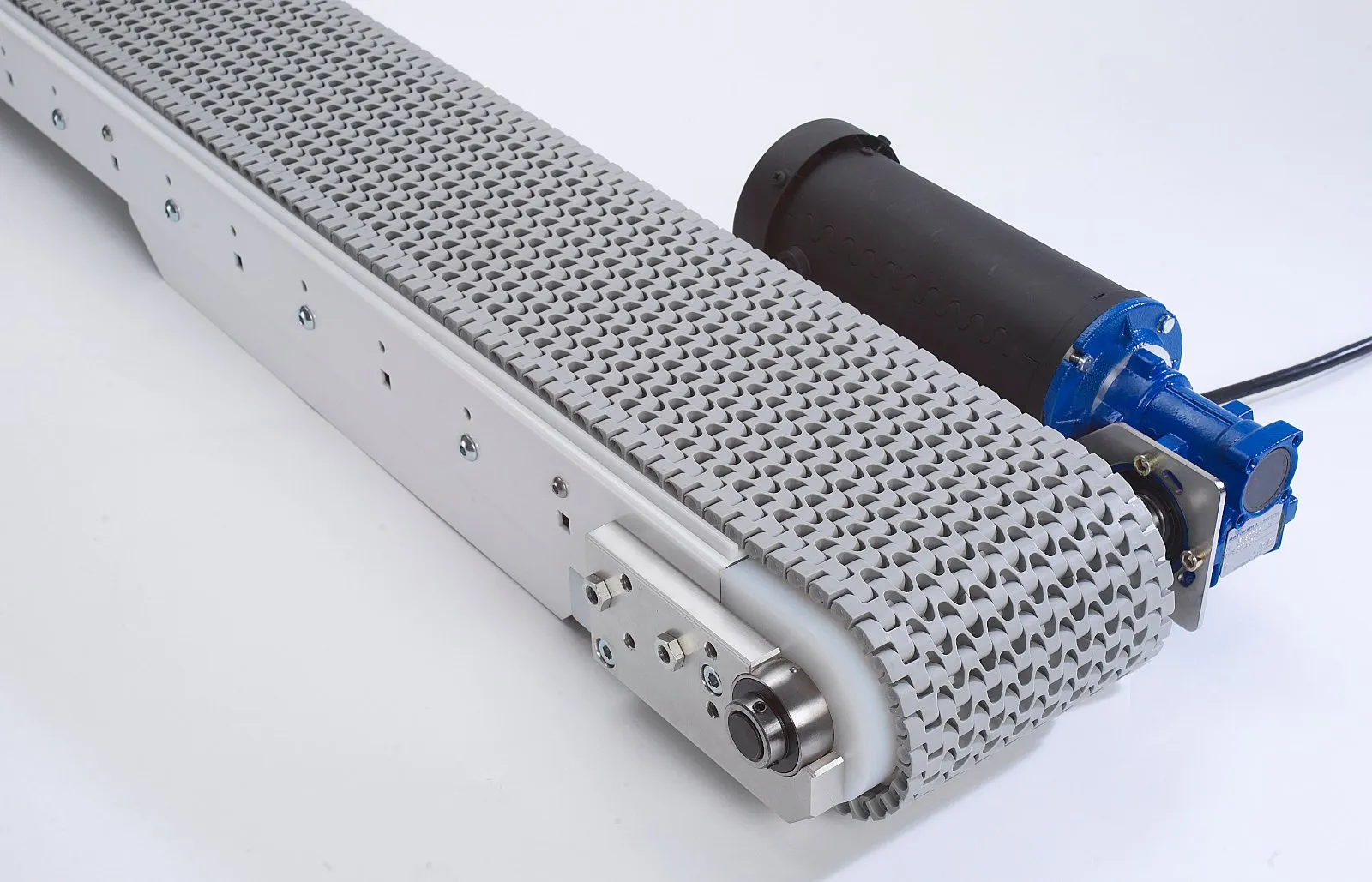
- ConveyorUseful when frequent cleaning is part of the routine; access underneath without separating the belt.
Modular Plastic Belt Conveyor
Useful when frequent cleaning is part of the routine; access underneath without separating the belt. 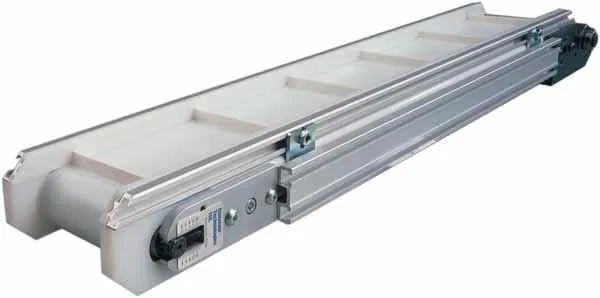 ConveyorUseful when cartons, trays or bundles climb an incline between packaging steps.
Cleated Conveyors
Useful when cartons, trays or bundles climb an incline between packaging steps.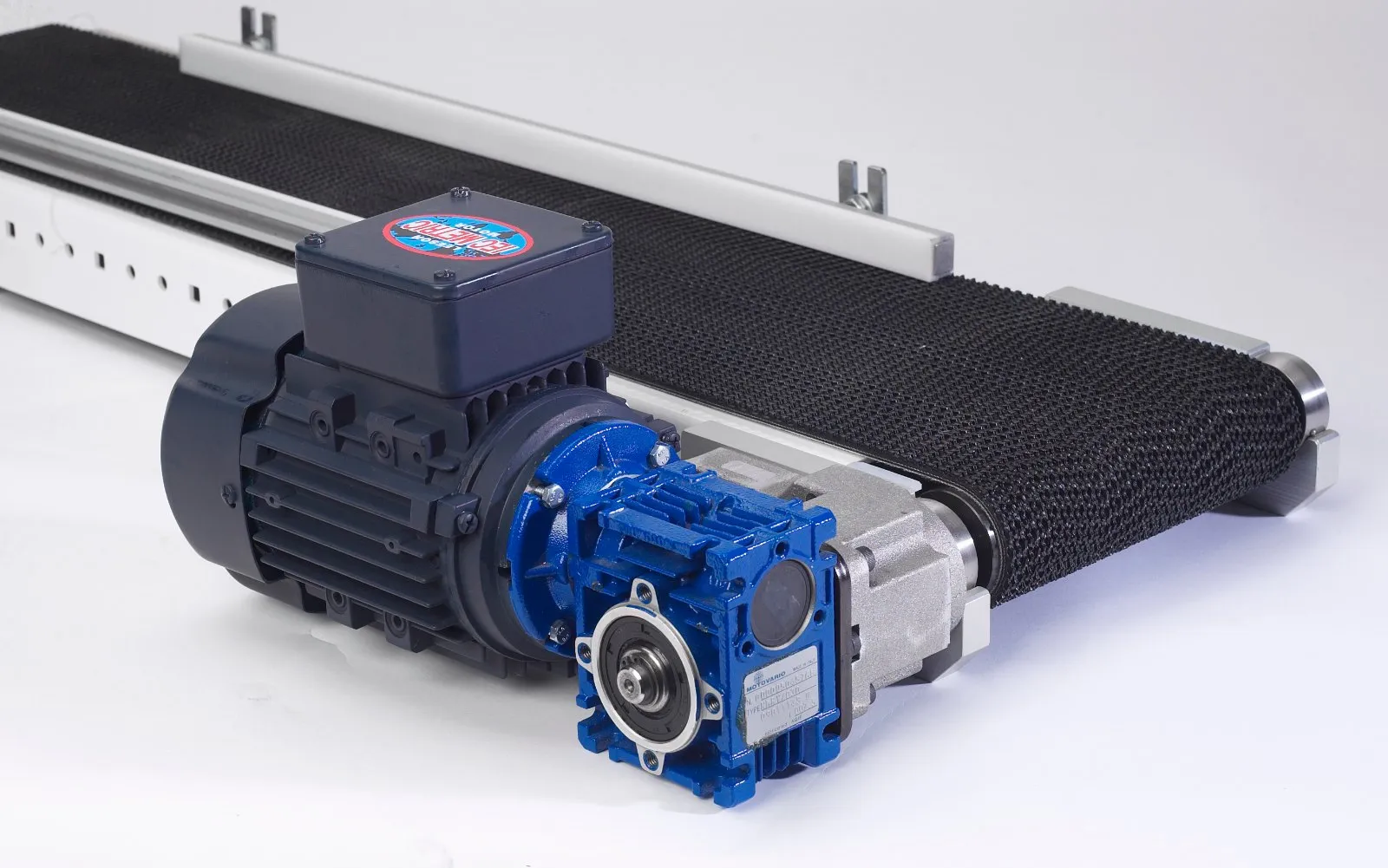 ConveyorUseful for moving packaged products from filling or labeling toward case packing.
End-Drive Conveyors
Useful for moving packaged products from filling or labeling toward case packing.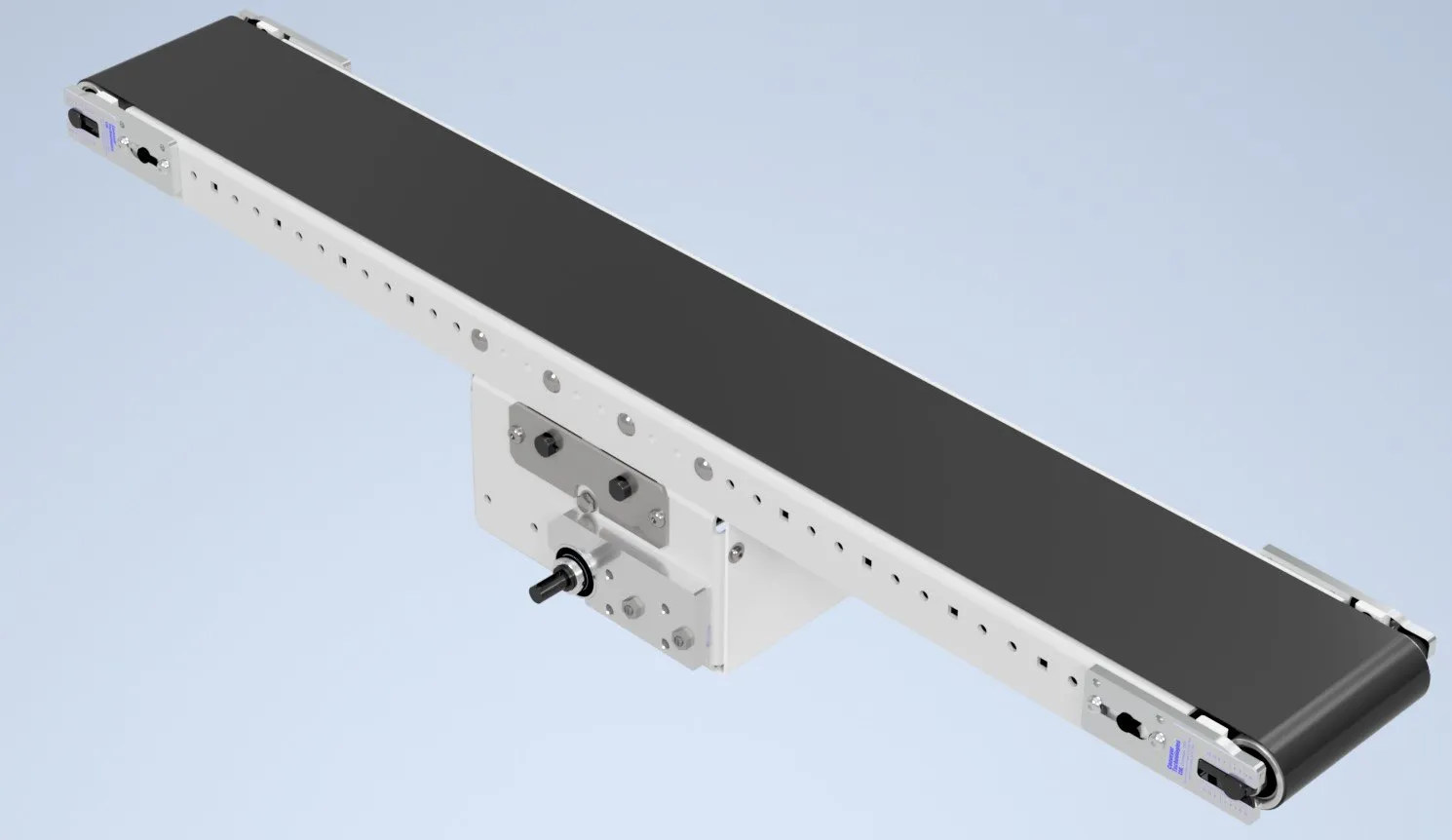 ConveyorUseful when a motor at either transfer point would be in the way.
Center Drive Conveyor
Useful when a motor at either transfer point would be in the way.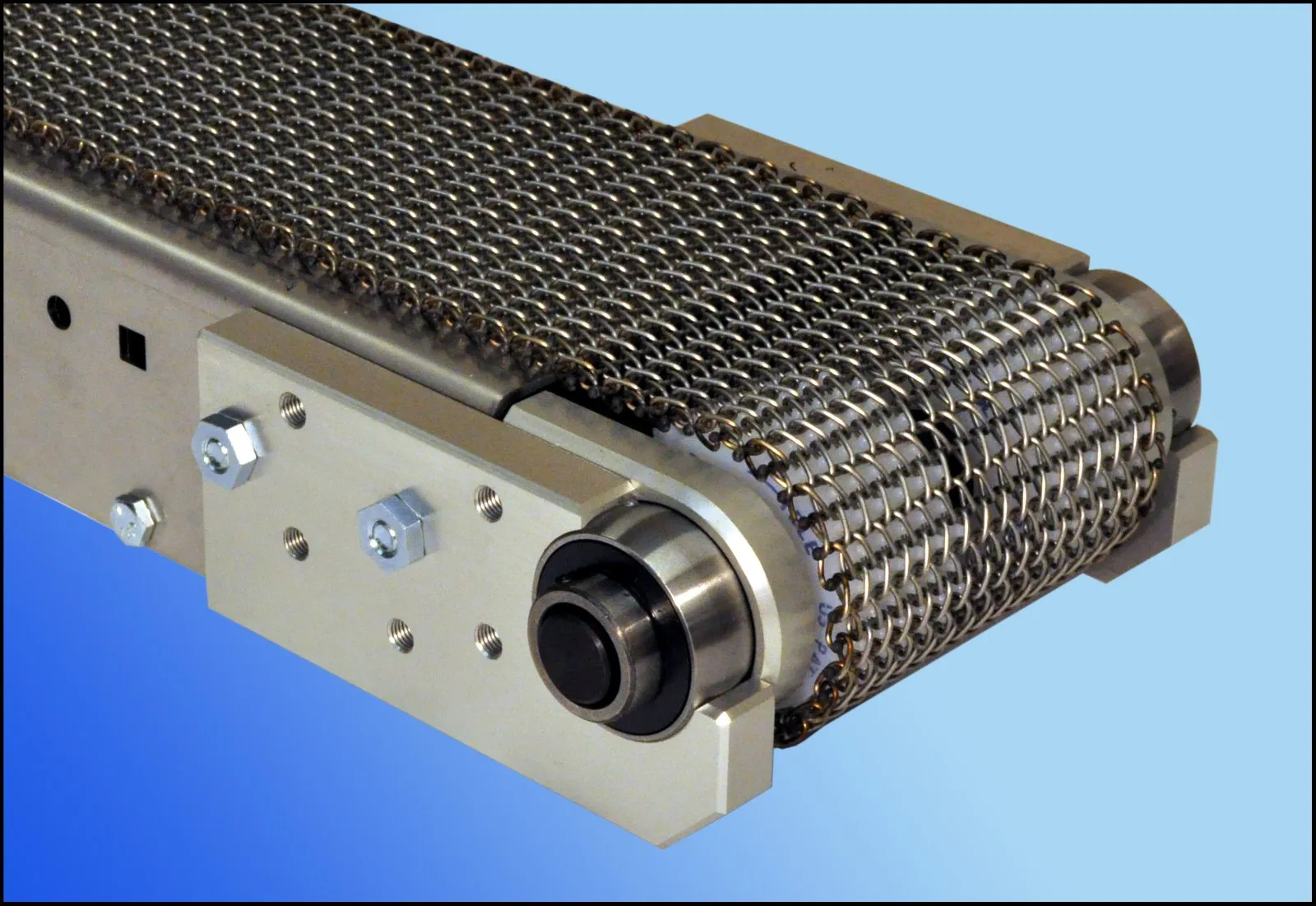 ConveyorUseful when products leave heating or frying and need airflow.
Wire Mesh Belt Conveyor
Useful when products leave heating or frying and need airflow.