
For inclines, spacing and separating parts
Cleated Conveyors
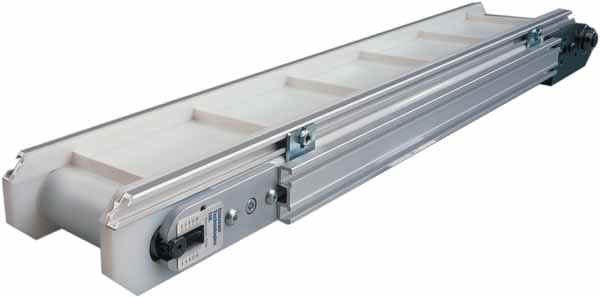
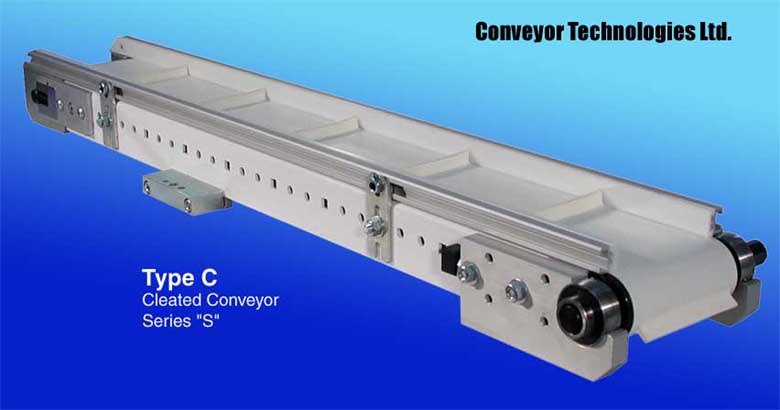
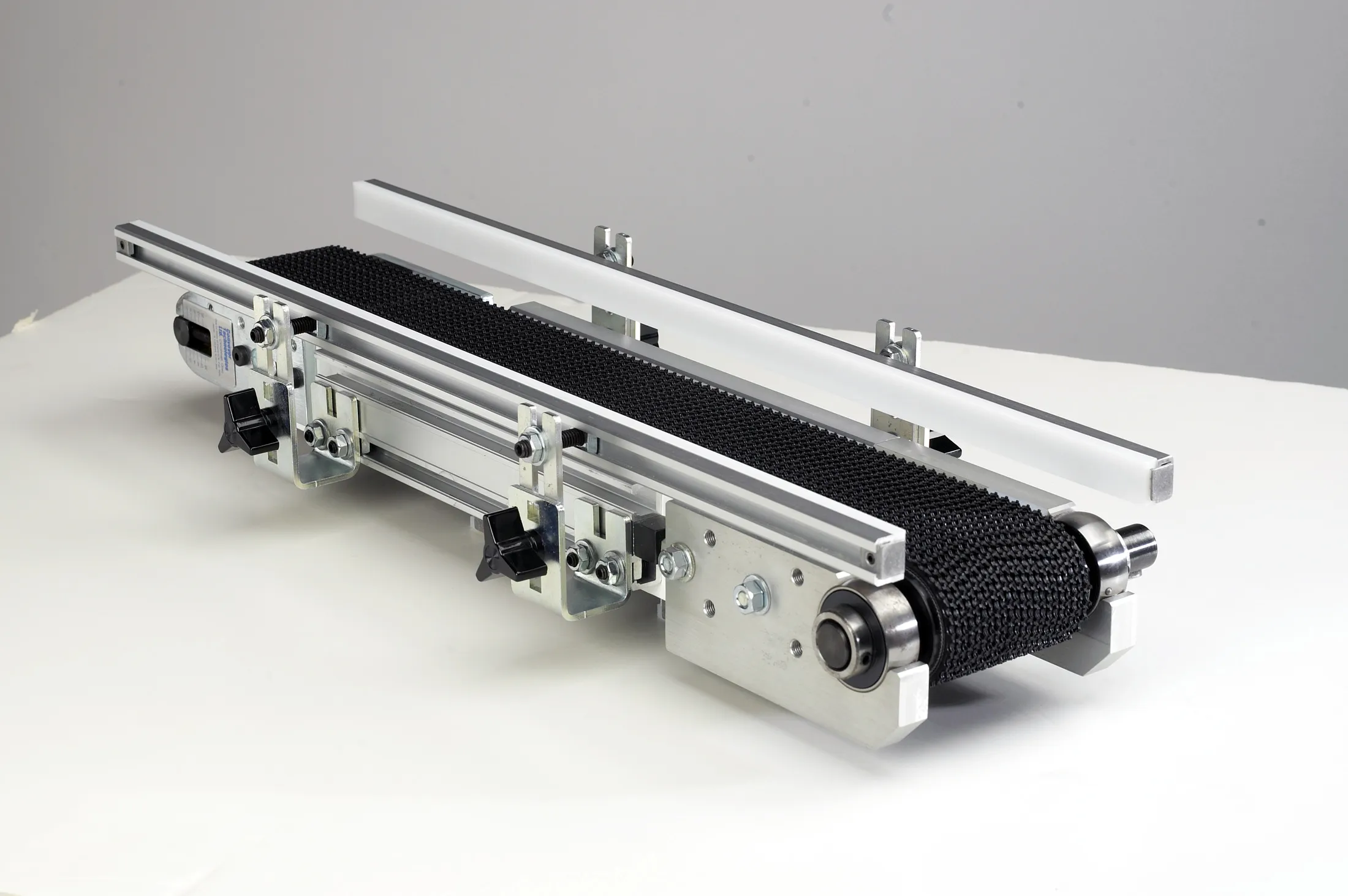
Cleats on the belt carry products uphill and keep them apart, so they arrive spaced for counting, timing or the next operation.
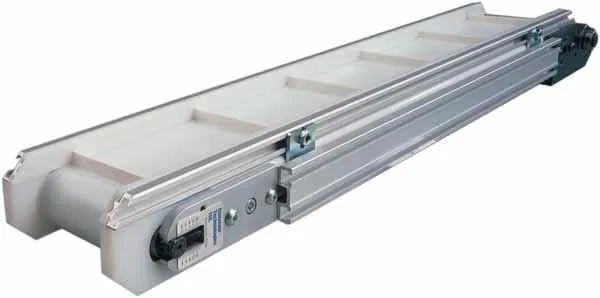
Cleated Conveyors move products on inclines and support spacing, counting, timing and part separation. Standard and Automation styles are available, with standard and custom cleats. We match the conveyor, belt and cleats to your application.
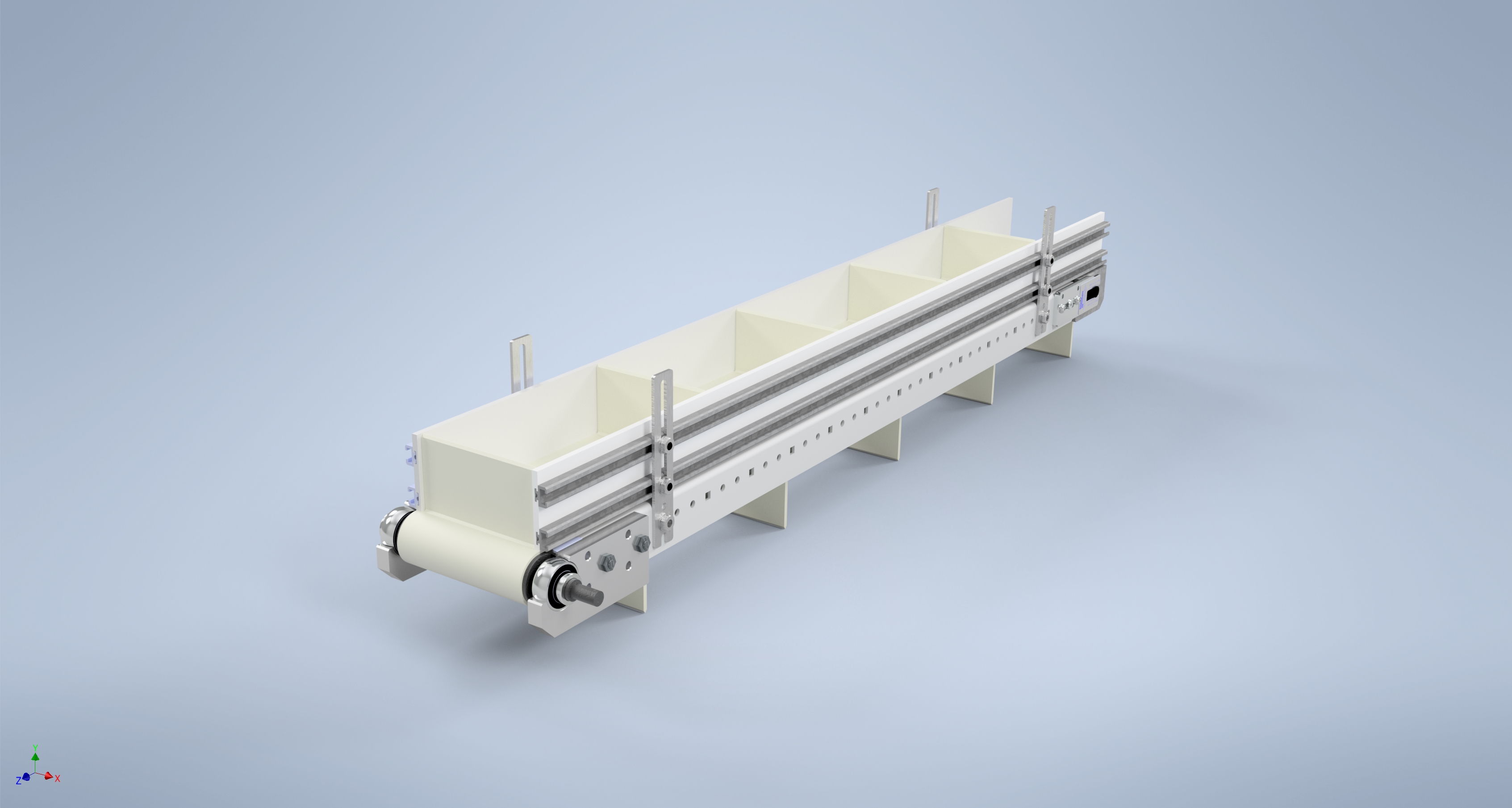
Design it in CAD and export STEP files, or let our engineers design it.
Preview unavailable. Open original image ↗
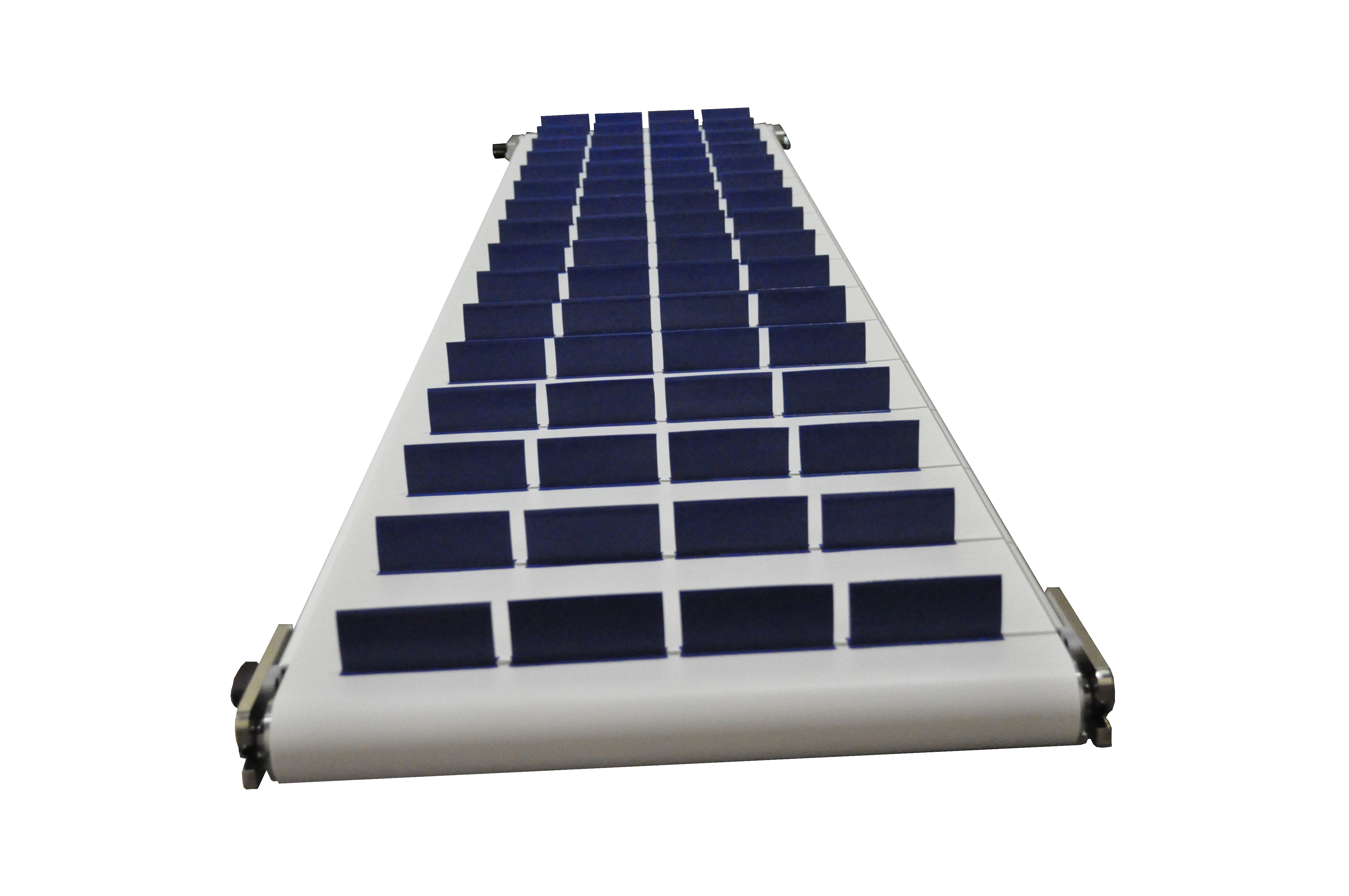
- Standard cleats
- 20, 30 or 40 mm high2 in and 3 in also listed
- Belt widths
- 9 widths, 2.5–24 in
- Length
- 14 in to 16 ftin 1 in increments
- Belt change
- Two minuteson our open stand
Features
Engineered for the job it does every day.
Primary feature
Cleats for inclines and product spacing
Cleats separate products along the belt as it moves. They carry material uphill and space products for separating, counting and timing at the next operation.
In practiceProducts climb without sliding back and reach the next operation already spaced out.
Quick belt change
The endless belt can be replaced without removing the drive or taking the conveyor off its stands. Mounted on our open stand design, the belt change takes two minutes.
In practiceThe drive and stands stay in place while the belt is changed.
The belt-removal path needs to stay accessible.
Lined sidewalls and cleat entry
The inner sidewalls are lined with UHMW plastic, and there is no pinch point where the cleats enter. This describes the cleat entry only; guarding for the complete installation is separate.
In practiceProducts run against smooth, lined walls along the incline.
Sealed bearings
Bearings are sealed and lubricated for life. Inspection, belt changes and cleaning still need space around the conveyor.
In practiceNo routine bearing lubrication in your maintenance schedule.
Cleat heights
Choose the cleat for the incline and spacing
Cleats carry material uphill and space products for counting and timing. Taller cleats need more clearance under the conveyor where the belt returns.
- Belt C1
20 mm · 0.79 in
- Belt C2
30 mm · 1.18 in
- Belt C3
40 mm · 1.57 in
- Listed
51 mm · 2 in
- Listed
76 mm · 3 in
Other cleat sizes on request. Guide clearance depends on the cleats and the product.
Maintenance at a glance
Built to be maintained, not just to run.
What servicing this conveyor involves. Where it says “set for your configuration”, we confirm it as part of the design.
- Belt change
- Without removing the drive; two minutes when mounted on our open stand designOr taking the conveyor off its stands
- Tension and tracking
- Set for your configuration
- Bearings
- Sealed for life, with no routine lubrication
- Replacement parts and belts
- AvailableStart with the equipment identifier if you have it
Technical specifications
The numbers, with their conditions.
Nominal length, overall installed length and usable width between the cleats are separate dimensions.
| Specification | Value | Condition |
|---|---|---|
| Belt widths | 2.5, 3.25, 4.5, 6, 7.5, 10, 12, 18 and 24 in | 63, 83, 114, 152, 190, 250, 305, 457 and 610 mm |
| Length options | 14 in (356 mm) to 16 ft (4877 mm) | In 1 in increments |
| Common catalogue lengths | 2, 3, 4, 5, 6 and 10 ft | |
| Standard cleat heights | 0.79 in (20 mm), 1.18 in (30 mm), 1.57 in (40 mm) | Belts C1, C2 and C3 |
| Styles | Standard and Automation | Catalogue series S and T |
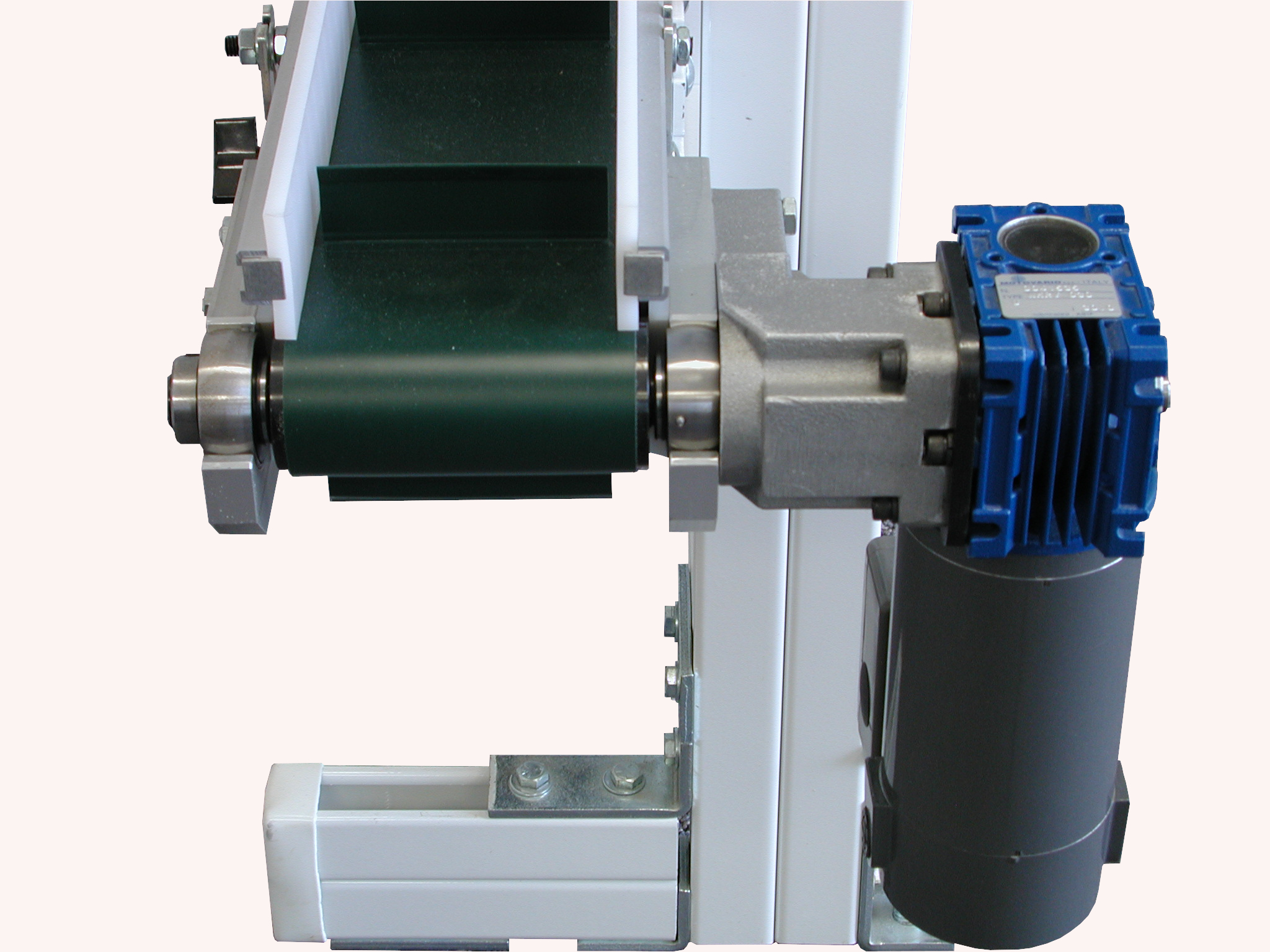
| Motors | AC or DC, reversible options | |
| Frame | Powder-coated steel, aluminum or stainless steel | |
| Catalogue designation | Type C | Useful when identifying an existing conveyor or ordering parts |
Applications
Where it works, and how it fits.
If products shouldn’t touch fixed sides, compare the Flex-Side Cleated Conveyor. For a transfer gap or positioning question, start with the Transfer and Product Control Guide.
- Tasks
- Inclines, product spacing, counting, timing and separation
- Environments
- Cleanroom, washdown and industrialDepends on the cleanroom class, cleaning process and exposure.
Other ways to handle the product
- Industry
Food & Beverage
Connect filling, labeling and packing, and handle the wet end of the line.Explore → - Industry
Metalworking & Stamping
Catch parts and clear scrap from under the die, in the space the press leaves you.Explore → - Industry
Pharmaceutical Packaging & Inspection
Present every package to the printer, scanner or camera the same way.Explore → - Industry
Plastics & Injection Molding
Take parts, runners and sprues away from the mold, each to where it needs to go.Explore →
Configured with
One conveyor, one complete system.
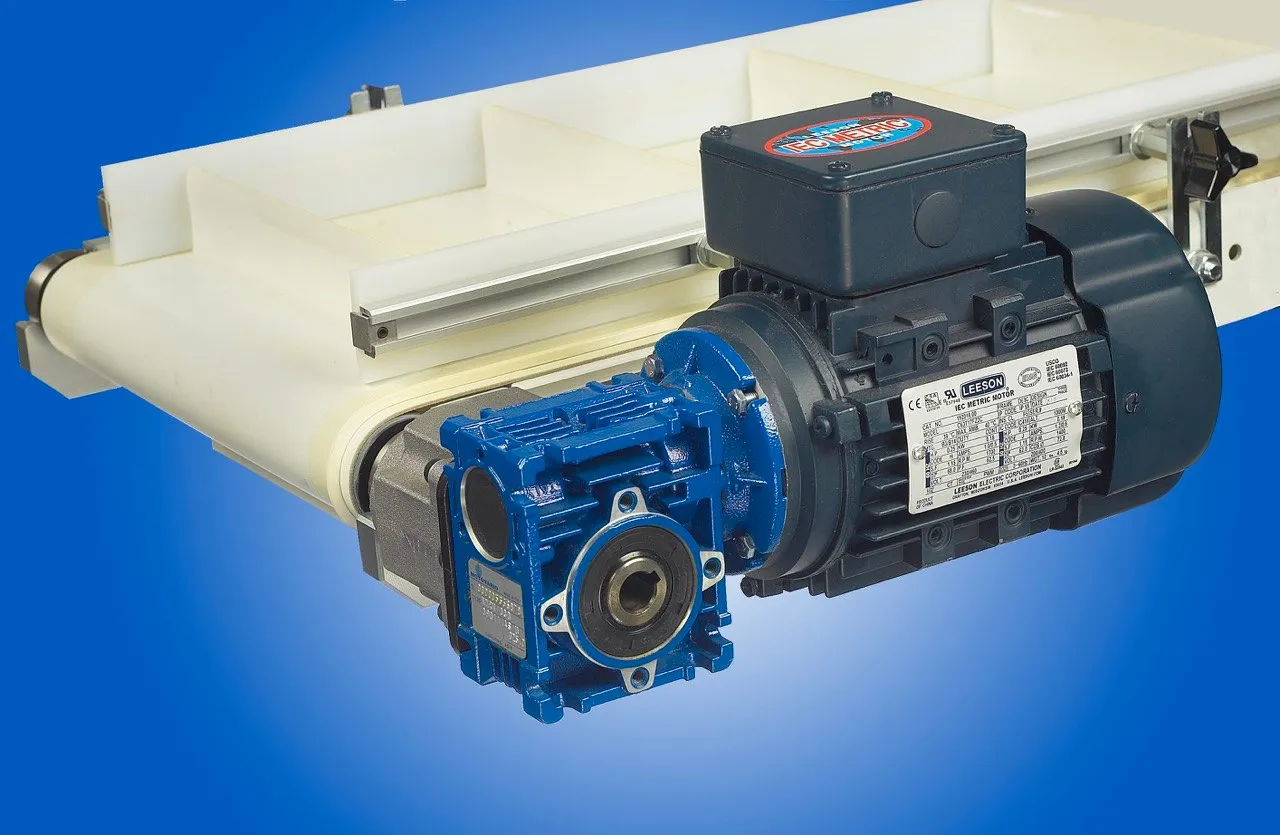
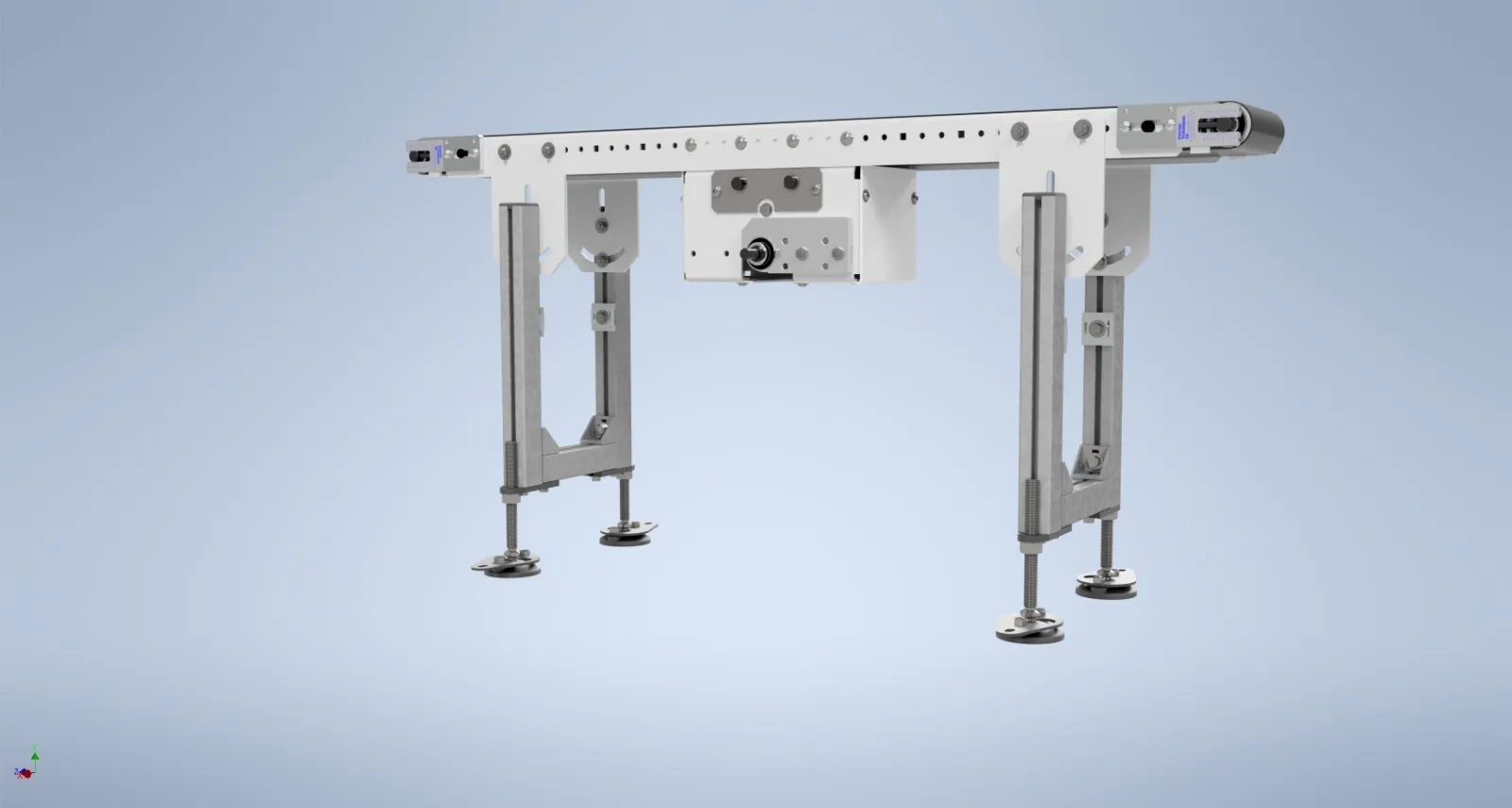
We design the drive, guides and stand with the conveyor, from the same modular system, so the parts are designed to work together.
Questions engineers ask
Tell us about the product and the incline.
Or the spacing or separation task. We design and configure a Cleated Conveyor for your application; a brief description is all we need to start.
Talk to an engineer2.5, 3.25, 4.5, 6, 7.5, 10, 12, 18 and 24 in (63, 83, 114, 152, 190, 250, 305, 457 and 610 mm).
Without removing the drive; two minutes when mounted on our open stand design. Or taking the conveyor off its stands.
Sealed for life, with no routine lubrication.
Cleanroom, washdown and industrial. Depends on the cleanroom class, cleaning process and exposure.
Documents and support
Everything you need, after it’s installed.
- Drawings · on request
Dimensions and belt details
We find the drawing for your style, cleat height and mounting. Browse published sheets or we’ll send the right one.Find or request drawings → Warranty
- Conveyor
- 10 years, unlimited hours
- Bearings
- 5 years
- Drive packages
- 2 years
- Existing equipment
Drawings, manuals, parts and belts
An identifier helps us find what applies to your conveyor. No identifier? Start with a description.Identify your equipment →
Compare with
Other ways to climb and save space
 ConveyorChoose it when small or fragile products shouldn’t rub against fixed side walls.Choose it whensmall or fragile products shouldn’t rub against fixed side walls.
Flex-Side Cleated Conveyor
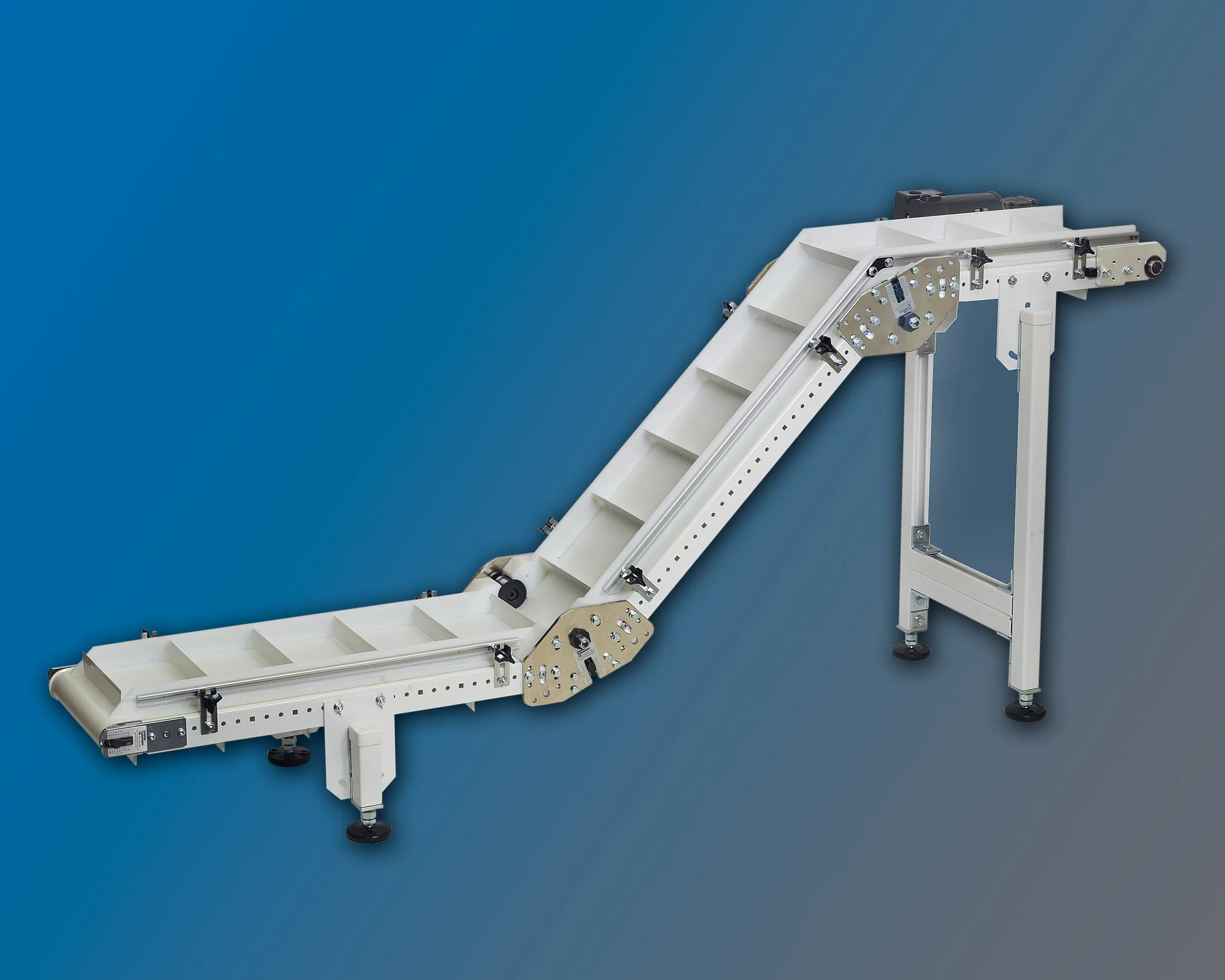 ConveyorChoose it when product has to change height between levels.Choose it whenproduct has to change height between levels.
Multi-Flex VSC Variable Shape Conveyors