
Industry
Conveyors for Plastics & Injection Molding
Take parts, runners and sprues away from the mold, each to where it needs to go.
We fit the conveying surface, drive and discharge around your parts, the runner material and the space around the machine, from the mold to collection, inspection or assembly.
Design it in CAD and export STEP files, or let our engineers design it.
01In detail
Finished parts
Catch the part after ejection
Parts land on the conveyor under the mold. Its length and discharge set the route to collection, inspection or assembly.
A surface that won’t mark the part
Soft urethane and silicone belts are available. The part’s shape, finish and temperature at contact decide the belt; we confirm the allowable contact temperature for the configuration.
Arrive in a set orientation
When inspection or assembly needs the part a certain way round, timing belts move it and holders locate it, matched to the part’s shape.
02How it works
Runners and sprues
The conveyor carries material onward after it’s separated; it doesn’t separate finished parts from runners and sprues by itself.
To collection
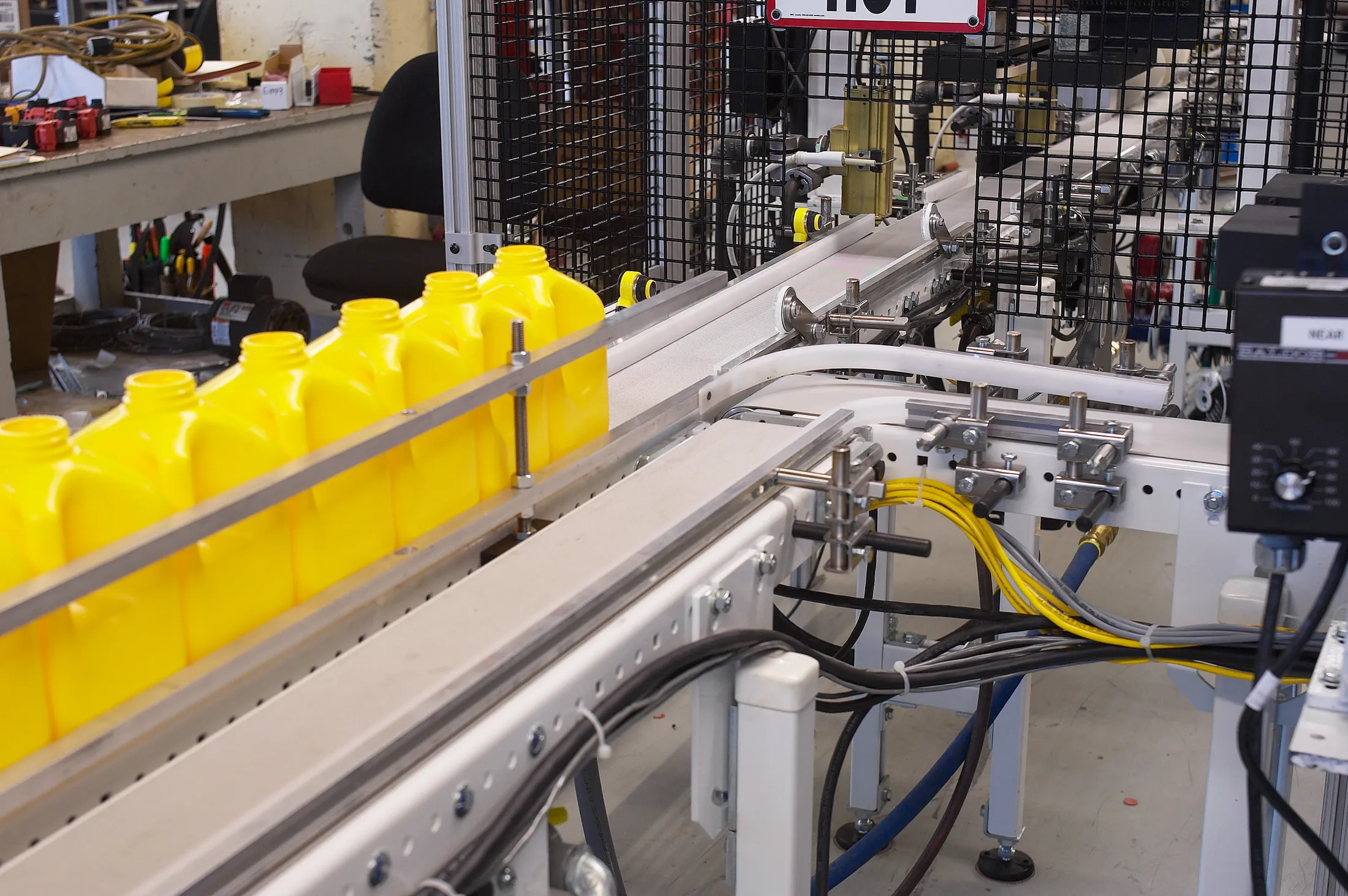
Low-profile conveyors move runners, sprues and flash to bins or granulators, from under the mold or beside the press, wherever the material is released.
Up to the granulator
Cleated conveyors carry material up an incline from a low collection point to a higher granulator infeed.
Cleated →Separate routes
Parts and runner material often need different routes. We match width, speed, length and discharge to the material and molding cycle.
03Reference
Fitting under the mold
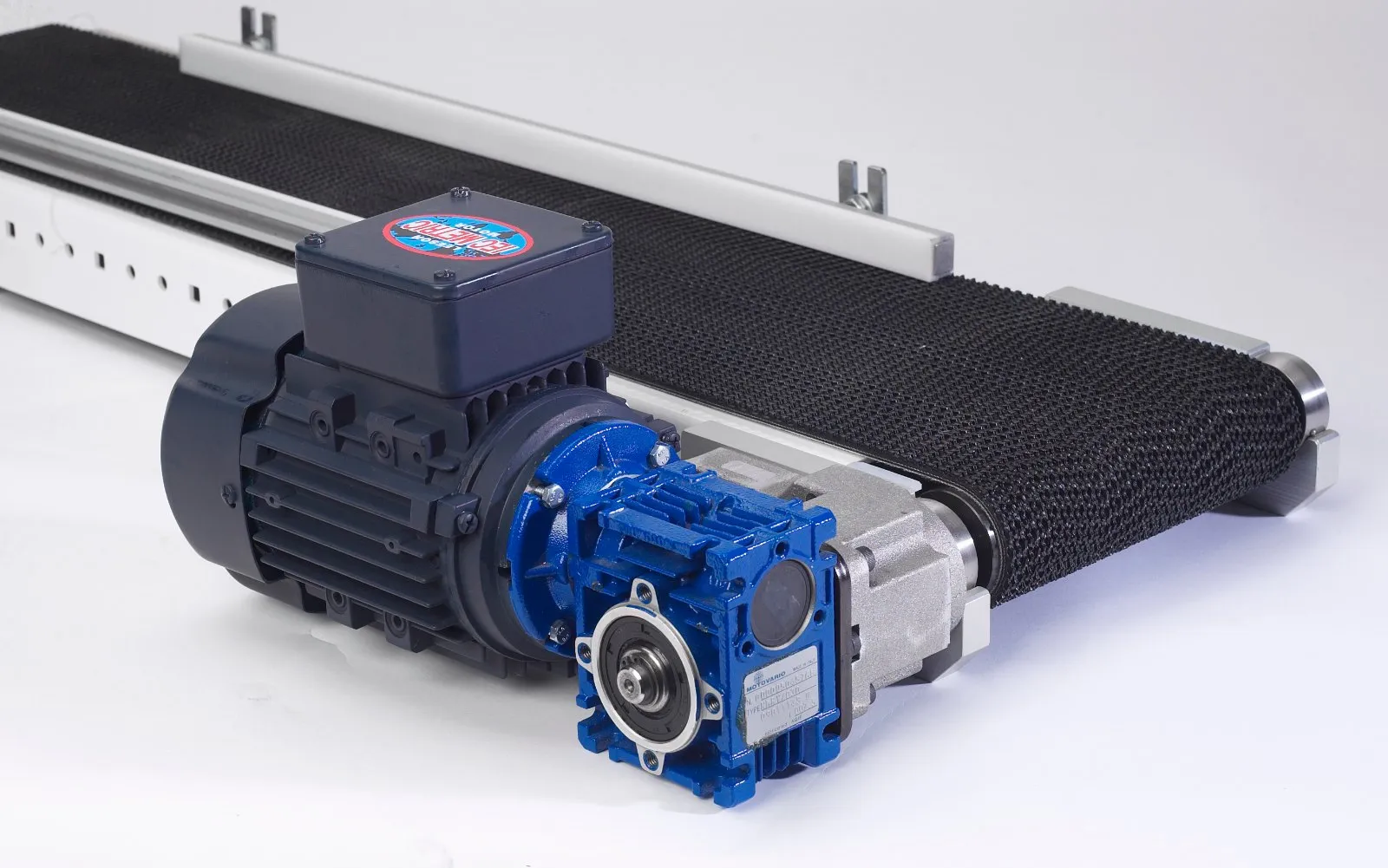
Compact aluminum frames fit tight spaces around the mold. Mount directly to the machine, on floor stands or on purpose-made brackets, with room for the motor, supports and discharge and access around the machine.
| Drive layout | When it fits |
|---|---|
| End-Drive | Motor and gearbox at the end of the conveyor, outside the mold area where the layout allows. |
| Center Drive | Drive between the ends when there’s no room at either end. |
04In detail
Connect the next operation
Inspection
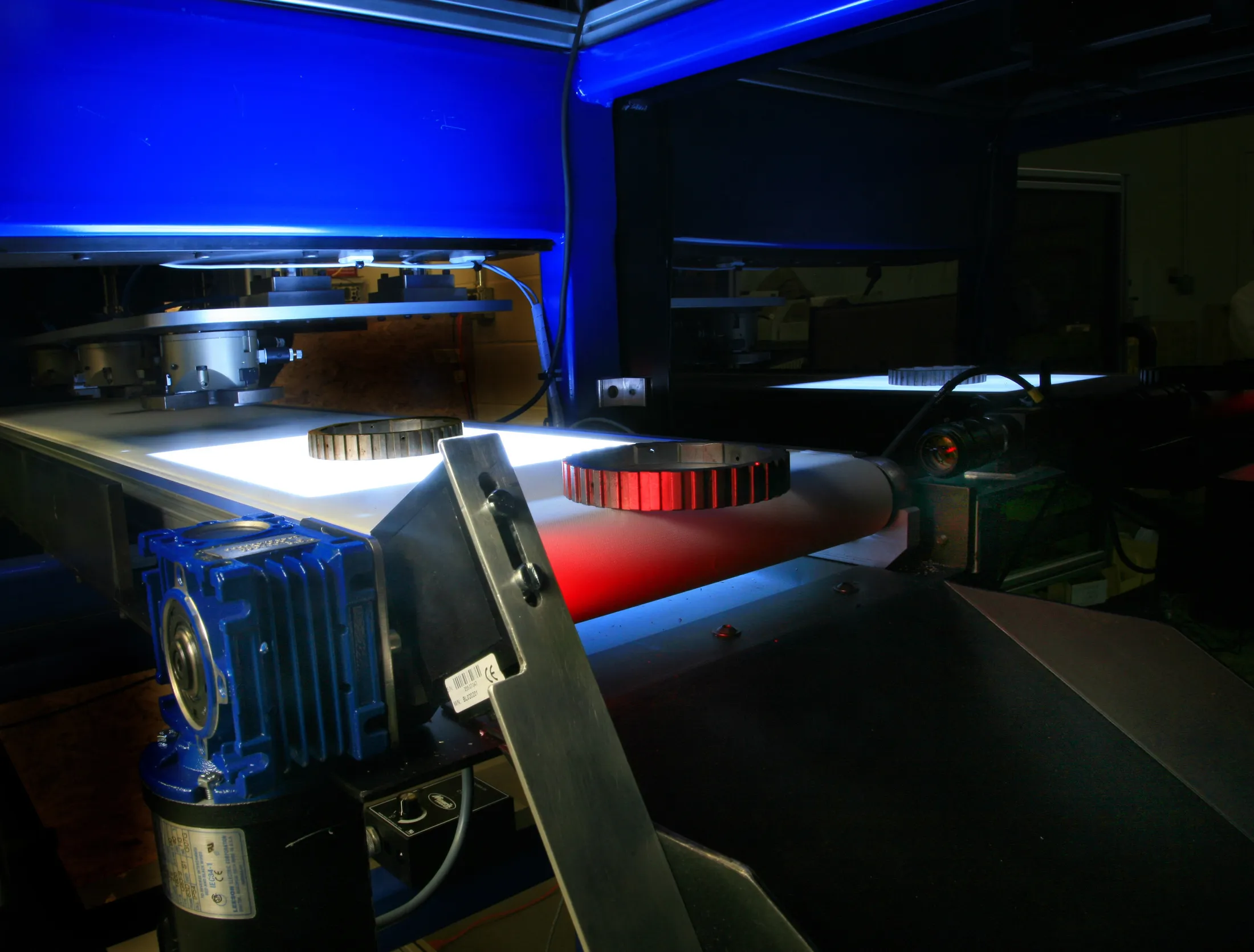
AccuVision backlights molded parts for outline and edge checks; part support and capture timing work with the lighting.
Assembly and robots
AccuMove indexes parts between positions; Dual Belt carries them in guided holders that set how the part meets the robot or station.
Press and line controls
Start and stop signals follow the molding cycle and the next operation; fault detection and production counts report back. Conveyor routes can link molding with inspection, assembly and packaging.
05Conditions
Operating conditions
Mold release agents, processing fluids, plastic dust and cleaning all affect the belt and component choice. Sealed-for-life bearings need no routine relubrication. For cleanroom molding, the classification and contamination controls decide the documentation needed, and we identify it.
06Recommended conveyors
Conveyor options to explore
- ConveyorUseful for taking ejected parts away from the mold.
End-Drive Conveyors
Useful for taking ejected parts away from the mold. 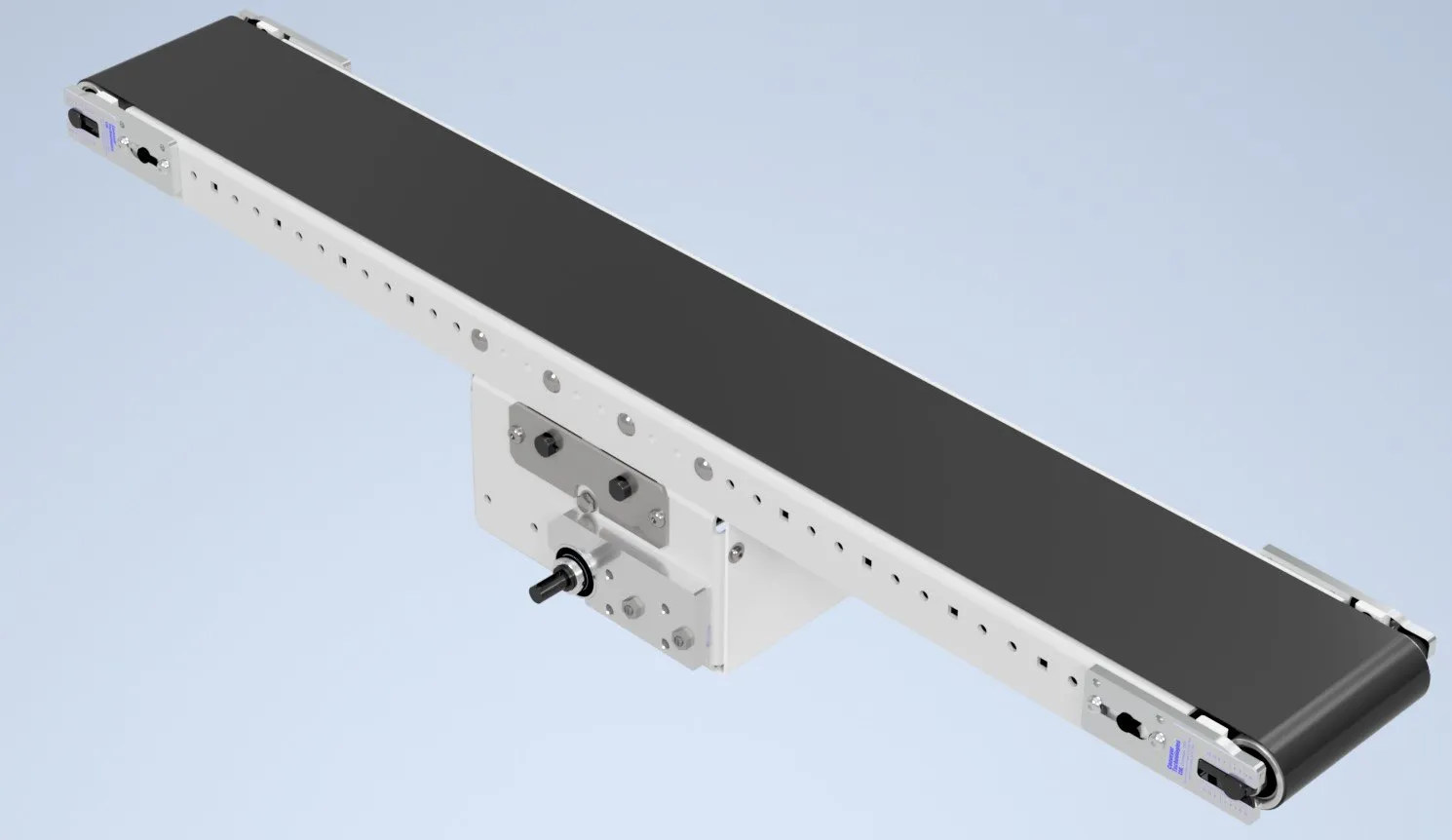 ConveyorUseful when the machine restricts space at either end.
Center Drive Conveyor
Useful when the machine restricts space at either end.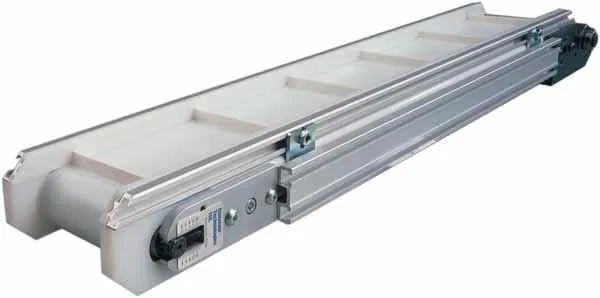 ConveyorUseful for lifting runners and sprues to a granulator.
Cleated Conveyors
Useful for lifting runners and sprues to a granulator.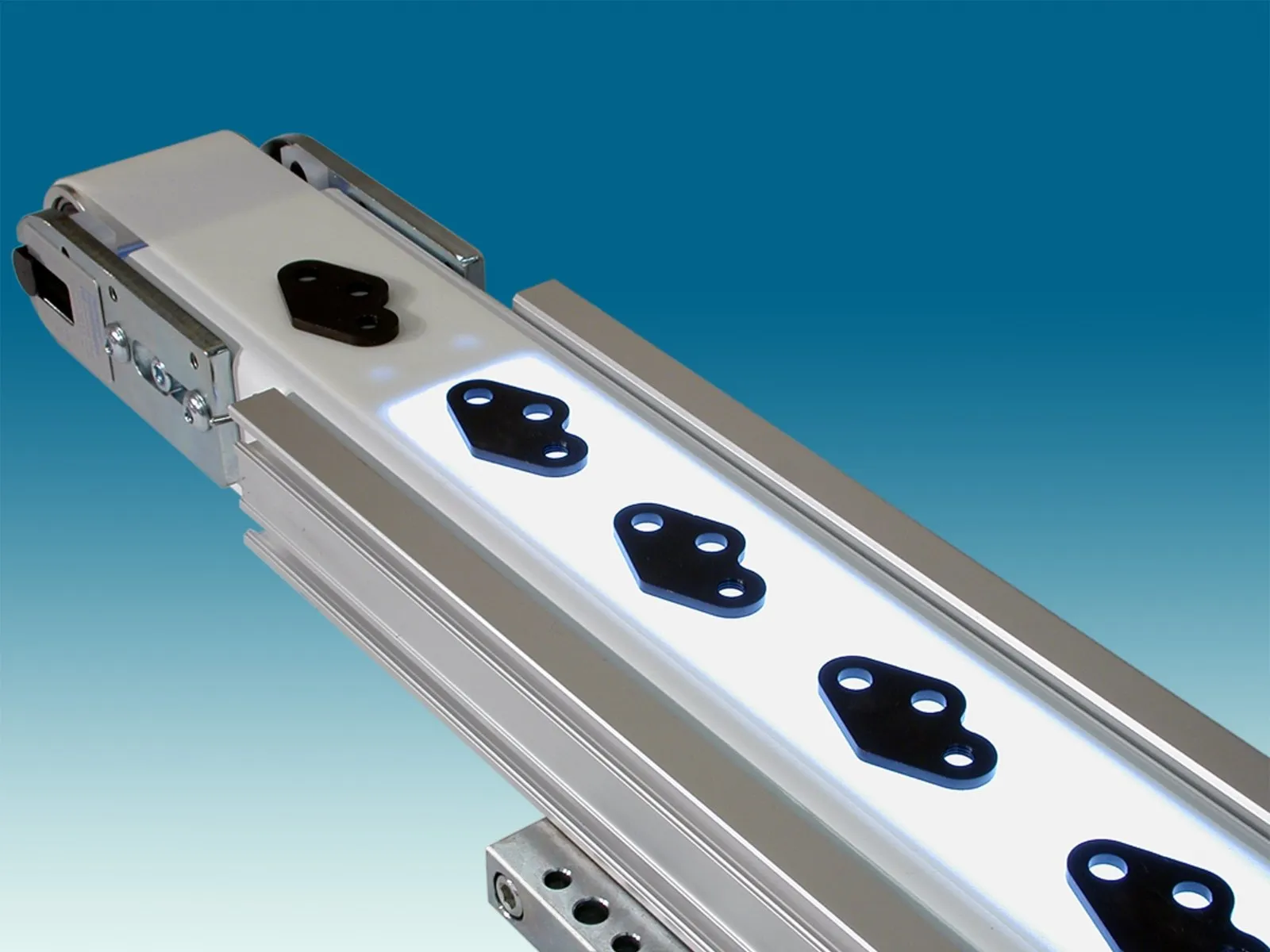 ConveyorUseful for checking outlines or edges after molding.
AccuVision Internal Backlit Conveyor
Useful for checking outlines or edges after molding.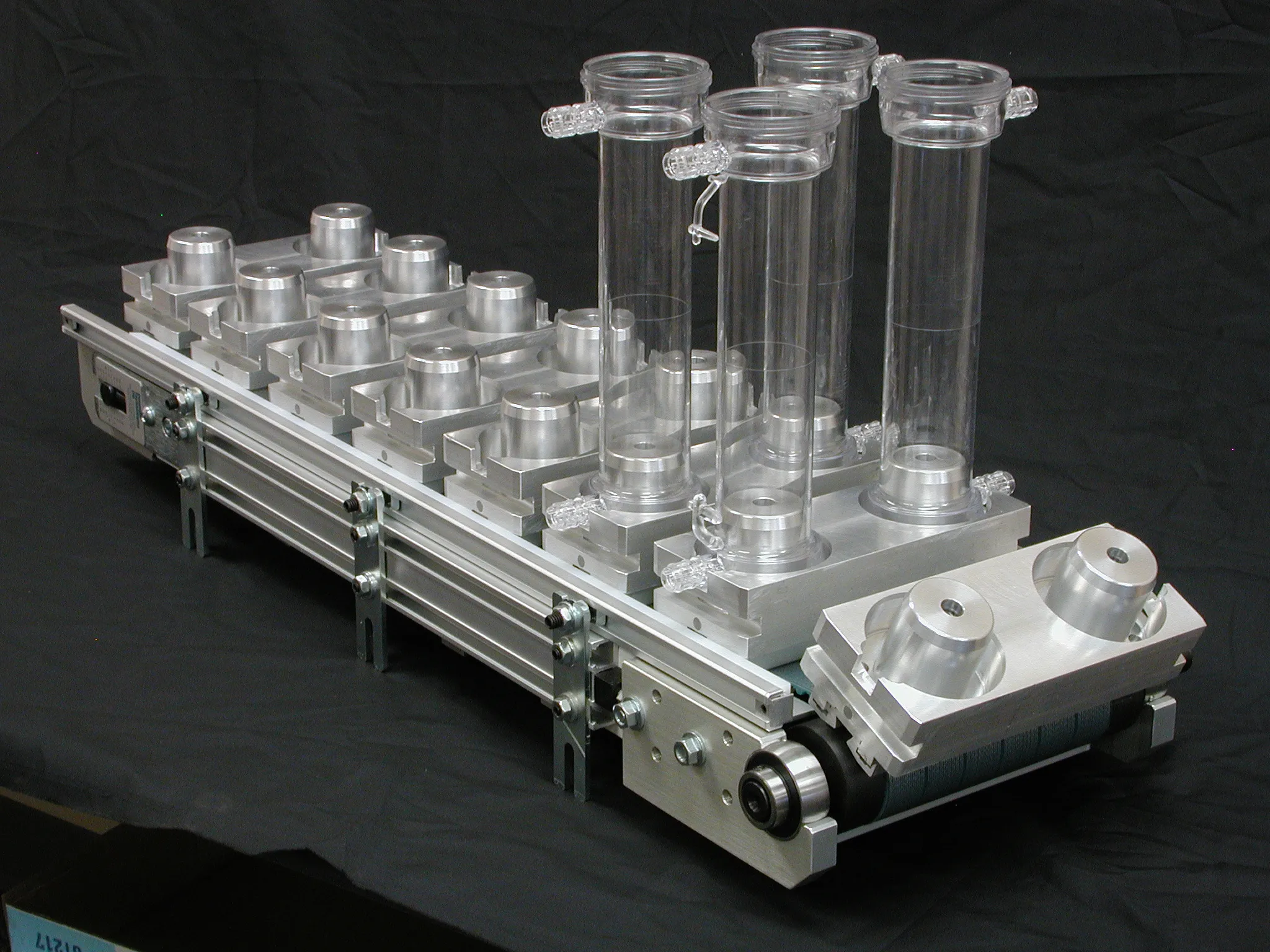 ConveyorUseful when parts step between inspection or assembly positions.
AccuMove Conveyors
Useful when parts step between inspection or assembly positions.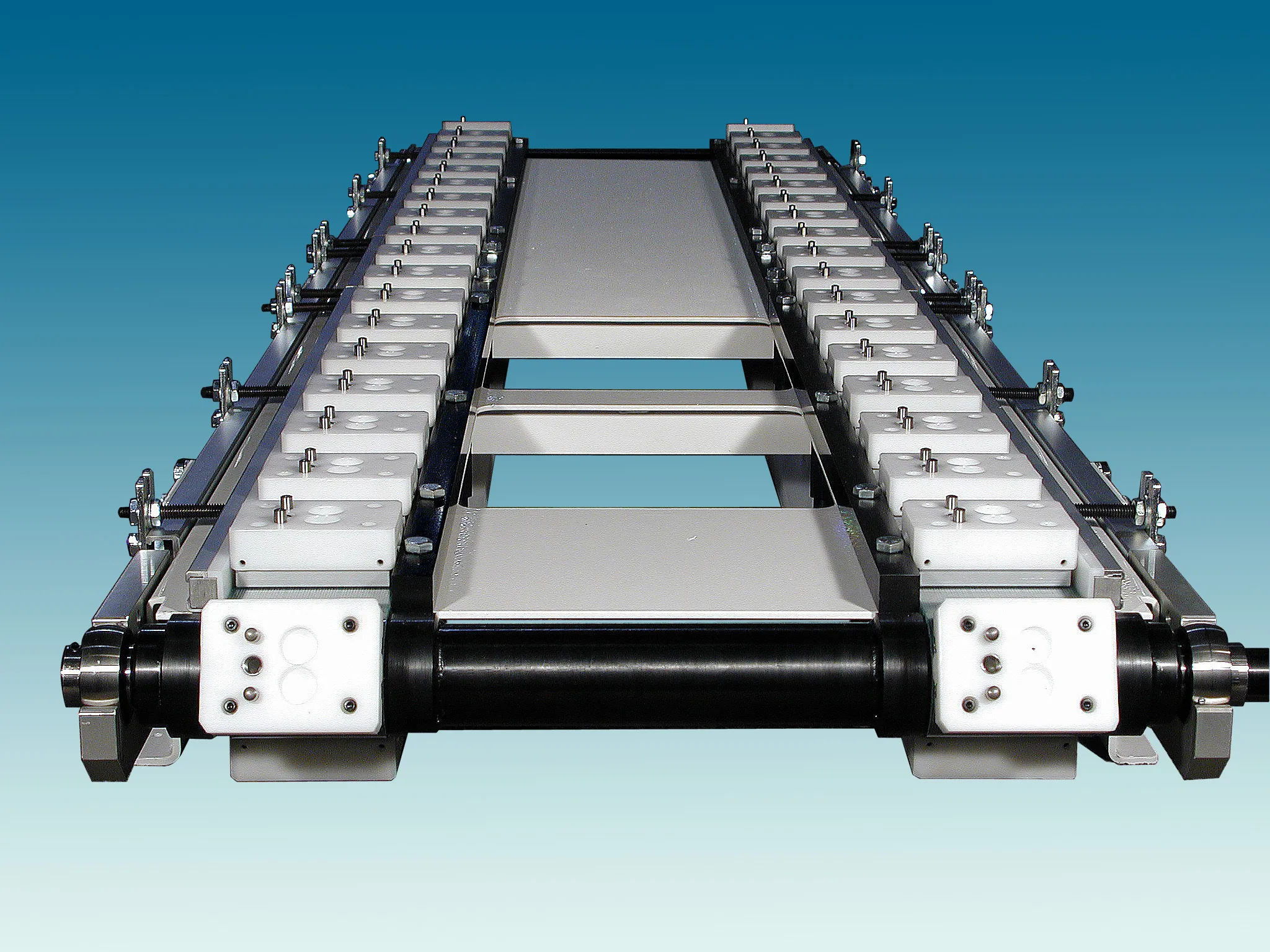 ConveyorUseful when a station needs each part in a set orientation.
Dual Belt Indexing Conveyor
Useful when a station needs each part in a set orientation.
Questions engineers ask
No. It carries the material onward once it has been separated. Where parts and runners need different routes, we design each route around the material and the molding cycle.
Soft urethane and silicone belts are available. The part’s shape, finish and temperature at contact decide the belt, and we confirm the allowable contact temperature for the configuration.
A cleated conveyor carries the material up an incline from a low collection point to the higher granulator infeed.
A Center Drive conveyor places the drive between the ends, and compact aluminum frames fit the tight space around the mold.
Yes. Start and stop signals follow the molding cycle and the next operation, and fault detection and production counts report back to the surrounding controls.
The cleanroom classification and contamination controls decide the materials and documentation needed. Suitability depends on the selected arrangement and environment.