
Parallel round belts for parts that can’t sit flat
Round Belt Conveyors
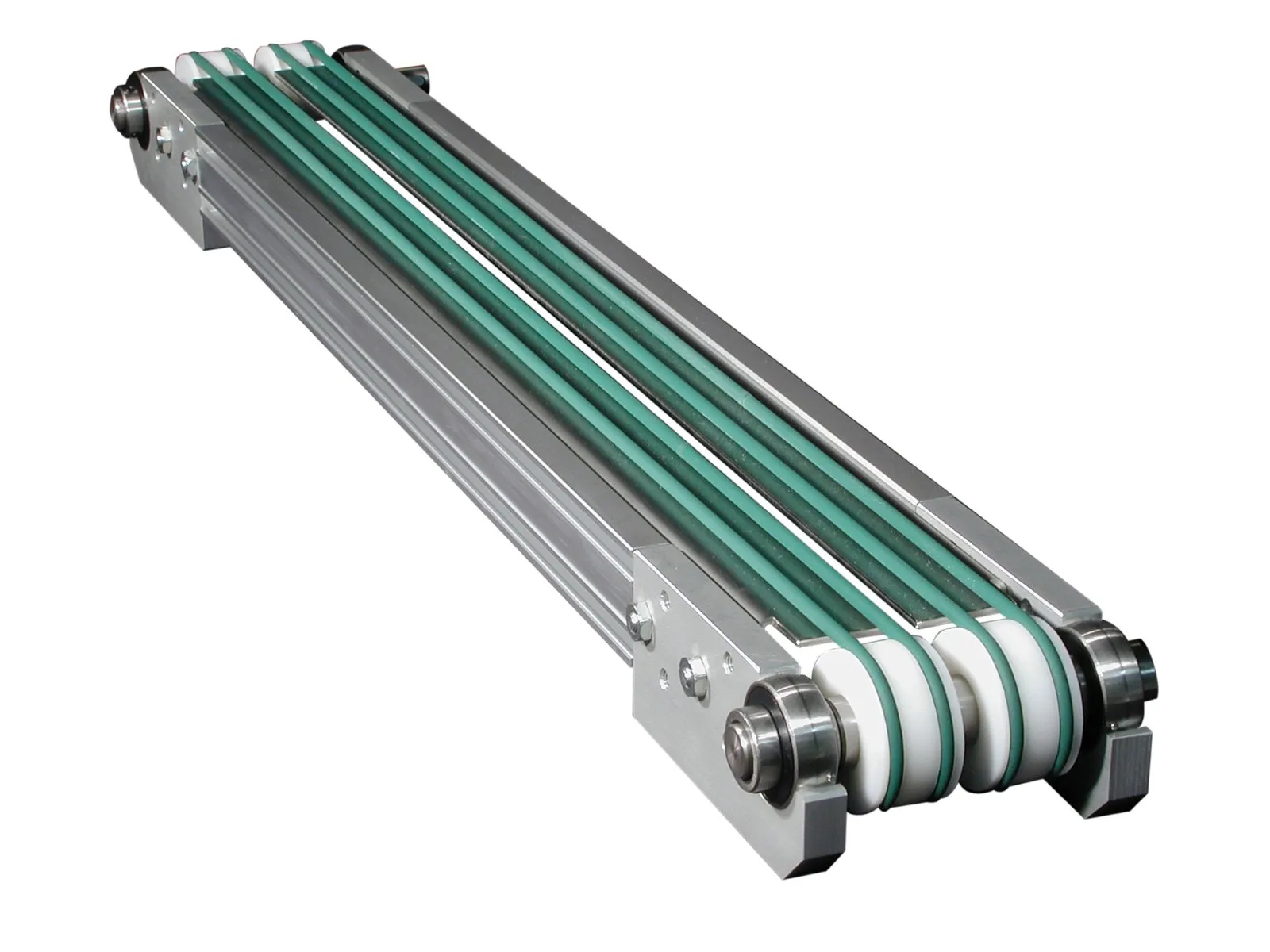
For parts a flat belt can’t carry: two round belts support the part at chosen points, leaving room for anything that sticks out below and open access around it.
Round Belt Conveyors handle parts that can’t sit on a flat belt, including parts with a feature extending below the conveying surface. Acetal or UHMW guides can steer both the part and the belts along the conveyor.
Design it in CAD and export STEP files, or let our engineers design it.

Preview unavailable. Open original image ↗


- Belts
- Solid urethane, self-tracking
- Belt speed
- Up to 250 ft/min
- Load
- Up to 50 lb (22.7 kg)depending on the application
- Length
- 16 in to 15 ftin 1 in increments
Features
Engineered for the job it does every day.

Primary feature
Support for irregular parts
Two parallel belts support small or unstable products and parts that need clearance beneath the conveying surface. We match the belt and guide layout to where the part can be supported and what projects from it.
In practiceParts with odd shapes or features hanging below are carried at the points they can take, with clearance where they need it.
Open access for inspection, printing and drying
Because the belts touch the part in only a few places, there is access around it for vision inspection, printing on exposed surfaces, and drying.
In practiceMost of the part’s surface stays reachable while it travels.

Self-tracking urethane belts
The solid urethane round belts track themselves in both directions, and urethane resists chemicals and abrasion. Material suitability depends on the product, cleaning agents and conditions.
In practiceThe belts stay on their pulleys whichever way the conveyor runs.
Maintenance at a glance
Built to be maintained, not just to run.
What servicing this conveyor involves.
- Belt change
- No re-tracking after the changeThe belts track themselves
- Tension and tracking
- Self-tracking round beltsIn both directions
- Bearings
- Sealed for life, with no routine lubrication
- Replacement parts and belts
- AvailableStart with the equipment identifier if you have it
Technical specifications
The numbers, with their conditions.
Conveyor width, round-belt diameter, belt spacing and usable product support are separate dimensions.
| Specification | Value | Condition |
|---|---|---|
| Conveyor widths | 2.5, 3.25, 4.5, 6, 7.5, 10, 12, 18 and 24 in | |
| Length options | 16 in to 15 ft | In 1 in increments |
| Common lengths | 2, 3, 4, 5, 6 and 10 ft | 610, 914, 1219, 1524, 1829 and 3048 mm |
| Load capacity | Up to 50 lb (22.7 kg) | Depending on the application |
| Belt speed | Up to 250 ft/min | |
| Belt material | Solid urethane | |
| Styles | Standard and Automation, SAE and metric | |
| Frame | Powder-coated steel, aluminum or stainless steel |
Applications
Where it works, and how it fits.
The Transfer and Product Control Guide covers support and transfer questions. The Selection Guide compares conveyor requirements.
- Tasks
- Irregular parts, vision inspection, printing and drying
- Industries
- Medical, food and electronics manufacturing
- Environments
- Cleanroom, dry and abrasiveDepends on the product, belt material, cleanroom class and conditions.
Support and transfers
Configured with
One conveyor, one complete system.
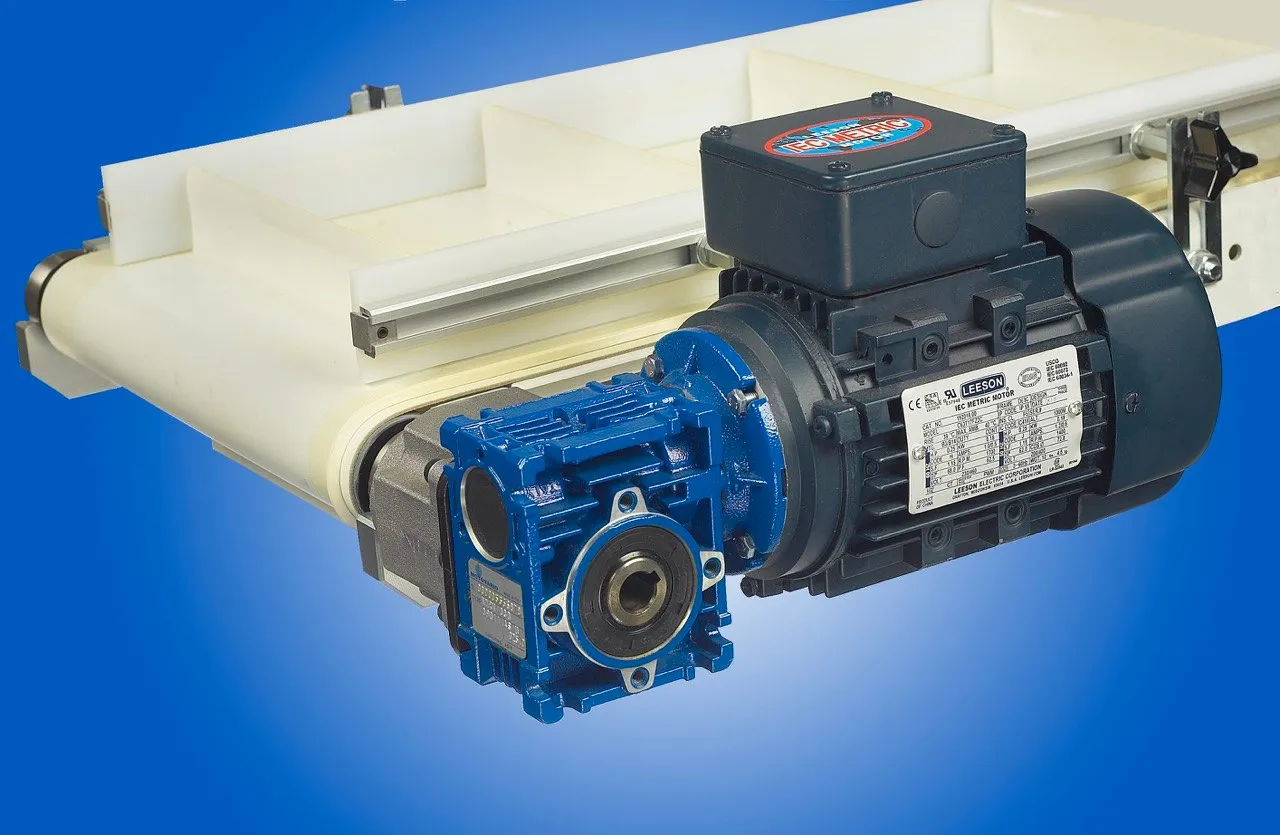
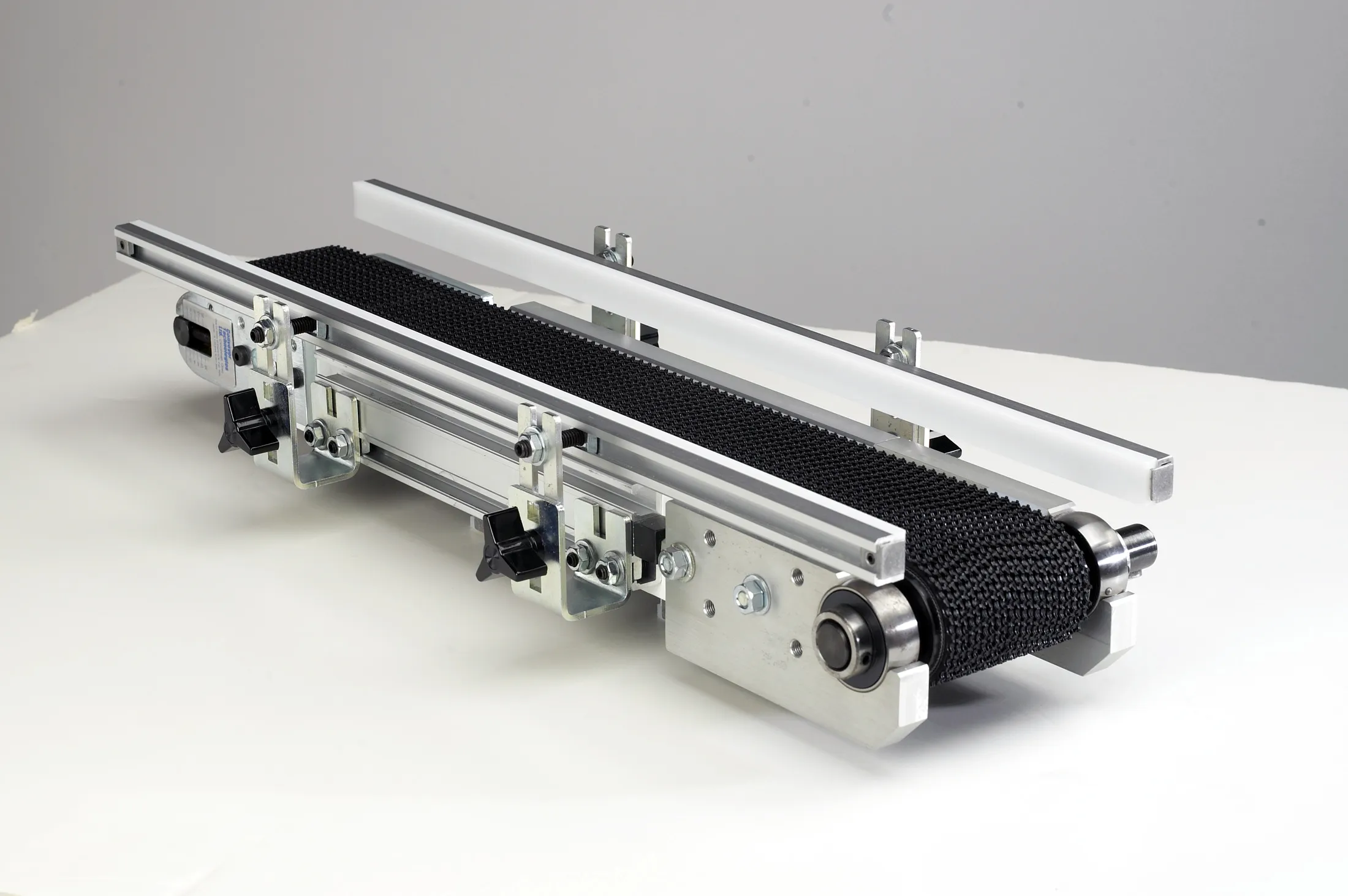
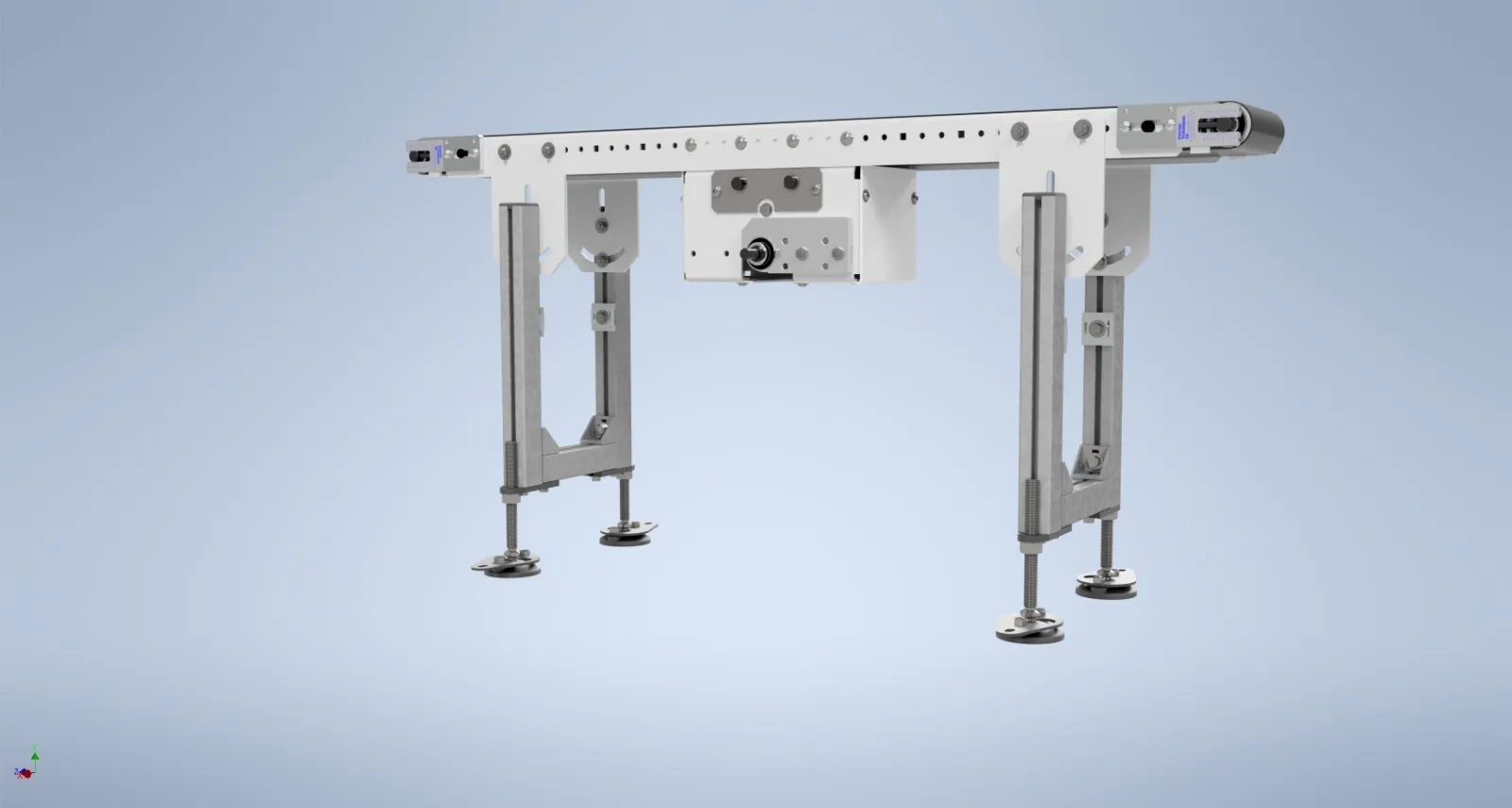
We design the drive, guides and stand with the conveyor, from the same modular system, so the parts are designed to work together.
Questions engineers ask
Tell us about the part’s shape.
And which surfaces need support or access. We design and configure a Round Belt Conveyor; a brief description is all we need to start.
Talk to an engineer2.5, 3.25, 4.5, 6, 7.5, 10, 12, 18 and 24 in.
Up to 50 lb (22.7 kg). Depending on the application.
No re-tracking after the change. The belts track themselves.
Sealed for life, with no routine lubrication.
Cleanroom, dry and abrasive. Depends on the product, belt material, cleanroom class and conditions.
Documents and support
Everything you need, after it’s installed.
- Drawings · on request
Belt and guide information
What applies depends on the number and spacing of belts, the product support and the conveyor size. Browse published sheets or we’ll send the right one.Find or request drawings → Warranty
- Conveyor
- 10 years, unlimited hours
- Bearings
- 5 years
- Drive packages
- 2 years
- Existing equipment
Drawings, manuals, parts and belts
An identifier helps us find what applies to your conveyor. No identifier? Start with a description.Identify your equipment →
Compare with
Other ways to transport parts
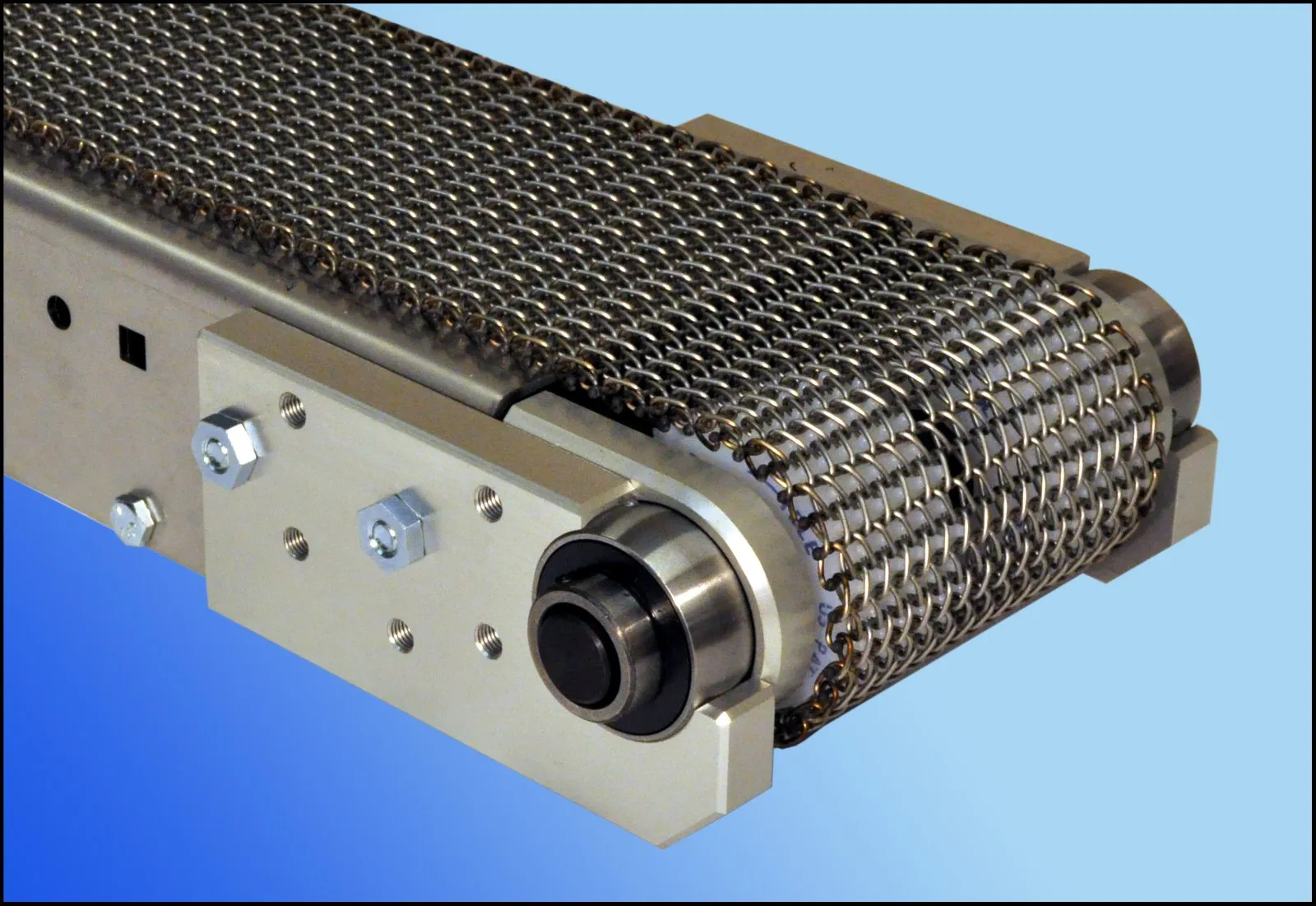 ConveyorChoose it when parts are hot, wet or oily, or air and fluid need to pass through.Choose it whenparts are hot, wet or oily, or air and fluid need to pass through.
Wire Mesh Belt Conveyor
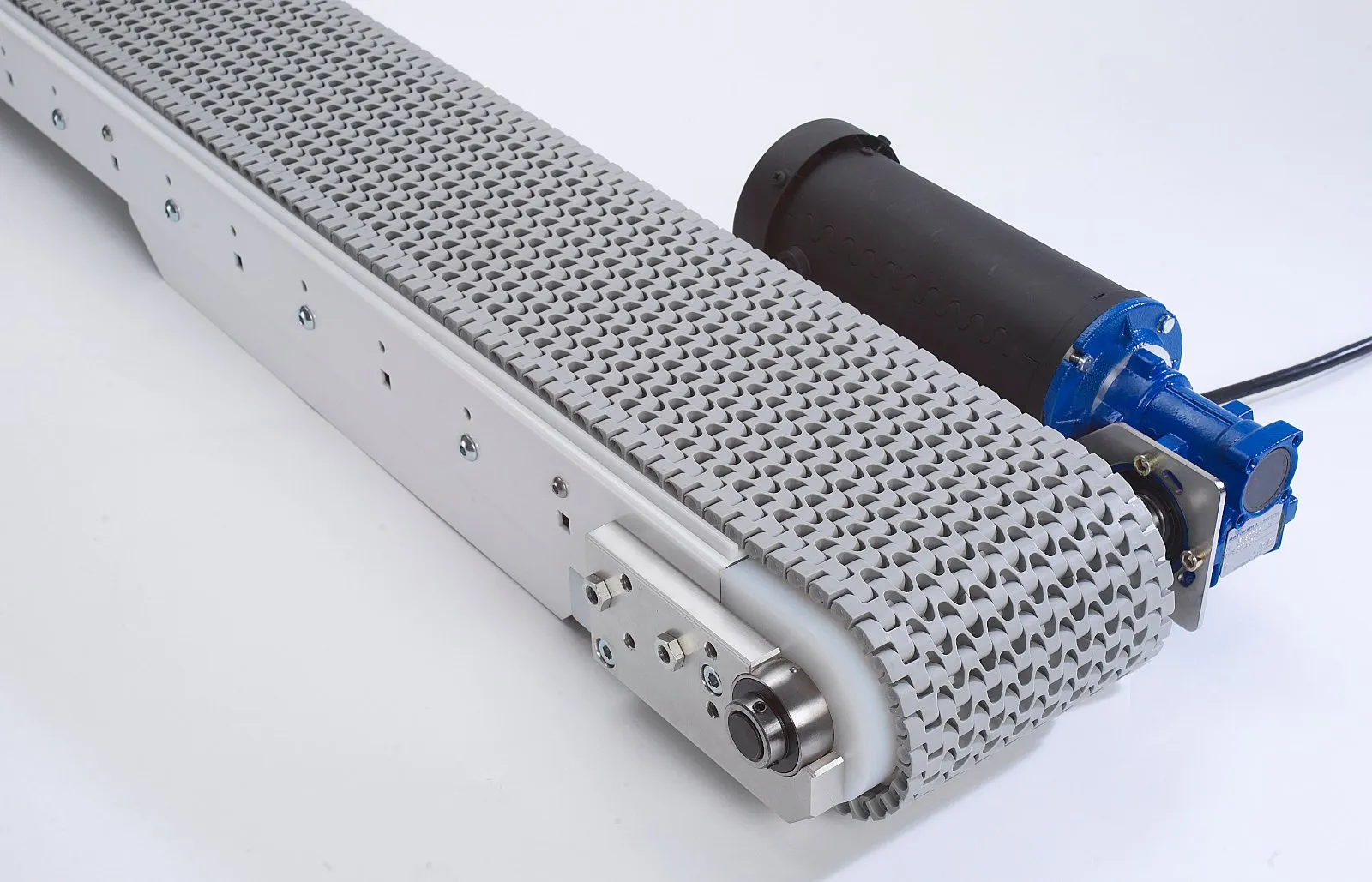 ConveyorChoose it when you need a choice of belt surfaces and materials, or regular washdown.Choose it whenyou need a choice of belt surfaces and materials, or regular washdown.
Modular Plastic Belt Conveyor
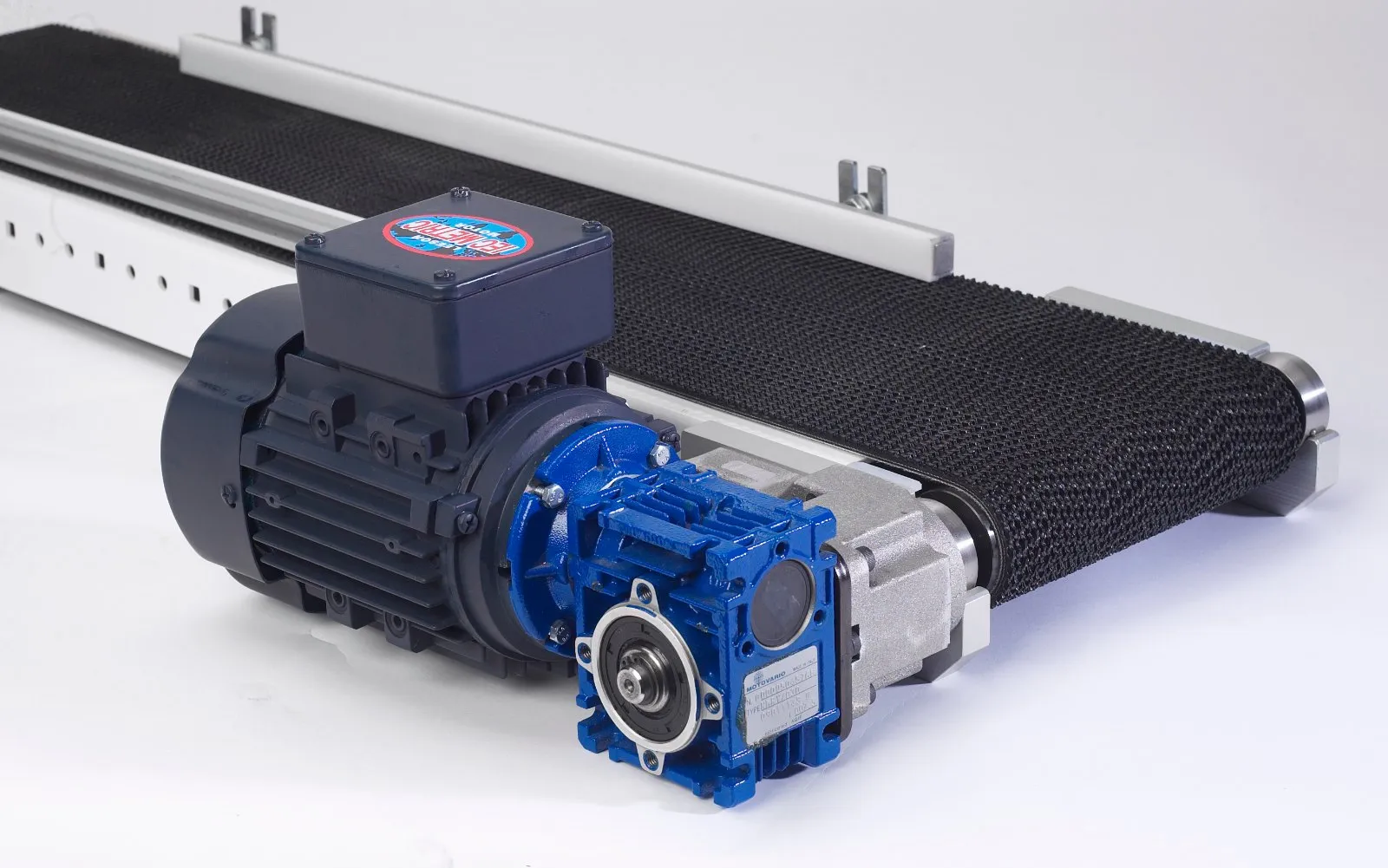 ConveyorChoose it when you need a straightforward flat-belt transfer with the drive at the end.Choose it whenyou need a straightforward flat-belt transfer with the drive at the end.
End-Drive Conveyors